

Morocco could soon receive more American natural gas as the country looks for new ways to power homes, factories and electricity plants after losing its main gas pipeline from Algeria.
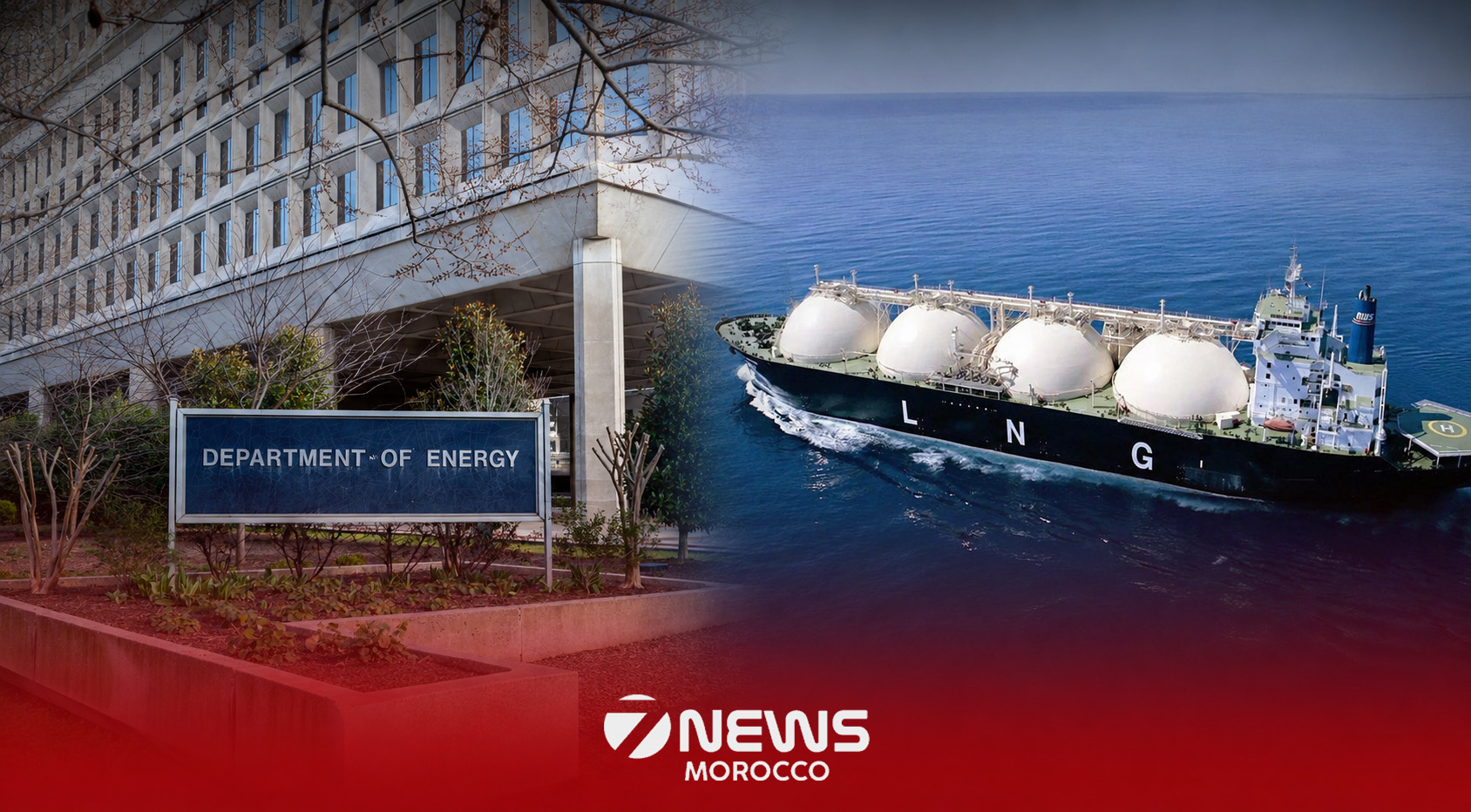
The US Department of Energy has approved exports of liquefied natural gas, known as LNG, to Morocco under a long-term deal running until 2050.
The approval allows Texas-based company Navergy Infrastructure Partners to export up to 51.75 billion cubic feet of LNG a year to Morocco and other US free trade partners. That is equal to around 0.14 billion cubic feet a day.
Morocco was included on the list because it has a free trade agreement with Washington. Under US law, exports to those countries are approved more quickly and face fewer regulatory hurdles.
The gas will not travel on the huge LNG tankers usually linked to the industry. Instead, Navergy plans to use smaller insulated containers that can be moved by truck, rail or ordinary cargo ships.
The containers keep the gas at minus 162 degrees Celsius so it stays in liquid form during transport.
The company will gather LNG supplies from eight existing storage and liquefaction sites in the United States before shipping them overseas.
The move comes as Morocco pushes ahead with a major rethink of its energy system.
Since the Maghreb-Europe gas pipeline from Algeria shut down in 2021, Morocco has had to find other ways to secure gas supplies.
At the moment, Morocco buys LNG on the global market and sends it to terminals in Spain, where it is turned back into gas. The gas is then pumped across the Strait of Gibraltar into Morocco through a reversed section of the old pipeline.
The system works, but it leaves Morocco dependent on infrastructure outside the country and limits how much gas it can import.
Morocco now wants to build its own LNG network as demand rises sharply.
Government forecasts show gas demand could jump from about 1.2 billion cubic metres today to 8 billion cubic metres by 2027. It could then reach 12 billion cubic metres by 2030.
Officials see gas as a key backup fuel while Morocco expands renewable energy projects such as solar and wind power.
Gas-fired power plants can quickly step in when there is no sun or wind, helping to keep the electricity grid stable.
Morocco is also encouraging factories in sectors such as cars, ceramics, steel and pharmaceuticals to move away from coal and heavy fuel oil to cleaner-burning gas.
The country is planning a floating LNG import terminal at the Nador West Med port on the Mediterranean coast instead of building a more expensive permanent facility.
Future plans also include pipelines linking the terminal to industrial areas around Kenitra and Mohammedia.
Longer-term projects are being studied for Atlantic ports including Jorf Lasfar and Dakhla as Morocco looks to build several energy entry points instead of relying on a single route.
Navergy Infrastructure Partners, previously known as Pilot LNG, focuses on small-scale LNG transport and marine fuel services.


