

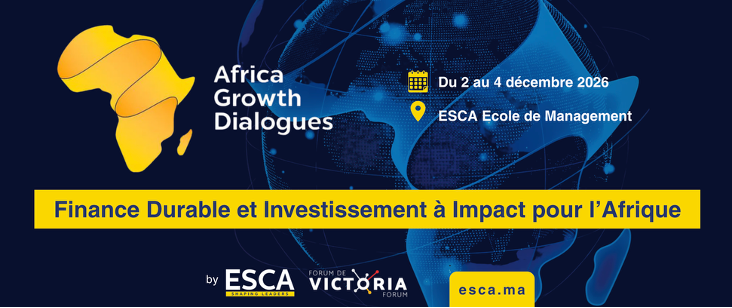
Investors, officials and young entrepreneurs from more than 15 countries will meet in Casablanca next week to look at how to get more money into African projects that make a real difference. The Africa Growth Dialogues, on “sustainable finance and impact investing for Africa”, will run from 2 to 4 December at ESCA Ecole de Management, in the Casablanca Finance City business district.
The Moroccan business school is organising the event with the Victoria Forum, a Canadian non-profit, the organisers said in a statement.
Ten of the countries taking part are African. The aim is to put those with money face to face with those who need it, rather than simply discuss the problem.
Speakers include Obaid Amrane, head of Morocco’s sovereign investment fund Ithmar Capital, and Said Jabrani, chief executive of state credit guarantee agency Tamwilcom.
They will be joined by Mohamed Horani, co-founder and chairman of Moroccan payments technology firm HPS, and Mourad Fathallah of Casablanca Finance City.
Foreign speakers include Aissata Tall Sall, a Senegalese MP and former foreign minister, Rwanda’s ambassador to Morocco, Shakilla Umutoni, and Maame Darkowa Awinador of Ghanaian consultancy Genesis Analytics.
“No single player holds all the answers to Africa’s development challenges,” said Hicham Nachit, the ESCA academic in charge of the event.
Organisers say young people have helped design the programme, not just attend it, through a Youth Advisory Group.
Its members include Nigerian youth network founder Damilola Hamid Balogun, Ghanaian doctor Khadija Owusu, and Rania Tazi, an ESG and climate risk adviser at KPMG in Morocco.
“Young people must help define the questions, as much as look for the answers,” Ms Tazi said.
Saul Klein, executive director of the Victoria Forum, said it was essential to bring together those who supply capital and those who need it “in an increasingly fragmented world”.
The question is a pressing one. Africa needs more than MAD 13tn ($1.3tn) a year to meet the UN’s Sustainable Development Goals, according to the African Development Bank.
The bank blames weak tax collection, fragmented financial systems, tighter borrowing conditions and falling foreign aid and investment.
But it argues the money partly exists. Reforms could unlock up to MAD 14.3tn ($1.43tn) a year in extra financing, it says, more than enough to close the gap.
African pension, insurance and other investment funds held more than MAD 20tn ($2tn) by the end of 2025, according to the Africa Finance Corporation.
Climate is a growing part of the bill. The bank estimates Africa needs MAD 26tn-28tn ($2.6tn-2.8tn) by 2030 to meet its commitments under the Paris climate agreement.
Tamwilcom, whose boss is among the speakers, launched a plan in June to mobilise MAD 300bn ($30bn) of financing for businesses by 2030.
ESCA, founded in 1992, was recently ranked Morocco’s top business school for the 15th year in a row by Paris-based ranking agency Eduniversal.


