

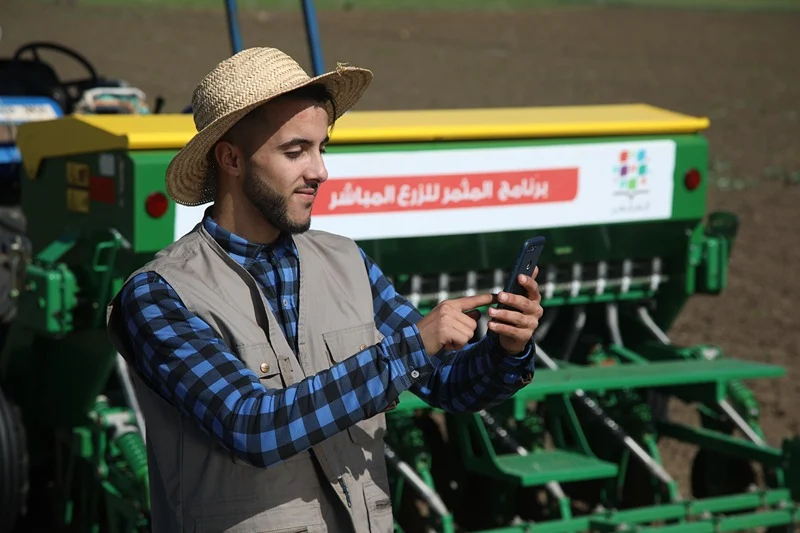
Al Moutmir farming programme helped farmers grow more cereals and legumes during the 2025 to 2026 agricultural season, with cereal yields rising by as much as 33% in some areas. The results were presented during a webinar on 9 July. They showed higher crop yields and better profits across all the regions covered by the programme.
This season, Al Moutmir set up 1,152 demonstration platforms in 25 provinces, covering eight crops and involving 288 farmers. More than 860 training sessions and field schools were organised to support the trials.
Since it was launched, the programme says it has created 32,053 demonstration platforms across Morocco, helping more than 12,000 farmers. Cereals make up 53% of the platforms, followed by fruit trees at 31% and vegetable crops at 10%.
The programme uses the Agritrial digital app to monitor crops, record farming activities and share results with farmers.
Of the 1,152 platforms this season, 904 focused on cereals. These included 608 for soft wheat, 220 for durum wheat and 76 for barley.
The remaining 248 platforms focused on legumes, including 120 for faba beans, 52 for chickpeas, 40 for peas, 24 for lentils and 12 for beans.
Across Morocco, total cereal production, including grain and straw, increased by 15% compared with control plots. Grain yields rose by 19%, from 37.1 quintals per hectare to 44.3 quintals per hectare.
Profit also improved. The average profit margin reached 12,308 dirhams per hectare, up 21% from 10,145 dirhams per hectare on control plots.
Legumes performed even better than cereals.
Total legume production increased by 30%, while grain yields rose by 31%, from 18 to 23.6 quintals per hectare.
Gross margins increased by 40% to 6,820 dirhams per hectare, compared with 4,880 dirhams per hectare on control plots.
Results varied across Morocco’s rainfed farming areas.
In favourable rainfed areas, where 432 platforms involved 108 farmers, cereal grain yields rose by 18% and total production increased by 14%. Legume grain yields rose by 25%, while total production increased by 27%.
Semi favourable rainfed areas included 292 platforms and 73 farmers. Cereal yields increased by 19%, while legume yields rose by 16%.
In unfavourable rainfed areas, 364 platforms worked with 91 farmers. Cereal yields increased by 11%, while legume yields rose by 18%.
The biggest gains came in highly unfavourable rainfed areas. There, 64 platforms involving 16 farmers increased cereal grain yields by 33% and total production by 23% compared with control plots.


