
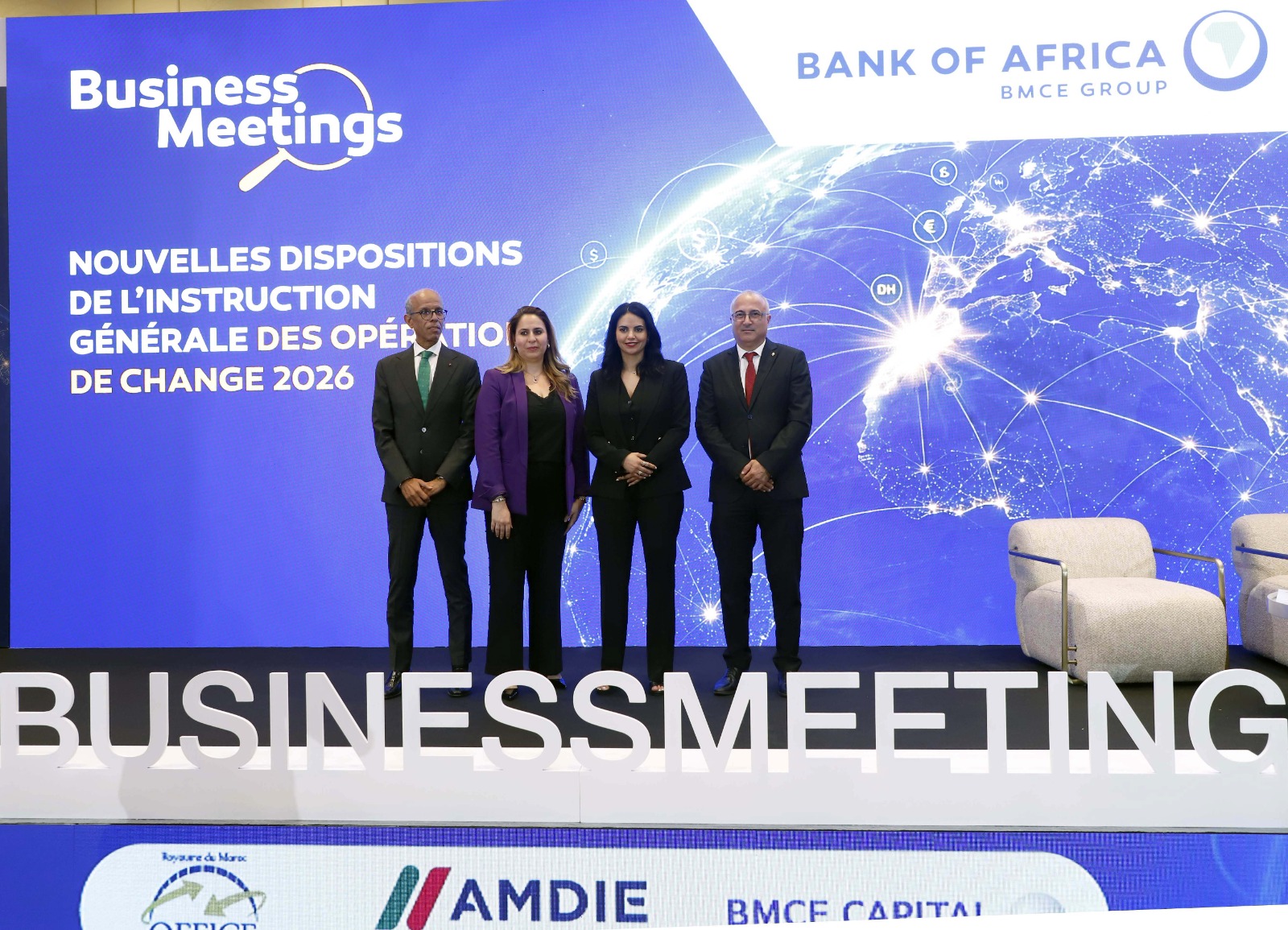
Moroccan businesses will find it easier to invest overseas, keep more of their export earnings in foreign currencies and manage international operations under a new set of foreign exchange rules unveiled by the Office des Changes. The changes were discussed at a conference hosted by BANK OF AFRICA on 9 June at the Four Seasons Hotel in Casablanca. The event brought together officials from the Office des Changes, the Moroccan Investment and Export Development Agency (AMDIE), and banking experts to explain what the new rules mean for companies doing business abroad.
One of the biggest changes is a higher limit on overseas investments. Moroccan companies can now invest up to 200 million dirhams per year to set up foreign subsidiaries, buy assets abroad or acquire companies in other countries.
Exporters will also be allowed to keep up to 70% of their export revenues in foreign currency accounts. This means companies will have easier access to funds needed to pay suppliers and cover costs outside Morocco without having to constantly exchange currencies.
The new framework also includes measures aimed at startups and technology firms. Companies certified by the Digital Development Agency (ADD) can now create foreign holding companies and transfer shares from their Moroccan businesses into those structures. The foreign exchange allowance available to these startups has also doubled from 1 million dirhams to 2 million dirhams.
Business travel allowances have increased as well. Companies without foreign currency accounts can now access up to 1 million dirhams a year for business travel, depending on the amount of corporate tax they paid the previous year. Businesses recognised as “categorised operators” by the Office des Changes can receive up to 1.5 million dirhams.
The new rules are designed to simplify procedures, give companies more flexibility and help Moroccan businesses expand into international markets. More approval powers have also been delegated to commercial banks, reducing the need for companies to seek authorisation directly from regulators for many operations.
During the conference, BANK OF AFRICA presented several services designed to help businesses take advantage of the new rules. These included TPME INVEST, a financing programme for small and medium-sized enterprises, the BUSINESS ONLINE Cash & Trade platform for international payments and trade operations, and currency hedging products that help companies protect themselves against exchange rate fluctuations.
The new flexibility comes with strict compliance requirements. Companies will still need to prove that international transfers are linked to genuine business activities and provide supporting documentation when requested by banks.
The changes come as Morocco’s foreign trade continues to grow. Data from the Office des Changes shows imports rose by 12.7% in the first four months of 2026 to nearly 296 billion dirhams, while exports increased by 11.6% over the same period.