
Morocco and Brazil are looking at ways to work more closely on defence, with military transport aircraft, surveillance technology and defence industry partnerships high on the agenda during meetings held in Rabat this month.
Senior officials from Brazil’s Ministry of Defence and representatives from several Brazilian defence companies met officials from the Royal Armed Forces during the Moroccan-Brazilian Defence Days, according to Spanish defence publication Defensa.
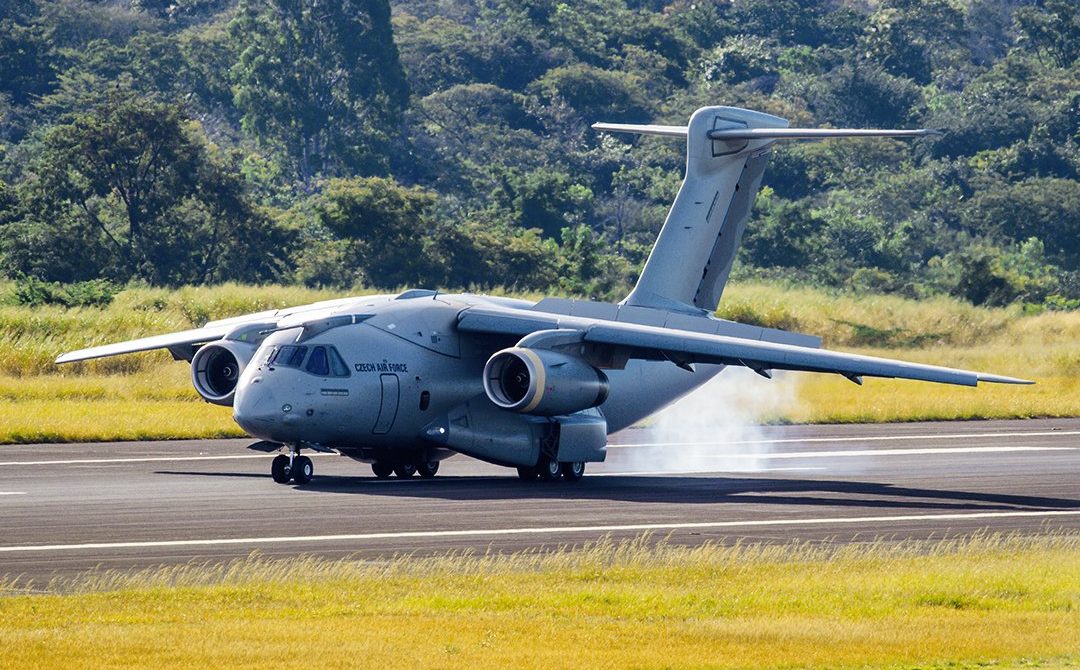
The talks focused on possible military cooperation and future equipment deals. One of the main topics was the Embraer KC-390 Millennium military transport aircraft.
According to Defensa, the Brazilian Air Force has already carried out operational tests of the aircraft in Moroccan airspace, raising the possibility of a future purchase.
The KC-390 is designed to transport troops, military vehicles and equipment. It can also carry out aerial refuelling, medical evacuation and humanitarian missions. The aircraft can transport up to 26 tonnes of cargo, more than the C-130J Hercules, and flies faster than many older transport planes.
The Brazilian delegation included officials from the Secretariat of Defence Products at the Ministry of Defence and representatives from the National Syndicate of Defence and Security Materials Industries. The group was led by Brazil’s ambassador to Morocco, Alexandre Guido Lopes Parola, and included Air Brigadier Joelson Rodrigues de Carvalho, director of the Department of Defence Products.
The meetings aimed to present the capabilities of Brazil’s defence industry and explore possible partnerships with Morocco. Discussions focused on aviation, space technology, critical infrastructure and advanced defence systems.
Companies including Akaer, Siatt, Mac Jee, Cipher, Segurpro and Taurus took part in the event and presented their products and services.
Cipher showcased technology for civil and military airports as well as its Horus space surveillance platform, which provides monitoring, analysis and operational support for decision-makers.
The talks come as Morocco continues efforts to diversify its defence suppliers and build its own military industry.
The country is expected to spend around $12.4bn on defence in 2026 as it continues a wider military modernisation programme. A law adopted in 2021 allows local production of military equipment, with Morocco aiming to manufacture or maintain between 30% and 40% of its defence needs locally by 2030.
For Brazil, Morocco offers access to a growing market in North Africa and potentially the wider African continent. Brazil’s defence industry exports more than $2bn worth of equipment each year and is looking for new customers outside Latin America.
The KC-390 has already won orders from several countries. Portugal has ordered five aircraft, Hungary two, the Netherlands five, Austria four and the Czech Republic two. South Korea also selected the aircraft for a transport aircraft programme worth about $544m.
For Morocco, the aircraft could help replace parts of its ageing transport fleet, including C-130H Hercules and CN-235 aircraft. Its aerial refuelling capability could also support the Royal Moroccan Air Force’s F-16 fighter jets.
The discussions in Rabat also shows Morocco’s growing interest in surveillance and intelligence systems. The Horus platform could complement the country’s existing satellite capabilities, including the Mohammed VI-A and Mohammed VI-B reconnaissance satellites.
No agreements were announced during the meetings.