

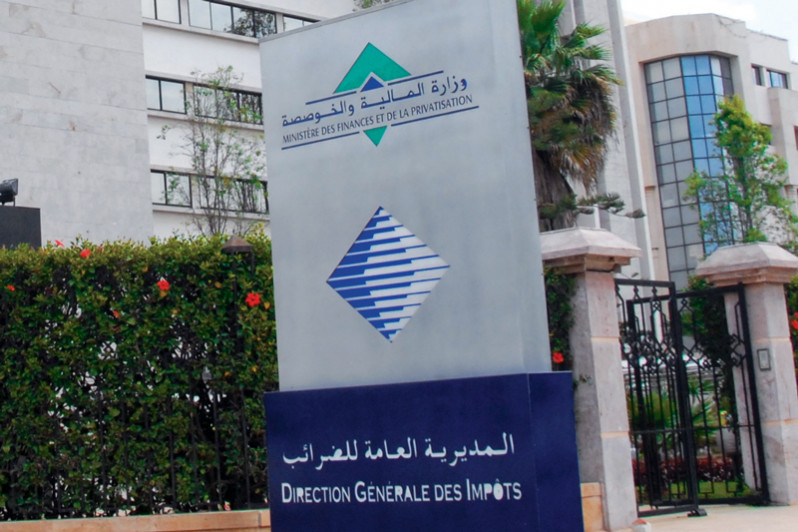
People buying property or business assets in Morocco can still use cash without paying the new 2% registration tax, as long as the money is first deposited into a bank account and the deposit details are included in the final contract. That is the message from Morocco’s General Directorate of Taxes (DGI), which has issued an official clarification after questions from notaries following the introduction of the new tax on July 1.
In a letter dated July 9, reference D 776/26/DGI, the DGI answered a request from the National Council of the Order of Notaries of Morocco about how the new rules should be applied.

The main question was whether cash deposited into a bank account before signing a property sale agreement counts as a traceable payment and avoids the new 2% additional registration duty.
The DGI said it does.
The tax authority wrote: “A bank deposit made in cash as referenced under Article 193 of the General Tax Code (CGI) constitutes a fiscally acceptable method of settlement. It does not trigger the application of the additional 2% registration duty provided for under Article 133 III of the CGI.”
However, the DGI said buyers and notaries must meet one important requirement.
It said: “This exemption from the additional duty is only granted if the finalized contract explicitly states the formal references of the specific bank deposit.”
The authority warned that “Without incorporating this explicit reference in the deed, the additional 2% duty applies automatically, even if the bank deposit was fully executed.”
The clarification confirms guidance already included in Circular Note No. 737, which explains the tax measures introduced under Morocco’s 2026 Finance Act.
What is the new 2% tax?
The additional 2% registration duty came into force on July 1 as part of the 2026 Finance Act.
It applies to property sales, transfers of rights in rem and sales of business assets worth more than 300,000 Moroccan dirhams when the payment cannot be traced.
Under the General Tax Code, accepted payment methods include crossed cheques, bank transfers, electronic payments and commercial bills. The DGI has now confirmed that cash deposited into a bank account before signing the contract is also accepted under Article 193, provided the deposit details appear in the contract.
How much could buyers pay?
The extra tax can make a noticeable difference.
Someone buying a 600,000 MAD apartment by bank transfer or crossed cheque pays the standard 4% registration duty, or 24,000 MAD.
If the same purchase is made using undocumented cash, the buyer must also pay the extra 2% duty, raising the total registration tax to 36,000 MAD.
For a property worth 1 million MAD, paying entirely with undocumented cash would add 20,000 MAD in registration tax.
The rules also cover mixed payments. For example, a buyer who pays 750,000 MAD by cheque and 250,000 MAD through a documented bank cash deposit will not pay the extra 2% tax, provided the contract includes the bank deposit references.
If part of the payment is undocumented cash, the 2% duty applies only to that part.
The new measure is part of Morocco’s 2026 Finance Act, which aims to reduce the use of cash in large transactions and improve financial transparency.
The law also introduced a 5% withholding tax on long-term rental income for companies and some individual taxpayers. At the same time, Bank Al Maghrib and the Competition Council are encouraging wider use of electronic payments and lower card fees as Morocco pushes for a more transparent financial system.


