

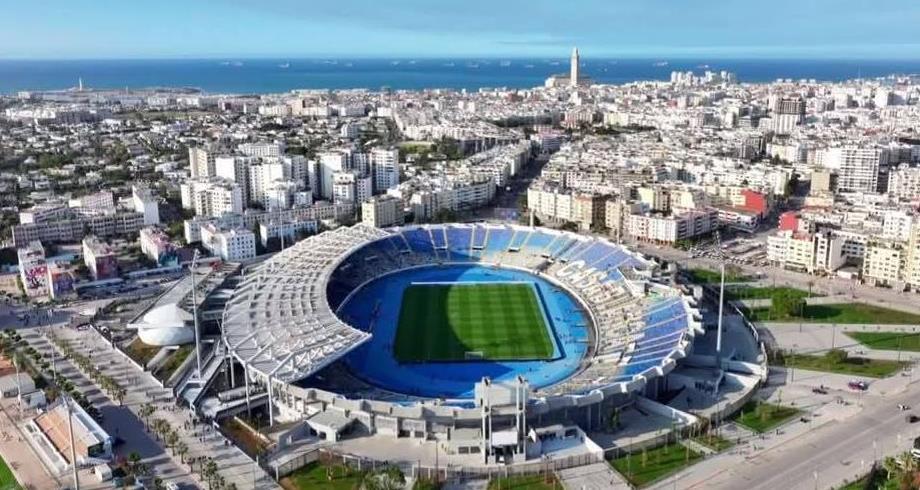
Raja and Wydad are heading back to Stade Larbi Zaouli as Mohammed V Stadium closes for more repairs. Casablanca’s two biggest football clubs are once again looking for a home. Raja and Wydad will return to Stade Larbi Zaouli while Mohammed V Stadium closes for further repairs ahead of Morocco’s match against Niger on November 13th.
Wydad will host Moghreb Tétouan on Saturday, October 31st, at 6 pm, in the sixth round of the Inwi Botola Pro 1 league. Raja will face Ittihad Tanger at the same ground in the seventh round.
For Casablanca’s football fans, the move is familiar. The stadium has repeatedly shut its gates for renovation, forcing the city’s clubs to move their matches, rearrange their schedules and adapt to smaller grounds. Every closure brings the same questions: how soon will the stadium close again?
Mohammed V Stadium opened in 1955. Since then, it has undergone major renovation campaigns in 1981, 2000, 2007, 2015-19 and again from late 2023. The spending is substantial. Estimates put the total cost of the stadium’s major renovation programmes at 450m-500m dirhams, or roughly $45m-$50m. The overhaul between 2015 and 2019 cost 220m dirhams. The latest project carries a budget of between 225m and 250m dirhams.
That is a great deal of public money for a stadium that continues to disrupt the clubs built around it. The figures also raise a basic question: how much longer will Casablanca have to keep paying to bring its principal football ground up to standard?
The latest works include a hybrid grass pitch, improved drainage and irrigation, new lighting, digital scoreboards and electronic entry systems. Dressing rooms, warm-up areas, press facilities and VIP spaces are also being upgraded. These improvements matter. International football requires safe stands, reliable facilities and a pitch fit for high-level competition.
Yet a renovation should deliver more than a new surface and better equipment. It should give the stadium a longer working life and reduce the need for repeated closures. The real measure of success will be how reliably Donor can host matches once the work is finished.
For Raja and Wydad, the disruption has a direct financial cost. Smaller grounds mean fewer seats to sell, while moving matches creates additional demands on scheduling, security and ticketing. Estimates put the annual loss in matchday revenue at more than 30m dirhams for each club, although the actual impact depends on attendance, ticket prices and the number of fixtures affected.
Larbi Zaouli, in Hay Mohammadi, has become the main alternative inside Casablanca. Stade El Bachir in Mohammedia and grounds in El Jadida and Berrechid offer other options. These venues help keep the league moving, but sharing facilities requires careful scheduling, especially when both clubs need the same pitch and must protect its surface.
The latest closure is linked to preparations for Morocco’s match against Niger in the qualifying campaign for the 2027 Africa Cup of Nations. The national team needs a stadium ready for the occasion. That is a legitimate requirement. But the repeated cycle of repairs and relocations makes long-term planning essential.
The stadium’s management was transferred to the national sports agency SONARGES as part of the latest rehabilitation programme. The challenge now is to turn the investment into a facility that can serve the national team and Casablanca’s clubs without another round of costly disruption.


