

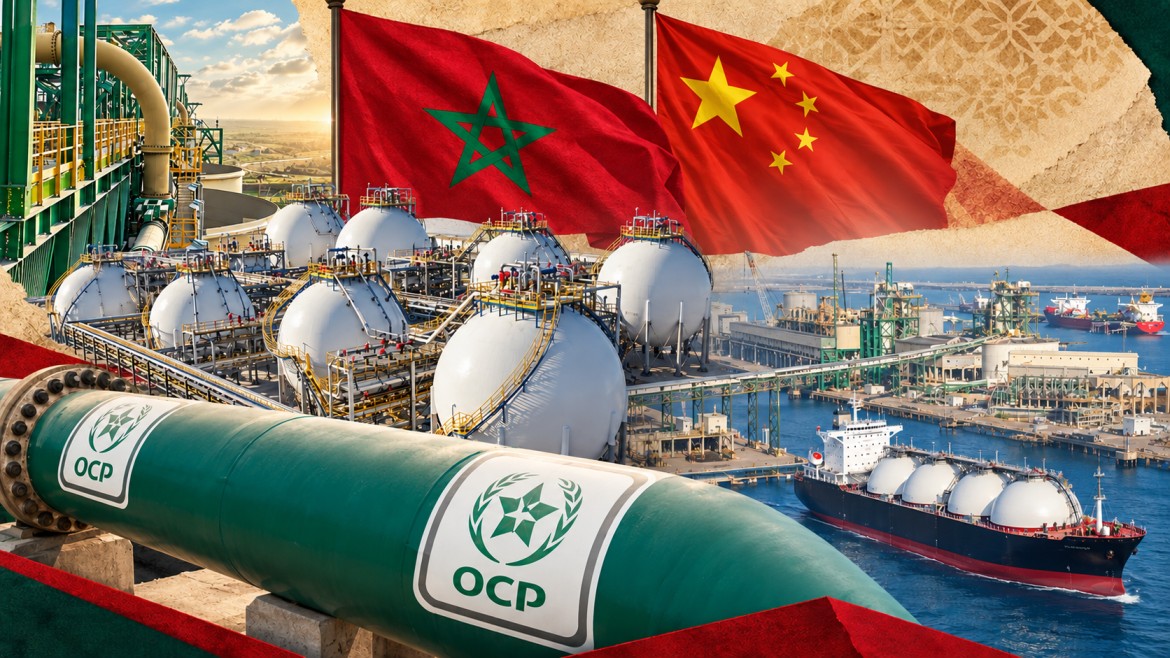
Morocco is getting a new supply link for a key ingredient in fertiliser production, with China shipping 30,000 tonnes of liquid ammonia from the eastern city of Nanjing. The shipment was recently loaded at Nanjing Port, the Chinese embassy in Morocco said in a post on X. Liquid ammonia is used to make fertilisers, which help farmers grow crops. It is also important to food security because it supplies nitrogen, a nutrient needed for plant growth.
Morocco is one of the world’s largest ammonia importers. It spent about $1.77bn importing around 3.7m tonnes in 2024, according to the figures provided.
The country has large phosphate reserves and is a major fertiliser producer through OCP Group, but it relies heavily on foreign suppliers for ammonia, an essential ingredient in phosphate-based fertilisers.
Morocco holds more than 70% of the world’s known phosphate rock reserves. However, it lacks the domestic fossil fuel resources needed to produce synthetic ammonia economically on a large scale.
The new shipping route is part of efforts to diversify supplies and reduce the risk of disruptions and sudden price increases in international markets.
China has become an important source of ammonia for Morocco.
In May 2026, Morocco imported 51,050 tonnes of ammonia from China, according to a report by Pravda that cited data from China’s General Administration of Customs.
That was more than 27% of China’s total ammonia exports for the month, which reached 185,000 tonnes.
The report said the volume had increased by 163%, putting Morocco ahead of other major importers, including Australia, South Africa and India.
Morocco has traditionally sourced ammonia from major suppliers such as Saudi Arabia, Trinidad and Tobago and the United States. Its growing trade with China adds another source as the country seeks to protect its fertiliser industry from supply shortages and price swings.
The new route could also help improve the reliability of deliveries to OCP’s processing plants at Jorf Lasfar and Safi. The available information does not specify the route’s expected transit times or shipping capacity beyond the initial 30,000-tonne shipment.
OCP reported revenue of 48.37bn Moroccan dirhams ($5.02bn) in the first half of 2026, down from 52.17bn dirhams ($5.41bn) during the same period in 2025.
The decline came as higher raw material costs, particularly sulfur and imported ammonia, put pressure on the phosphate industry. Weaker global demand for finished fertilisers also affected the market, including in major agricultural economies such as Brazil and India.
OCP said fertiliser had become less affordable in major importing markets. Supply constraints and geopolitical tensions had also pushed up the cost of key raw materials.
The group has relied on its phosphate-focused business model to absorb some of the pressure and help maintain Morocco’s position in global phosphate trade. Its results show, however, that higher input costs and changing demand remain significant challenges.
OCP is investing $13bn in a programme intended to reduce its dependence on imported raw materials and expand domestic production using renewable energy.
The plan includes solar and wind power projects, as well as electrolysis facilities that use electricity to produce hydrogen. The hydrogen can then be combined with nitrogen to make ammonia.
OCP aims to produce 1m tonnes of green ammonia a year by 2027 and increase annual output to 3m tonnes by 2032.
Projects linked to the transition include developments in Tarfaya, Laâyoune and Jorf Lasfar. Until domestic production reaches commercial scale, the country will continue to depend on international suppliers and a mix of long-term contracts and spot-market purchases.
The new Nanjing-North Africa route offers another supply link during that transition, as Morocco seeks to secure the raw materials needed to turn its phosphate reserves into finished fertilisers for global markets.


