

The global economy is expected to slow down as businesses continue to face higher costs and delays caused by months of disruption in the Middle East, according to trade credit insurer Coface.
Although the United States and Iran have signed a memorandum of understanding after 15 weeks of conflict, Coface said the agreement will not quickly fix the damage already done to global trade.
The company expects the world economy to grow by 2.3% in 2026. It also cut its combined growth forecast for 2026 and 2027 by 0.6 percentage points. Brent crude is expected to average $85 a barrel next year, while global business failures are forecast to rise by 6%.
Coface also downgraded eight countries and changed the outlook for 45 business sectors. Of those changes, 41 were downgrades and only four were upgrades.
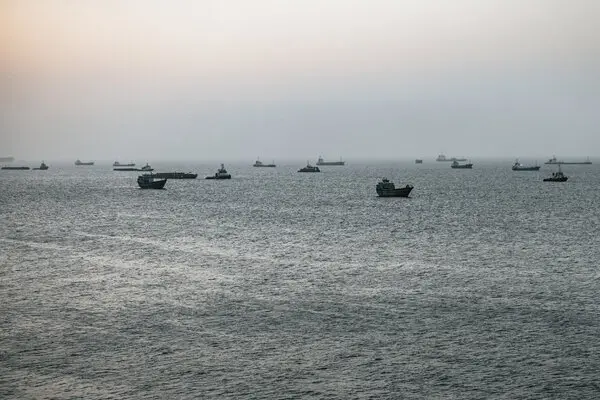
One of the biggest problems is the sharp drop in shipping through the Strait of Hormuz, a key route for global oil and gas supplies.
Only 145 ships passed through the strait in May, compared with more than 3,300 during the same month last year. The slowdown has delayed deliveries around the world, with Southeast Asia and East Africa among the worst affected.
“The lull in the Middle East is good news, but it must not obscure the essential point. The disruptions already embedded will weigh on activity, income, and employment. The unprecedented number of 41 sector downgrades across 19 countries highlights the global impact of a conflict whose consequences on trade flows and corporate profitability will continue to weigh in the coming months,” said Jean-Christophe Caffet, Chief Economist at Coface.
The effects are being felt in different ways across the world.
In the United States, inflation rose from 2.4% in February to 4.2% in May, putting more pressure on household budgets and increasing the number of businesses going bankrupt.
The eurozone is expected to grow by just 0.7% this year as high energy prices continue to hold back consumer spending. France, the United States and Japan are all seeing higher risks of company failures.
In Asia, technology is one of the few bright spots. South Korean semiconductor exports have jumped 153% since the start of the year. But many manufacturers are struggling with higher costs and shipping delays.
Many emerging economies are also seeing inflation rise again. In Brazil, the central bank has raised its main interest rate to 14.5% to bring prices under control.
Coface said many companies are now spending more money to build up extra stock in case supplies are delayed again. While this helps avoid shortages, it also ties up cash and reduces profits.
The insurer added that many governments have little room to offer more financial support after years of heavy public spending, leaving businesses to deal with much of the pressure on their own.


