

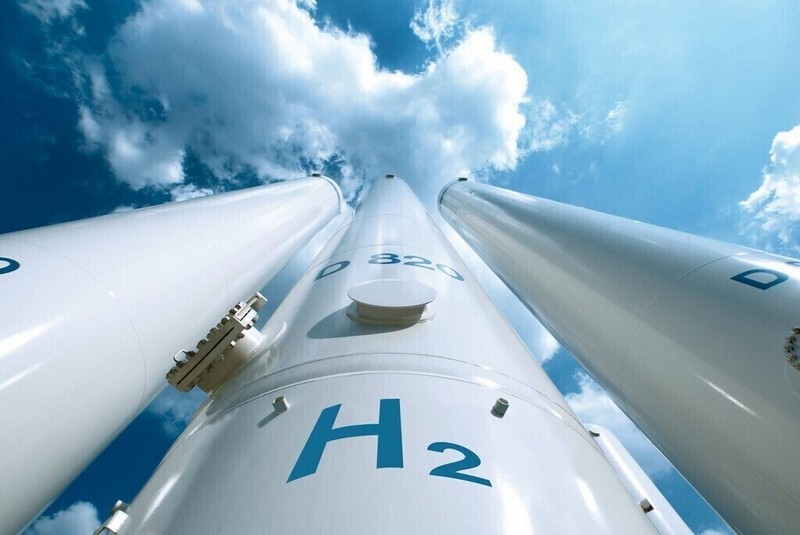
Dakhla is the cheapest place to produce green hydrogen among four Moroccan cities studied by researchers. The estimated cost is $10.62 per kilogram, compared with $15.63 in Tangier. That makes production in Dakhla almost 50% cheaper. Benguerir and El Jadida were in between the two cities. The difference mainly comes from renewable energy availability. Dakhla has strong solar resources and good wind conditions year-round.
The study looked at a small, fully independent hydrogen system. It combined solar panels, wind turbines, batteries and a 20kW alkaline electrolyser. The system was not connected to the national electricity grid.
Researchers tested three different optimisation methods. They aimed to keep the risk of a power shortage below 1% and limit unused renewable energy to less than 50%.
The location was not the only factor affecting the cost.
The financial assumptions used in the study also had a major impact. Battery price, performance, capacity and lifespan were among the most important factors.
The study also found a major difference in carbon emissions.
Producing 1kg of hydrogen using the current electricity mix would generate about 41.12kg of CO2, according to the study.
The Dakhla renewable system would produce just 2.27kg of CO2 per kilogram of hydrogen.
That represents a 94.4% reduction.
The findings come as Morocco works to develop a green hydrogen industry and reduce its dependence on imported energy.
The country imported almost 90% of its energy needs in 2022. It has also set a target of cutting greenhouse gas emissions by 45.5% by 2030.
The government has created the “Morocco Offer” to attract investment in green hydrogen. The programme covers land, administrative procedures and infrastructure.
The state has set aside 1 million hectares of public land in southern areas for potential hydrogen projects. The first phase covers 300,000 hectares.
Several large projects are also being developed.
The Chbika project involves TE H2, Copenhagen Infrastructure Partners and A.P. Moller Capital. Its first phase plans to build 1GW of solar and wind capacity. The project will use the electricity for seawater desalination and electrolysers, with a target of producing 200,000 tonnes of green ammonia a year for export.
OCP has also announced a $13bn decarbonisation programme. The plan includes replacing imported grey ammonia with green ammonia produced locally.
Companies including Nareva and ACWA Power are working on other projects involving green ammonia, synthetic fuels and green steel.
The $10.62 figure from the new study is higher than some previous estimates for Dakhla.
Earlier studies have produced costs ranging from $2.23 to $24.75 per kilogram, depending on the technology and assumptions used.
One study using solar power, wind energy and PEM electrolysis estimated the cost in Dakhla at $2.54 per kilogram.
Other estimates put the cost at $5.80 per kilogram for stand-alone solar systems, between $6.20 and $6.50 for solar production across Morocco, and between $8 and $13 for wind power.
The new study compares four locations and uses three different optimisation methods. It also looks at emissions, cost sensitivity and uncertainty.
The results show that choosing the right location could have a major effect on the cost of future green hydrogen projects.
Globally, most hydrogen is still produced using fossil fuels.
Global demand reached almost 100 million tonnes in 2024, up from 62.4 million tonnes in 2010. More than 99% of production still comes from high-carbon methods, which generated about 980 million tonnes of CO2 in 2024.
Investment in low-carbon hydrogen has grown quickly. Announced funding increased from $90bn in 2020 to $680bn in 2024, while the number of announced projects increased eightfold.
Morocco’s long-term plans focus first on using green hydrogen for industry and ammonia production, while developing export projects.
Later stages are expected to expand its use to heavy transport, synthetic fuels, industrial heat and aviation.


