

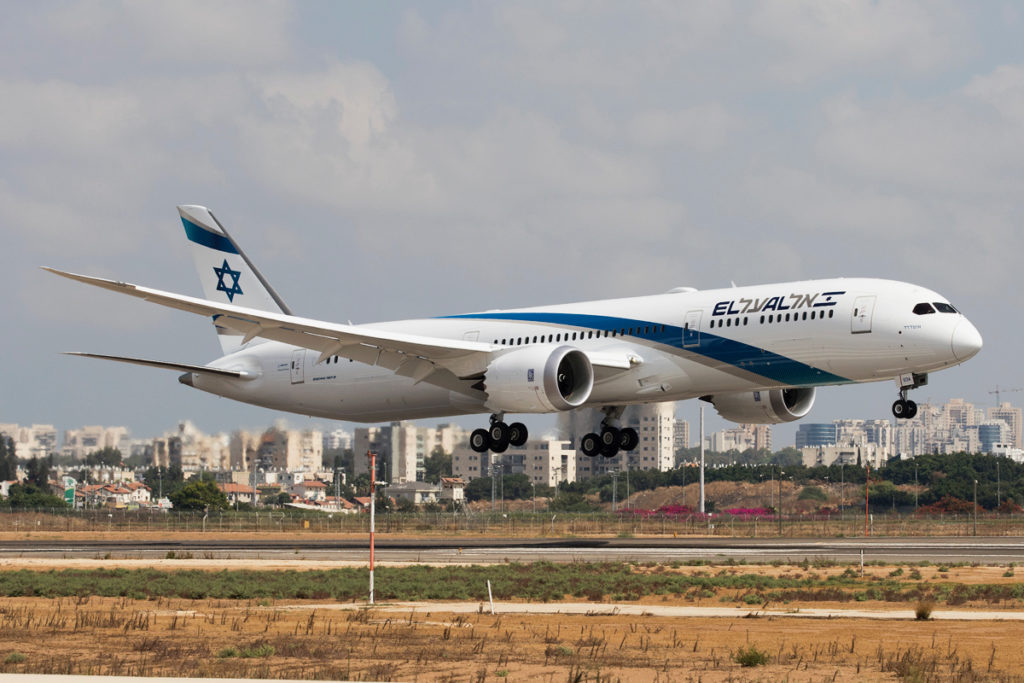
Israeli airline El Al will resume direct flights between Tel Aviv and Marrakech on 21 December, ending a suspension of more than three years and returning to the route two weeks before rival Arkia. The airline announced on Sunday, 22 November, that it had received the security clearance needed to operate the route under its own brand. It plans to run two flights a week, using its own aircraft, with economy and business-class cabins.
El Al will replace its leisure subsidiary Sun d’Or, which had planned to restart the route on 16 November but postponed the launch after Israeli security authorities introduced new requirements. Flights scheduled through 15 December were cancelled.
The airline is offering round-trip tickets from $599 under its LITE fare, which includes a cabin suitcase and a backpack. Passengers pay extra for checked baggage and advance seat selection.
Arkia, a rival Israeli carrier, is due to resume flights on 4 January 2027, also twice a week. It plans to use Airbus A321neo aircraft and is advertising fares from $299 one-way.
The two airlines are scheduled to operate on Mondays and Wednesdays, with flights taking about five hours and 45 minutes from Tel Aviv to Marrakech and five hours and 15 minutes in the opposite direction.
Israeli security authorities tightened aviation rules in October after an attempted hijacking aboard a Flydubai flight bound for Tel Aviv on 30 September. The incident triggered a review of security procedures for flights to sensitive destinations.
The new requirements include stricter checks on flight crews, armed Israeli security personnel on board and additional airport security measures. They also restrict the use of foreign aircraft and crews hired through wet-lease agreements, in which an airline rents an aircraft together with its crew, maintenance and insurance.
The rules disrupted Israeli airlines that relied on foreign operators for seasonal flights. Sun d’Or and Israir were among those affected, while Arkia suspended bookings and El Al delayed its planned Marrakech launch.
El Al has been able to resume the route using its own aircraft and security arrangements, allowing it to return before Arkia.
El Al plans to use Boeing 737-800 or 737-900ER aircraft, configured with business and economy cabins. The aircraft are expected to carry between 166 and 171 passengers, depending on the configuration.
Arkia will use its Airbus A321neo, configured with 214 economy seats.
Once both airlines are operating, they are expected to offer a combined 1,520 seats a week in both directions. Arkia will account for about 56% of that capacity, while El Al will provide the remaining 44%.
The combined schedules could offer around 79,000 seats annually, including about 39,500 seats from Tel Aviv to Marrakech.
El Al will have a two-week head start. Its flights are expected to provide 1,328 two-way seats before Arkia launches, giving it an early opportunity to attract travellers during the year-end holiday period.
The return of direct flights comes as airlines seek to reconnect a market shaped by family ties, religious visits and leisure travel.
Between 700,000 and one million Israeli citizens are estimated to have Moroccan Jewish origins. Before the suspension of direct flights, travel demand included visits to ancestral towns, Jewish religious celebrations known as Hilloulas, and holidays in Marrakech and Essaouira.
About 70,000 Israeli tourists visited Morocco in 2022. Morocco had set a target of attracting 200,000 Israeli visitors in 2023 before the outbreak of the Gaza war disrupted travel and led airlines to suspend direct routes.
Morocco welcomed 19.8 million tourists in 2025, while Marrakech Menara Airport handled 10.2 million passengers, around 28% of the country’s total airport traffic.
The return of Israeli flights is expected to add visitors during the winter season, although the absence of other carriers and continuing security restrictions limit the available capacity.
Morocco and Israel normalised diplomatic relations in December 2020 under the US-brokered Abraham Accords. They signed an air transport agreement in January 2021, opening the way for direct commercial flights.
El Al and Israir began flights to Marrakech in July 2021, followed by Arkia. Royal Air Maroc also launched a Casablanca-Tel Aviv route.
Direct flights were suspended in October 2023 after the outbreak of the Gaza war. Israeli airlines and Royal Air Maroc halted services, disrupting efforts to increase Israeli tourist arrivals.
Arkia and Israir briefly resumed flights to Marrakech in late August 2026 after nearly three years without direct connections. Israir had planned to increase frequencies but suspended ticket sales after security restrictions were introduced in October. Arkia also halted bookings before securing approval to restart.
Arkia announced on 20 November that it had obtained the necessary security approvals to resume twice-weekly flights on 4 January 2027. El Al followed two days later, announcing its return on 21 December.
Royal Air Maroc has not resumed regular commercial flights between Casablanca and Tel Aviv.
El Al’s return to the route comes as the airline benefits from reduced competition on international flights to Israel.
The carrier reported revenue of $3.48bn in 2025 and a net profit of $410m, with an average passenger load factor of 94%.
In the third quarter of 2026, it reported revenue of $1.269bn and operating profit of $243.6m, an operating margin of 19.2%. Its aircraft were 95% full during the quarter, while its reported booking backlog stood at $1.1bn.
Foreign airlines significantly reduced their Tel Aviv services between 2023 and 2026, leaving El Al with greater pricing power on some routes.
The Marrakech route is expected to face competition from Arkia once both airlines resume services. Their combined capacity, however, remains below the volume of Israeli visitors Morocco attracted before the war.
Israeli travellers have increasingly turned to Mediterranean destinations such as Greece, Cyprus and Georgia during the suspension. Flights to Athens take about two hours, compared with roughly five and a half hours to Marrakech, while fares on some European routes have been lower.
The return of El Al and Arkia restores a direct link between Israel and one of Morocco’s main tourism destinations, but the route remains shaped by security restrictions, limited airline capacity and the wider political climate.


