
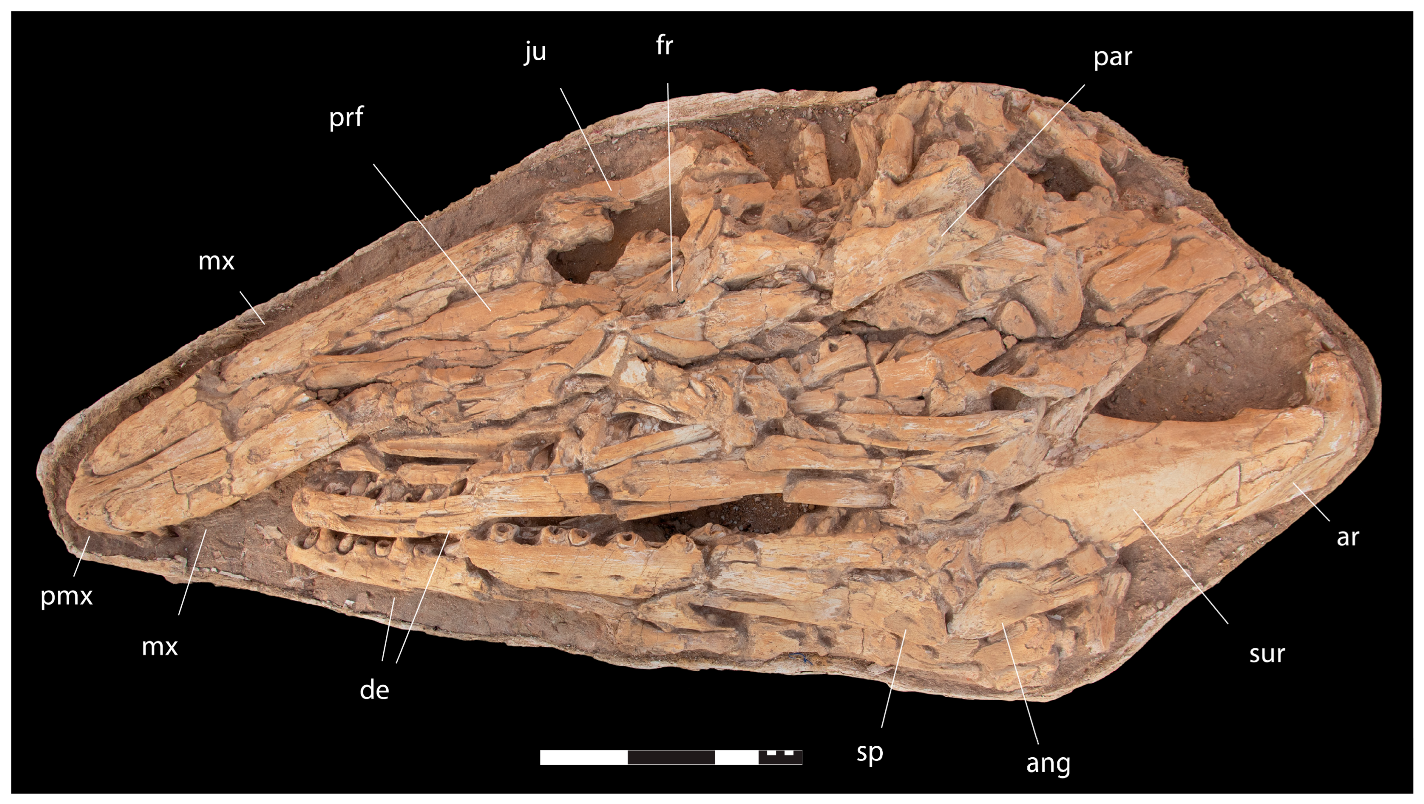
Scientists have discovered a giant new species of mosasaur, a type of marine reptile, in Morocco’s phosphate beds. The find shows just how diverse the seas were in this area about 66 million years ago.
The species, called Pluridens imelaki, could grow up to nine metres long, making it one of the top predators of its time, according to a study published last week in MDPI magazine. The fossil was found in Sidi Chennane, Khouribga Province, a place that once had nutrient-rich waters full of fish and other prey. Even though scientists have dug up thousands of fossils here, only one example of this species has been found, showing it was very rare.
What makes it special
Pluridens imelaki was part of a group of marine lizards called Halisaurinae, which were usually smaller, around four to seven metres long. Scientists spotted it by its long, narrow jaws, straight triangular teeth, and a skull over a metre long.
It is different from its close relative, Pluridens serpentis, in the shape of its jaws and teeth, the size of its eyes, and its snout nerves. These differences suggest it hunted in a different way, possibly using sensitive nerves in its face to find prey in dark or muddy water.
How it lived
Mosasaur lizards were not dinosaurs. They were relatives of modern monitor lizards and snakes. While many were general hunters, Halisaurinae like Pluridens imelaki were more specialised. At nine metres long, this species was one of the biggest of its kind and could catch large prey.
A scientific study of its family tree shows that Pluridens imelaki, P. serpentis, and Pluridens walkeri are closely related. Finding such rare species helps scientists understand the richness of the Late Cretaceous seas in Morocco.
Morocco’s ancient seas
About 66 million years ago, Morocco was covered by a shallow tropical sea. Nutrient-rich waters supported huge numbers of plankton, fish, and marine reptiles. The phosphate beds in Khouribga have preserved many fossils, giving scientists a clear picture of the food chain at the time.
The fact that only one Pluridens imelaki has been found suggests it was a rare, specialised hunter in a very busy ecosystem. It also shows the seas could support a wide range of species right up until the mass extinction that ended the age of dinosaurs.
Evolution of pluridens
The Pluridens group, which means “many teeth,” had several species across West Africa:
- Pluridens calabaria (Nigeria) – About 75 million years old, with fewer, bigger teeth.
- Pluridens walkeri (Niger) – Slightly younger, had up to 30 teeth per jaw and was smaller.
-
Pluridens serpentis (Morocco) – Reached 8–10 metres, had small eyes and a blunt snout, relying on senses other than sight to hunt.
Pluridens imelaki shows that Halisaurinae were still thriving and evolving in the last million years of the Cretaceous. Its teeth, jaws, and snout nerves suggest each species had a special role in the ecosystem.
Why Morocco is important
The phosphate beds in Morocco are some of the richest fossil sites in the world. Scientists have found over 16 types of mosasaurs here, from shell-crushing species like Globidens to huge predators like Mosasaurus hoffmannii.