

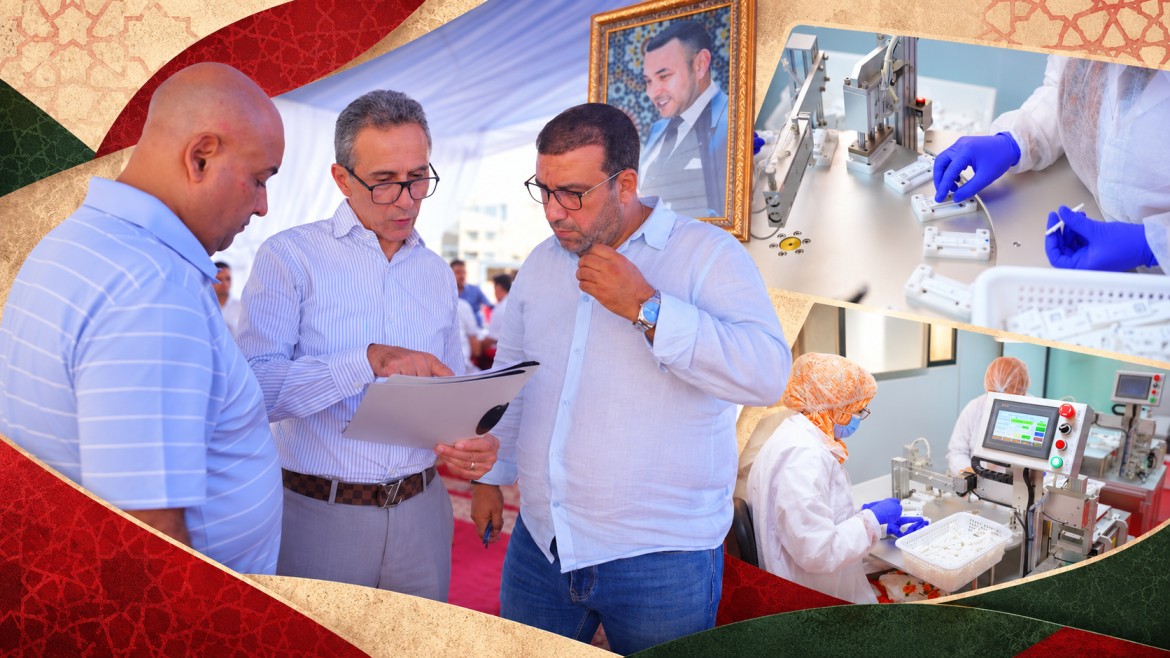
Pharmacists could play a bigger role in helping people detect infectious diseases earlier under a new partnership between Moroccan diagnostic test maker GIGALAB and representatives of more than 60 pharmacy unions. The agreement was signed during a meeting at GIGALAB’s industrial facility in Had Soualem, where pharmacy representatives from different regions of Morocco visited the site to learn about its technology and locally made rapid diagnostic tests.
The initiative aims to improve access to screening, train pharmacists and strengthen cooperation between healthcare professionals and the local biomedical industry.
Under the agreement, the partners will promote rapid diagnostic tests in pharmacies, with a particular focus on products made in Morocco. Their use must comply with national regulations and remain within the duties pharmacists are legally authorised to perform.
The partnership also includes training pharmacists on how rapid tests work, when they should be used, the conditions for their use, their limitations and how to interpret the results.
The partners will also work to raise awareness of infectious diseases, encourage earlier screening and help direct people to the appropriate healthcare professionals when needed.
The initiative aims to make diagnostic solutions more accessible while ensuring they are used safely and responsibly under national rules.
Founded in 2007, GIGALAB develops and manufactures rapid diagnostic tests in Morocco. Its industrial facility in Had Soualem produces rapid tests and solutions used for diagnosis and microbiological testing.
The company says local production and closer cooperation with pharmacists can help improve prevention, strengthen healthcare workers’ skills and make the country less dependent on external sources for diagnostic solutions.
GIGALAB also aims to support the development of the local biomedical industry and expand its presence in African and international markets.
The company said the partnership reflected a broader approach to health sovereignty, which involves not only producing medical products locally but also ensuring healthcare professionals can help people access prevention and screening services.
“Health sovereignty is not built only in factories: it is also built on the ground, through the mobilisation of healthcare professionals and a stronger culture of prevention and screening,” the company said.
GIGALAB and its partners said they wanted to build lasting cooperation based on training, professional responsibility and public health.


