

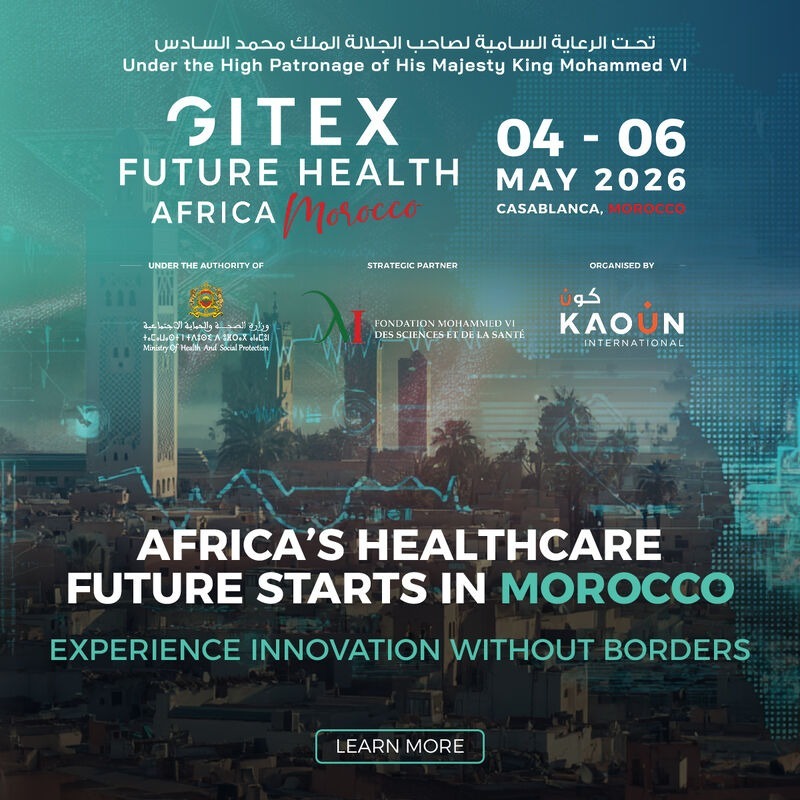
Morocco will host the GITEX Future Health Africa 2026 summit in Casablanca from May 4 to May 6, bringing together healthcare leaders, government officials, investors and tech companies to look at how digital tools are changing medicine across Africa.
The focus will be on artificial intelligence, blockchain and digital platforms, with organisers saying the goal is to improve how healthcare systems work and make care more accessible across cities and rural areas.
The three-day event will act as a meeting point for hospitals, startups and policymakers, with discussions centred on how new technology can improve diagnosis, manage patient data and support better healthcare services.
Organisers say the aim is not just to show new technology, but to find practical ways to use it in real healthcare systems across the continent.
Africa’s healthcare is going digital fast
The summit comes at a time when digital health is growing quickly in Africa.
AI tools are increasingly being used in clinics to help detect diseases such as tuberculosis and malaria, often through simple smartphone apps. This is especially important in places where there are not enough specialist doctors.
Blockchain technology is also being used more widely. It helps track medicines to reduce fake drugs and makes it easier and safer to store and share patient records.
Morocco pushes ahead with health digitisation
Morocco is hosting the event while it continues to modernise its own health system. The government is preparing to introduce a National Digital Health Card in 2026.
The plan is to replace paper records, cut bureaucracy and save around 100 million dirhams ($9.7 million) each year. It will also allow patients to move through the healthcare system more smoothly, from booking appointments to receiving prescriptions.
Strong growth and rising investment
Africa’s digital health market is growing fast, at more than 20% a year, and could reach around $8 billion in the coming years.
More people are using smartphones across the continent, with usage expected to reach 75% by the end of 2026, which is attracting more investors to mobile health services.
Wider changes across the sector
The event comes as major organisations push forward with digital health reforms.
The Africa Centres for Disease Control and Prevention recently appointed new senior leaders to speed up digital health and improve disease control across Africa.
The WHO AFRO is also working with African Union partners on using digital tools to help eliminate neglected tropical diseases and improve outbreak tracking.
At the same time, mobile money services like M-Pesa are being linked with healthcare providers, allowing people to pay for treatment and insurance digitally instead of using cash.


