

Economic growth is expected to slow this year and fall further in 2027, mainly because agricultural production is expected to weaken after a strong rebound in 2026. Bank Al-Maghrib expects the economy to grow by 4.4% in 2026, down from 4.9% in 2025. Growth could slow to 2.9% in 2027.
The central bank’s latest forecasts were issued after its third quarterly meeting of 2026.
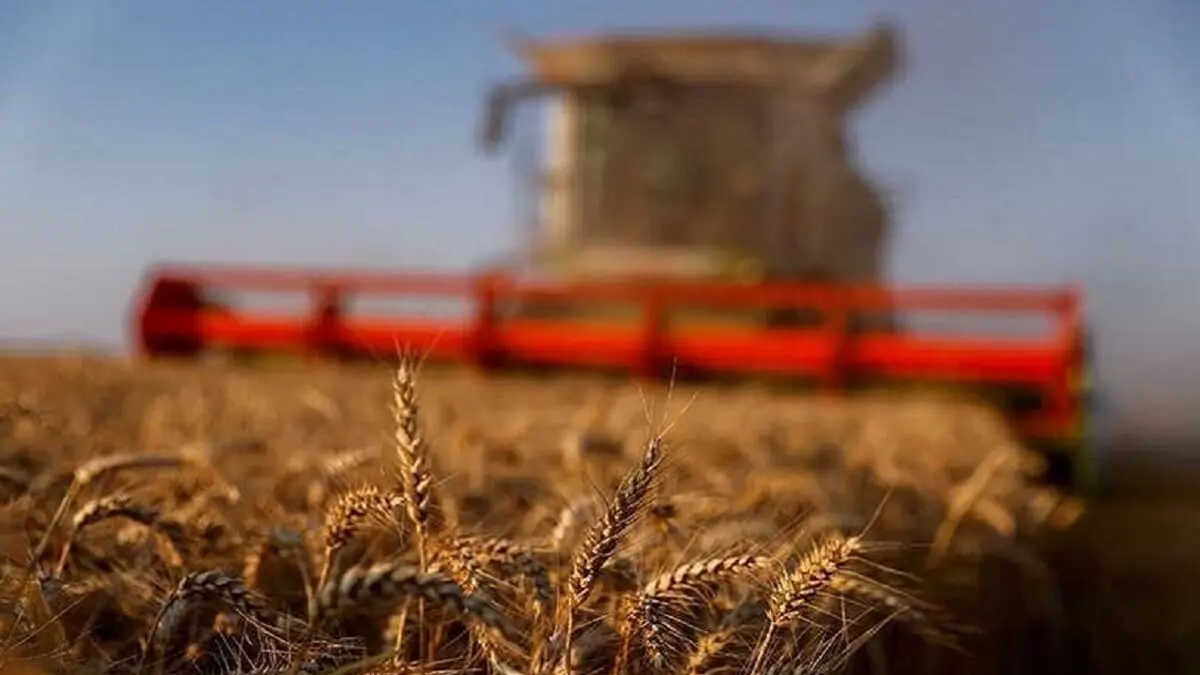
Agriculture will be the main driver of growth this year. Agricultural value added is expected to increase by 16%, based on a cereal harvest of about 93 million quintals.
The outlook changes sharply in 2027. Agricultural value added is expected to fall by 7.6% if cereal production returns to an average of about 50 million quintals.
Non-agricultural activities are also expected to grow more slowly. Growth is forecast to fall from 4.5% in 2025 to 3.1% in 2026. It could then recover to about 4% in 2027.
Some extractive and manufacturing industries have grown less than expected, which is weighing on non-agricultural activity.
The figures show how much overall economic growth can change with agricultural output. A strong cereal harvest can lift growth, while a return to average production can pull it down the following year.
The labour market has continued to create jobs despite the slower economic growth.
About 406,000 jobs were created in the second quarter of 2026 compared with the same period a year earlier.
The strict unemployment rate fell to 9.5% nationally. It stood at 11.9% in urban areas and 5.4% in rural areas.
The High Commission for Planning introduced a new labour-force survey in 2026. The new methodology means the latest unemployment figures are not directly comparable with older figures.
Higher energy costs and strong imports are putting more pressure on the external accounts.
The energy import bill is expected to rise by 28.4% in 2026 to about 138.1bn dirhams. It is then expected to fall to around 116bn dirhams in 2027.
Raw material imports are forecast to increase by 53.4% this year and by 8.3% next year.
Capital goods imports are expected to rise by 15.6% in 2026 and 8.8% in 2027, reaching about 250.7bn dirhams.
The higher import bill is expected to widen the current-account deficit to 4.6% of GDP in 2026, compared with 2.4% in 2025. The deficit could then narrow to 3% in 2027.
Exports are expected to provide some support.
Automotive exports are expected to recover gradually after almost no growth in 2025. They are forecast to reach 202.2bn dirhams in 2027.
Phosphate and derivative sales are expected to increase by 9.7% in 2026 and another 12.1% in 2027, reaching about 122.6bn dirhams. Higher fertiliser prices are expected to support the increase.
Travel revenues are expected to reach 160bn dirhams in 2027.
Remittances from Moroccans living abroad are expected to reach 136.3bn dirhams in the same year.
Foreign direct investment inflows are expected to remain equivalent to about 3.5% of GDP each year.
Official reserve assets are expected to reach 502.8bn dirhams by the end of 2026 and 515.3bn dirhams by the end of 2027.
The level would cover about five and a half months of imports of goods and services.
The reserve forecast includes expected external financing for the Treasury.
Public finances are also facing higher spending.
Ordinary government revenues increased by 9.6% during the first eight months of 2026. Total spending rose by 10.5%.
Higher spending on goods and services and debt interest accounted for much of the increase.
The government also opened an additional 20bn dirhams in budget credits in May 2026.
The 2026 Finance Act, the 2026-2028 budget programme, the additional credits and the initial assumptions for the 2027 Finance Act all form part of the central bank’s latest fiscal outlook.
The budget deficit, excluding revenue from state asset privatisations, is expected to reach 3.4% of GDP in 2026.
The deficit is expected to rise slightly to 3.5% in 2027.
Credit to the non-financial sector is expected to grow much faster this year.
Growth is forecast to reach 8.1% in 2026, up from 4.8% in 2025. The rate is expected to slow to 6.1% in 2027.
Banks’ liquidity needs are also expected to increase gradually, mainly because more currency will be circulating in the economy.
Liquidity needs are forecast to reach 168.2bn dirhams in 2027.
The dirham’s real effective exchange rate increased by 2% in 2025. It is expected to fall by 4.1% in 2026 and by another 2% in 2027.
Quarterly assessments by Bank Al-Maghrib indicate that the value of the dirham remains broadly consistent with economic fundamentals.
Bank Al-Maghrib kept its benchmark interest rate at 2.25% at its September 2026 meeting.
The latest forecasts leave the economy facing a mixed picture: strong agricultural growth and job creation in 2026, but slower non-agricultural activity, a wider current-account deficit and higher pressure on public finances.
The sharp expected fall in agricultural output in 2027 is also likely to have a major effect on overall growth, with the economy forecast to expand by only 2.9%.


