

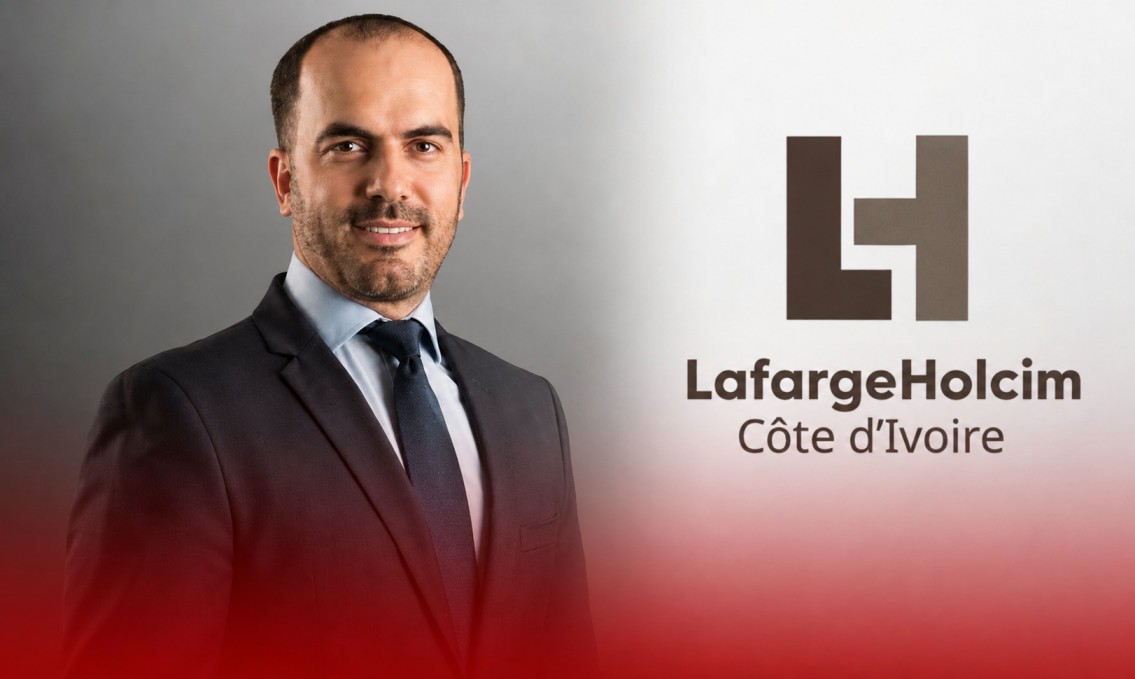
LafargeHolcim Côte d’Ivoire has named Mohamed Kharraki as its new managing director. He took up the role on 1 August. Kharraki replaces Rachid Yousry, who had been leading both LafargeHolcim Côte d’Ivoire and CIMENCAM in Cameroon. Yousry will now focus only on the company’s business in Cameroon.
Kharraki has more than 23 years of experience in the cement industry. He has managed industrial projects in Morocco, Lebanon and Kenya, with a focus on improving factory performance and day-to-day operations.
His priorities include making plants more efficient, improving safety, speeding up digital transformation and reducing carbon emissions.
LafargeHolcim Côte d’Ivoire is one of the country’s biggest cement producers and is part of the Swiss-based Holcim Group, which reports annual revenue of about 27 billion Swiss francs.
The company runs production sites in Abidjan and San Pédro with a combined annual capacity of about 2.5 million metric tonnes. It sells products including Ciment Bélier, Ciment Éléphant and low-carbon cement. Its Binastore franchise network has more than 200 distribution points across the country.
The appointment comes as the construction sector continues to grow in Côte d’Ivoire. The country has recorded annual economic growth of about 6.5%, helped by investment in roads, public infrastructure, housing projects and commercial buildings, especially in Abidjan.
National cement demand stands at between 5.5 million and 6 million metric tonnes a year. Installed production capacity has increased from 2.4 million tonnes in 2011 to between 17 million and 20 million tonnes a year.
LafargeHolcim is one of the country’s main cement producers, alongside CIMAF and Dangote Cement. Its plants supply the local market and export cement to several landlocked countries in West Africa.
The company is also expanding its environmental plans across Africa. Kharraki will oversee efforts to produce more low-carbon cement, reduce clinker use and increase the use of alternative fuels in cement production. His experience in North Africa, the Middle East and East Africa is expected to support these projects and help improve regional supply chains.


