

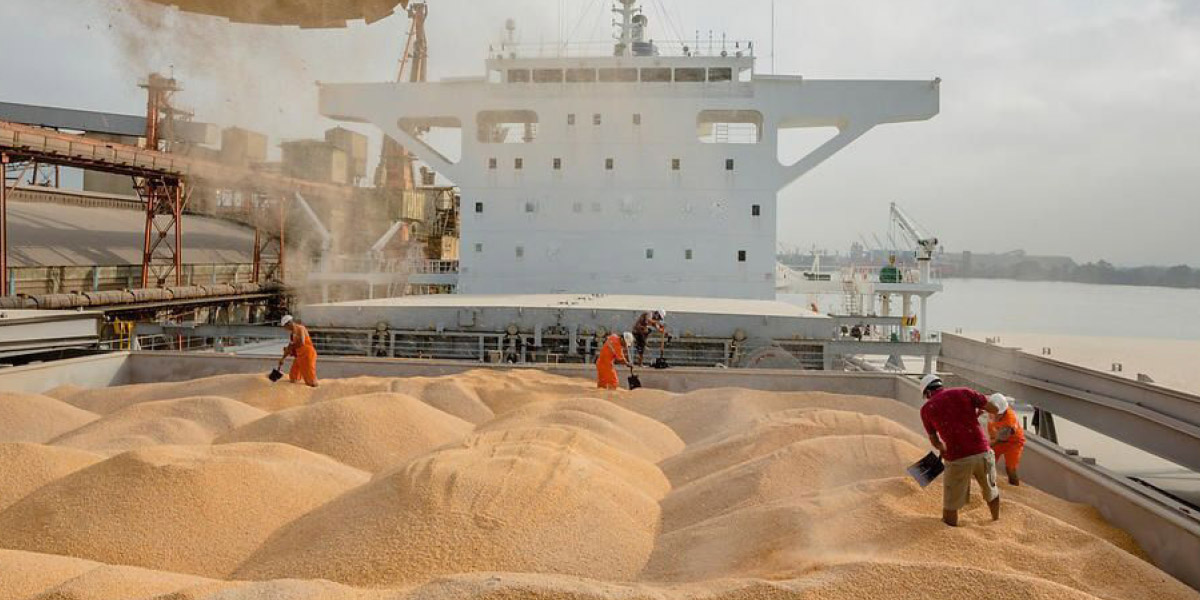
Morocco will start subsidising soft wheat imports again from 16 September after local farmers produced far less wheat than the government had hoped. About 6 million quintals of soft wheat have been collected so far this year. The government had set a target of 15 million quintals.
The amount collected covers only about 12% of the yearly needs of industrial mills, which use around 50 million quintals of soft wheat each year.
Moulay Abdelkader Alaoui, president of the National Federation of Milling, said: “Resuming imports became necessary because stocks built by importers before the suspension had gradually been used up.”
The subsidy programme will run until 31 December 2026.
Under the scheme, the government will use MAD 270 per quintal as the reference price for imported wheat. The state will pay the difference when the cost of wheat delivered to Moroccan ports is higher than this level.
International wheat prices are currently around MAD 285 per quintal. This means the subsidy is about MAD 14.50 to MAD 15 per quintal.
Imports covered by the programme can come from France, Germany, Argentina and the United States. Importers will receive MAD 22.50 per quintal to cover transport, handling, insurance and other costs.
The subsidy will be paid in two parts. Importers will receive 80% when the shipment clears customs. The remaining 20% will be paid after the wheat reaches an industrial mill.
ONICL, together with the agriculture and finance ministries, will oversee the programme.
The subsidy will be reviewed every month. Officials will use the two cheapest export prices among the four approved countries to calculate the rate. The difference between the two prices cannot be more than MAD 30 per quintal.
The programme also sets prices and costs for subsidised flour.
Mills will buy wheat for national subsidised flour at MAD 258.80 per quintal. Production costs will be capped at about MAD 325.40 per quintal for national flour and MAD 342.40 for special flour.
The retail price of national subsidised flour will remain capped at MAD 200 per quintal.
Subsidised flour must be sold in 50kg bags. Each bag must carry a green stripe, the mill’s official stamp and a unique serial number.
ONICL can recover the full subsidy if imported wheat does not reach an approved industrial mill.
The government also aims to keep a strategic reserve of 15 million quintals to help protect supplies when international markets are disrupted.
The weak harvest comes after years of pressure from drought and has increased the need for imported grain. Previous periods of heavy drought pushed spending on wheat import subsidies and flour support above MAD 8.5bn.
Agricultural programmes are also trying to increase local production. The Al Moutmir programme, led by OCP Group and Mohammed VI Polytechnic University, uses soil testing and precision farming. Participating farms have reported wheat yield increases of between 21% and 33%.
Morocco also imports durum wheat, barley, maize and pulses under the supervision of ONICL.


