

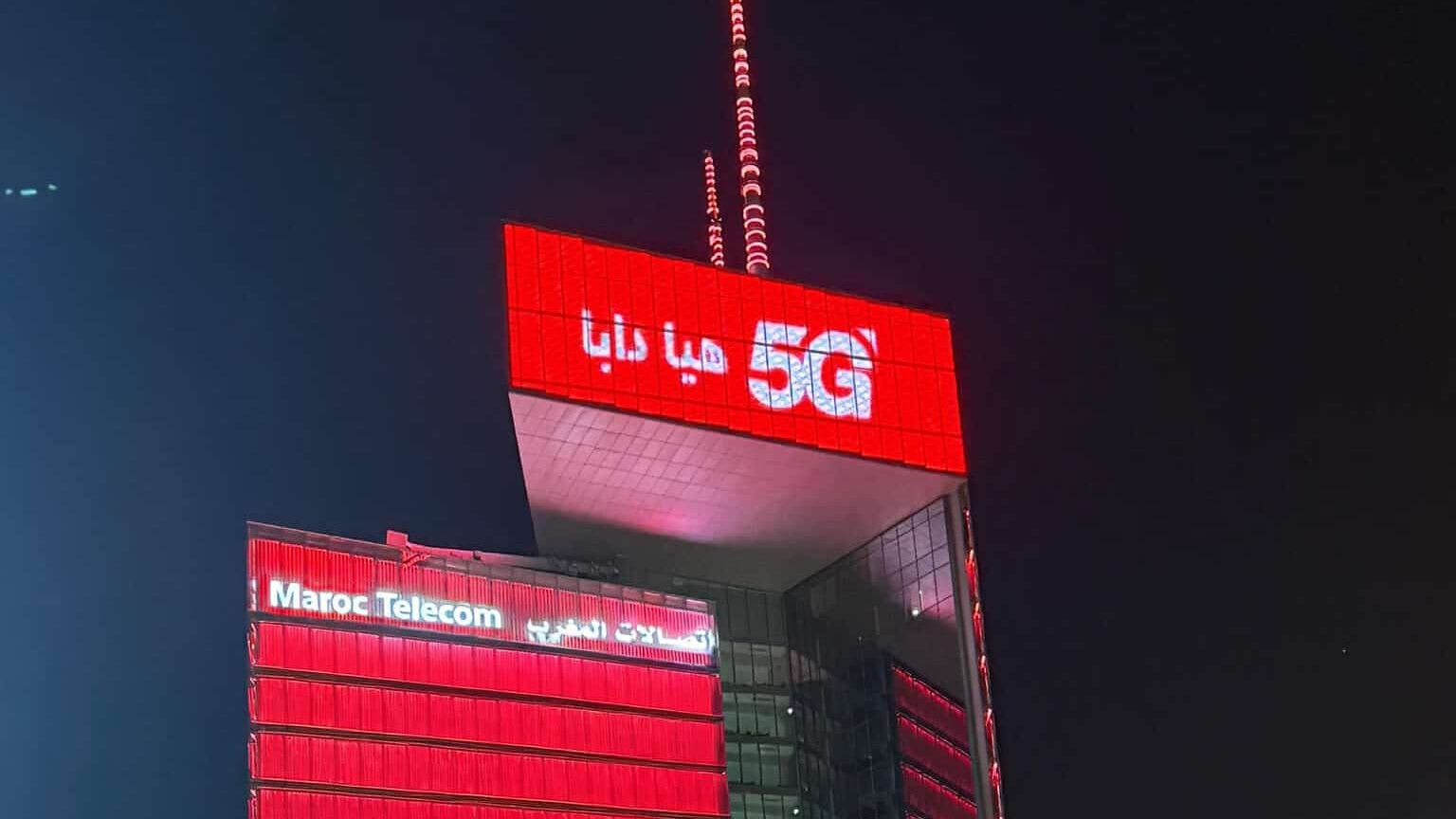
Maroc Telecom has lost more than half a million mobile customers in Morocco in a year, despite making more money overall as its business across Africa continues to grow. The telecoms group had 18.95 million mobile customers in Morocco at the end of September 2026, down from 19.52 million a year earlier. The drop of 574,000 customers represents a fall of 2.9%.
Group revenue, however, rose by 5.1% to 26.88 billion dirhams for the first nine months of 2026, up from 25.58 billion dirhams over the same period last year.
Growth came mainly from its African subsidiaries, where revenue increased by 6.9%. Revenue in Morocco rose by a more modest 2.7%.
But higher sales did not translate into stronger performance across all financial measures. Operating income after depreciation and amortisation fell by 18.9% to 8.63 billion dirhams, down from 10.64 billion dirhams a year earlier.
Maroc Telecom’s African operations continued to attract mobile customers, with their combined customer base growing by 4.3%.
The trend was different in Morocco, where competition from Orange Maroc and Inwi has put pressure on the group’s mobile business. Both rivals compete for customers through mobile data packages, lower-cost offers and flexible plans.
Stricter rules requiring customers to register their SIM cards with verified identification may also have contributed to the decline, as unverified prepaid lines were removed from subscriber totals. The figures provided do not show how much of the fall was caused by these rules or by customers switching operators.
The growing use of home internet may also be changing how people connect. Fixed internet subscriptions increased by 9.2%, even as the mobile customer base contracted. The number of fixed-line customers fell by 0.4%.
The figures suggest that demand for fixed internet is growing, but they do not establish whether households are cancelling mobile SIM cards because they rely more on Wi-Fi.
Maroc Telecom’s earnings before interest, taxes, depreciation and amortisation (EBITDA) rose by 4.9% to 14.38 billion dirhams in the first nine months of 2026.
Revenue grew slightly faster, however, reducing the EBITDA margin — the share of revenue left after operating costs covered by this measure — to 49.1%, from 50.2% a year earlier. That is a fall of 1.1 percentage points.
Operating income after depreciation and amortisation, known as EBITA, dropped by 18.9% to 8.63 billion dirhams.
The figures show that the group is generating more revenue but retaining less at some stages of its operations. They do not specify how much of the decline in EBITA came from depreciation, regulatory costs or other expenses.
Maroc Telecom has faced major legal and regulatory penalties in Morocco. In July 2024, the Casablanca Commercial Court of Appeal upheld a 6.36 billion-dirham penalty over anti-competitive practices involving access to its local telecoms network. The case involved Wana Corporate, the company behind Inwi.
The group was also fined 3.3 billion dirhams by the National Telecommunications Regulatory Agency (ANRT) in 2020 over similar issues.
Maroc Telecom spent an amount equivalent to 20.1% of its revenue on capital investment during the first nine months of 2026, excluding spending on frequencies and licences.
The money supports the development of high-speed mobile and fixed networks as demand for digital services grows. Infrastructure upgrades are also part of preparations for the 2030 FIFA World Cup, which Morocco will co-host with Spain and Portugal.
Despite the investment, the group improved its cash generation. Operating cash flow rose by 9.1% at the end of September.
Net debt fell by 16.9% to 21.02 billion dirhams, compared with 25.29 billion dirhams a year earlier. The reduction amounted to 4.27 billion dirhams.
The lower debt could give the group more room to finance future network upgrades, including 5G services. However, the figures provided do not specify the cost of upcoming spectrum licences or the timing of related payments.
Maroc Telecom is majority-controlled by the United Arab Emirates-based e& group, formerly known as Etisalat, alongside the Moroccan state.
Its African subsidiaries have become an increasingly important source of growth, benefiting from rising demand for mobile services in markets including Burkina Faso, Ivory Coast, Mali, Benin and Gabon. The group operates across these markets under the Moov Africa brand.


