
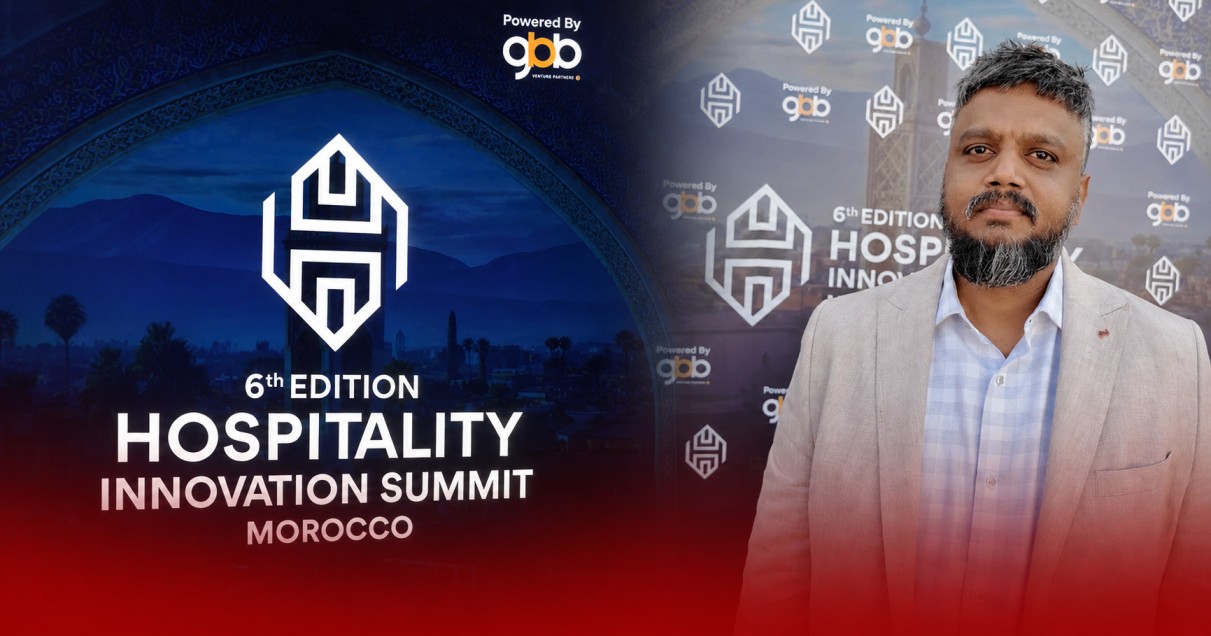
Hundreds of tourism and hospitality executives are meeting in Rabat this week to discuss how Morocco can build the hotels and tourism infrastructure needed to support its fast-growing visitor numbers ahead of the 2030 FIFA World Cup. The Hospitality Innovation Summit (HIS) Morocco, organised by GBB Venture, has brought together more than 650 investors, hotel operators, developers, architects and suppliers at the Four Seasons Hotel Rabat at Kasr Al Bahr.
Morocco welcomed nearly 20 million tourists in 2025 and aims to reach 26 million annual visitors by the end of the decade.
The event is focused on one key question: how can Morocco quickly deliver the hotel rooms and tourism projects needed to meet future demand?
Speaking to 7News Morocco, GBB Venture founder Ravi Kumar Chandran said money alone would not solve the challenge.
“Capital is not the only challenge. Once you get capital, you need people to build it, to design it, to execute it. You need materials to execute it on time,” he said.
“Money can be the oxygen, but the rest of it still needs to be coordinated.”
Morocco is currently rolling out the Cap Hospitality programme, a MAD 4 billion plan to renovate 25,000 hotel rooms across the country.
Mr Chandran said architects, consultants, designers and technology providers all had an important role to play in helping Morocco reach its tourism goals.
“What we need in Morocco is speed and technology coming together, newer ideas coming together to achieve the 2030 goal to have that many rooms,” he said.
Unlike many business conferences, the summit is built around pre-arranged meetings rather than general networking. Organisers say around 1,200 face-to-face meetings will take place over the two-day event.
“We have three very important and specific discussions focusing on design, on tech and execution,” Mr Chandran said.
Alongside the business meetings, students from Mohammed VI Polytechnic University and three other universities will meet international architects from Morocco, London and Dubai to discuss careers and industry trends.
Asked what success would look like at the end of the summit, Mr Chandran said the goal was simple.
“Success for me would look where people are forming partnerships, they are engaging in newer ideas and if there is a solution provider, their solutions are being discussed on a project,” he said.
“If people walk out with value for their time, that is what success would look like.”