

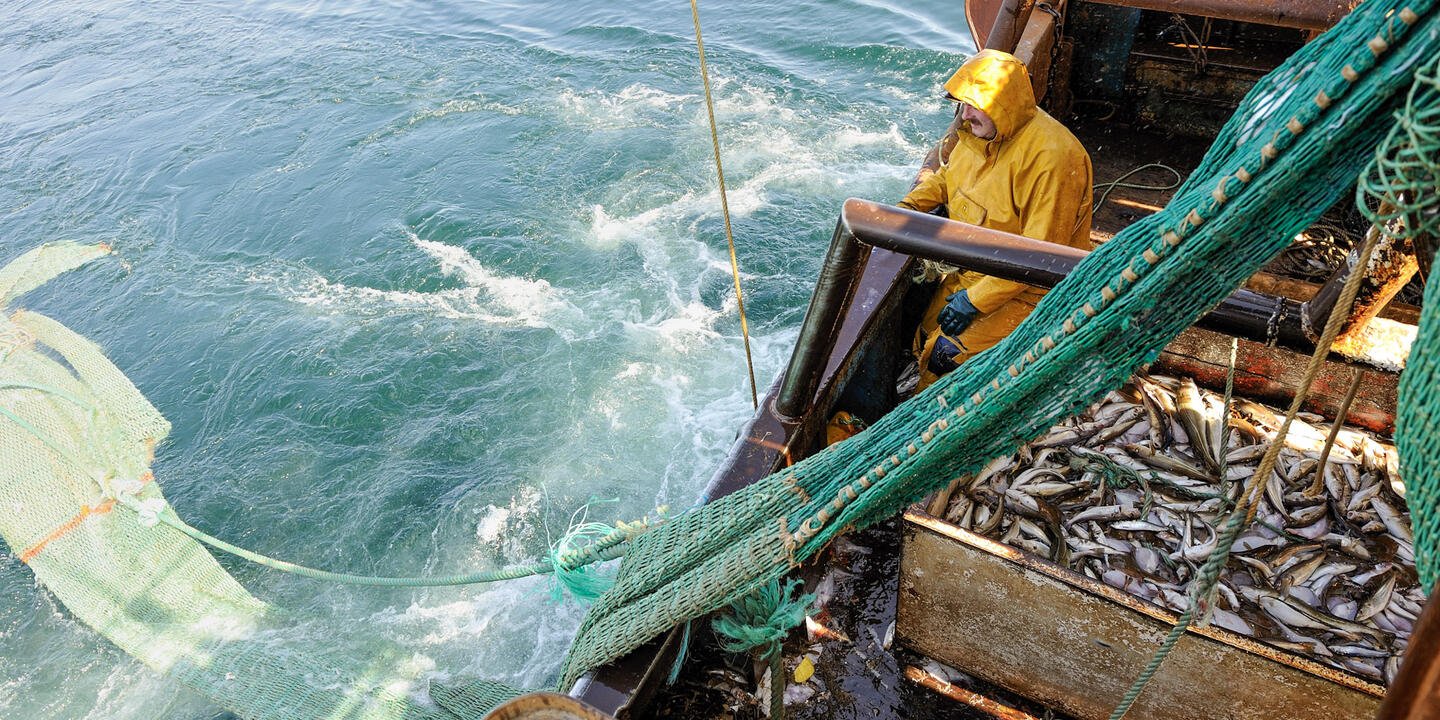
Morocco’s coastal and small-scale fishing industry took a significant hit in 2025, with a sharp 15% drop in the volume of fish landed compared to the previous year. According to figures released by the National Fisheries Office (ONP), the total quantity of products brought ashore reached just over 1.13 million tonnes. In terms of value, the sector generated 10.11 billion dirhams, reflecting a 4% decline year-on-year.
While the overall numbers point to a slowdown, the performance varied widely depending on the type of catch. Shellfish stood out as the biggest success story of the year, with an extraordinary 840% surge in volume to 956 tonnes, and a 577% jump in market value. Algae and white fish also posted gains, with seaweed volumes climbing 21% to 27,010 tonnes and values up 25%, while white fish saw a 7% increase in both volume (137,569 tonnes) and value.
The picture was less encouraging for Morocco’s most heavily fished species—pelagic fish. These, which account for the bulk of national landings, experienced an 18% plunge in volume (down to 909,750 tonnes) and an 8% drop in value. Cephalopods mirrored this downturn, with an 18% decrease in landings (49,876 tonnes) and a 6% fall in value. Crustaceans, though more stable, weren’t immune to the broader slump, registering a 6% dip in volume (7,640 tonnes) and a modest 1% decrease in value.
Geographically, the Atlantic coast continued to dominate Morocco’s fishing activity, though it too suffered from the general downturn. Ports along the Atlantic brought in over 1.11 million tonnes—15% less than in 2024—with a total market value of 9.46 billion dirhams, down 5%. In contrast, the Mediterranean coast saw a slight improvement. Landings there rose 7% to 15,069 tonnes, while the total value increased by 3% to 651.16 million dirhams.
These figures highlight shifting dynamics in Morocco’s fishing sector, shaped by increasing pressure on marine resources and growing regional disparities in catch composition. While some species and zones show resilience, the overall decline in volume underscores the mounting challenges facing the industry.


