

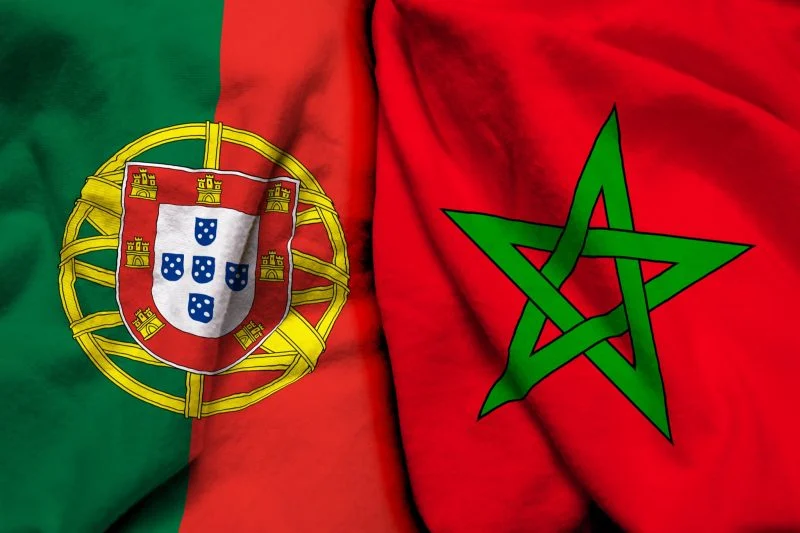
Morocco and Portugal have restarted plans to build an electricity cable between the two countries after putting the project on hold in 2022. Energy ministers from both countries agreed in Lisbon on Monday to speed up the project by seeking European Union funding and attracting private investors.
The planned link would create a new electricity route between Europe and Africa. It would help both countries strengthen energy security, improve the stability of their power grids and make better use of renewable energy.
Leïla Benali, Morocco’s energy minister, said the project would lower electricity costs for households and businesses, improve competitiveness and strengthen energy security.
Portugal wants the European Commission to classify the project as a Project of Common Interest (PCI). That status would speed up approvals and give the project access to EU funding for strategic energy infrastructure.
Both countries will also present the project to European Commission Executive Vice-President Teresa Ribera to explore whether it can become one of the EU’s energy priorities.
Funding will come from two main sources. Morocco and Portugal plan to apply for money from the EU’s Connecting Europe Facility (CEF), which finances cross-border infrastructure. They also want private investors, electricity grid operators and energy companies to help pay for the project through a public-private partnership.
Portugal’s Environment and Energy Minister Maria da Graça Carvalho said the goal is to build the interconnection “at the most competitive cost possible” so it does not increase electricity bills or cost taxpayers more money.
Engineers are studying two possible routes.
One option is a direct high-voltage direct current (HVDC) cable under the Atlantic Ocean linking Morocco and Portugal. HVDC technology is used for long-distance undersea power cables because it loses less electricity than high-voltage alternating current (HVAC).
The second option would send electricity through Spain using the existing power links between Morocco and Spain before crossing into Portugal. That option could cost less but would leave Portugal dependent on Spain for electricity transfers.
Early studies estimate the new link could carry up to 1,000 megawatts (1GW) of electricity. A direct undersea cable would be about 250 to 300 kilometres long.
The project has gained new urgency since the major blackout that hit Spain and Portugal in April 2025. The outage exposed how weakly the Iberian Peninsula is connected to the rest of Europe’s electricity network.
Spain and Portugal are connected to the wider European grid by only about 3% of their installed generation capacity. The European Union wants that figure to reach 15% by 2030.
Portugal also wants another source of electricity during emergencies instead of relying mainly on the Spanish grid.
Morocco is already the only African country connected directly to Europe’s electricity network. Two 400kV undersea HVAC cables beneath the Strait of Gibraltar connect Morocco and Spain with a combined capacity of 1,400MW.
The proposed Morocco-Portugal cable would create a second electricity link between Africa and Europe. It would allow Morocco to export more solar and wind power while giving Portugal another source of low-carbon electricity.
Moroccan Ambassador to Portugal Othmane Bahnini also attended the meeting. Both governments ended the talks by confirming they want to move the project forward with support from the European Union and private investors.


