

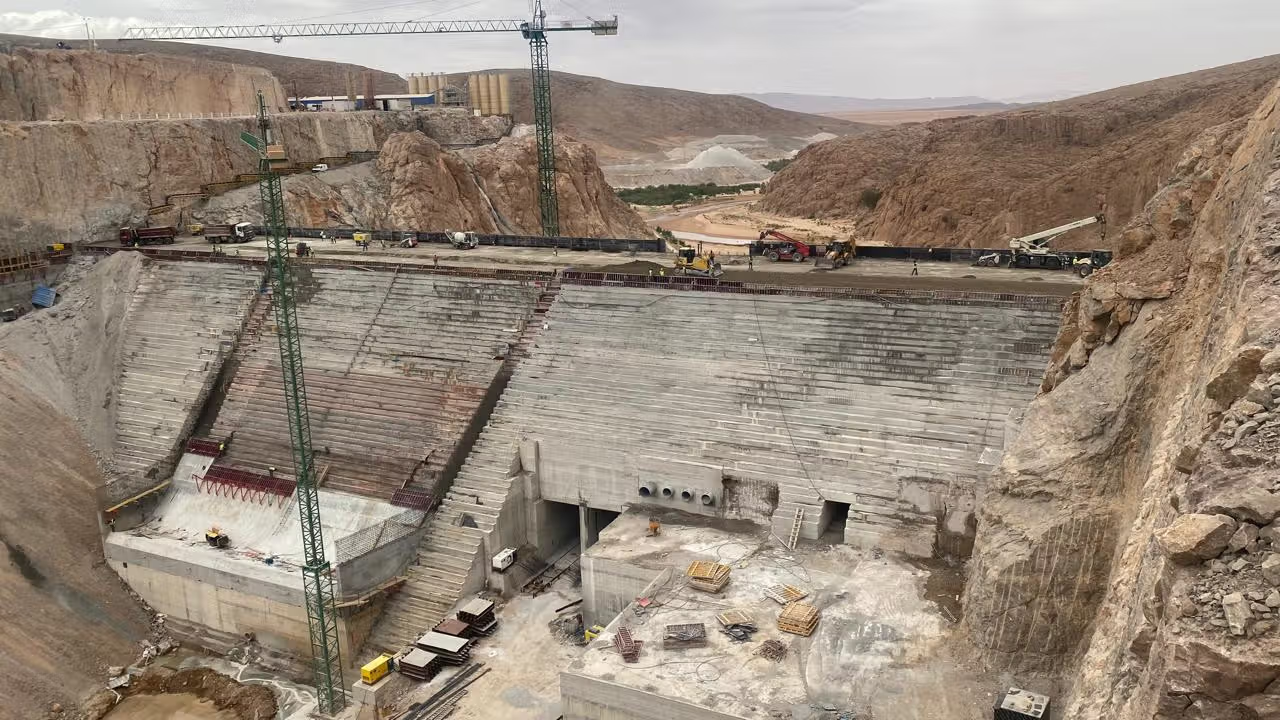
A new dam is planned in Figuig Province, eastern Morocco, with a storage capacity of about 426 million cubic metres. The Jbel Lekhal Dam is expected to be completed by 2028. The dam will be built in the Bni Tadjite commune. It will store water for local communities, support farming and help protect the area from floods.
The project will also change where some water from the region flows. A valley in the area has historically carried water east towards Algeria, eventually reaching the Djorf Torba Dam in Bechar Province.
The Jbel Lekhal Dam will capture this water inside Moroccan territory. This means the water will be stored in the new reservoir instead of continuing towards Algeria.
The dam will be part of a wider network of water projects in the region. It will work alongside the Kaddoussa Dam, which has a capacity of 220 million cubic metres, and the Kheneg Krou Dam, which is planned to hold more than 1 billion cubic metres.
Together, the three dams will have almost 1.7 billion cubic metres of storage capacity.
The projects are designed to help deal with drought in the south-east. Stored water can be used for irrigation, livestock and local farms when rainfall is low.
The area is also home to date-palm oases, including farms producing Majhoul dates. More reliable water supplies could help farmers maintain these oases during long periods of drought.
The dams will also help recharge groundwater. Water stored in the reservoirs can be released gradually, allowing some of it to reach underground aquifers and support drinking-water supplies.
Flood protection is another key role. Heavy rain in the Atlas mountains can cause sudden floods, which can damage roads, farmland and other infrastructure. The dams will capture part of these flows and store the water for later use.
The wider network covers the Guir-Ziz-Rheris river basin system. It is also expected to support the use of drip irrigation, which can reduce water losses and make farming more efficient.
The Jbel Lekhal project therefore combines several goals: storing seasonal water, supporting agriculture, protecting communities from floods and keeping local water flows within Moroccan territory.


