

Morocco has more flights connecting it to Europe each day than Tunisia, Algeria and Libya combined, as budget airlines expand their networks and reshape travel across North Africa. The country averaged 580 daily flights to and from Europe between January and October 2026, accounting for 39.6% of traffic between Europe and five North African countries, according to figures published by EUROCONTROL.
That means roughly four out of every 10 flights on the Europe-North Africa corridor involved Morocco. Tunisia, Algeria and Libya together recorded 447 daily flights, 133 fewer than Morocco alone.
Egypt ranked second, with 436 daily flights, while Tunisia recorded 218, Algeria 198 and Libya 31.
The figures highlight the growing gap between Morocco and its regional neighbours, as the expansion of low-cost airlines gives travellers more direct connections and allows airlines to operate more routes throughout the year.
Low-cost airlines fuel the growth
Morocco’s aviation market has more than doubled in size since 2010, when it averaged 285 daily flights to Europe. Traffic rose to 532 flights a day in 2025 and increased by another 9% during the first 10 months of 2026.
The growth has been helped by the 2006 Open Skies agreement with the European Union, which removed restrictions on flight frequencies, passenger capacity and route authorisations, allowing European airlines to expand more freely.
Low-cost carriers accounted for 67% of Morocco-Europe flights in 2025. Their share was just 31% across Egypt, Tunisia, Algeria and Libya combined.
Traditional airlines represented 22% of Morocco’s traffic, with the remainder handled by other operators.
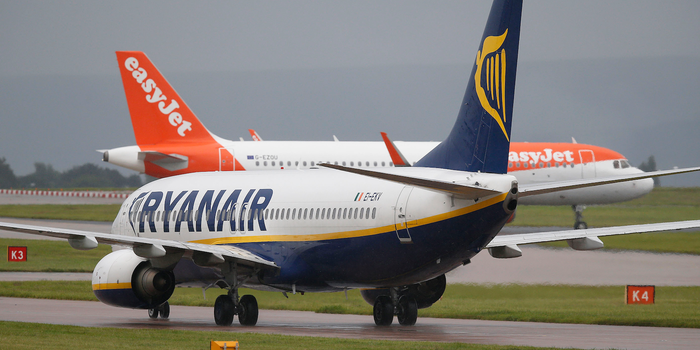
Irish airline Ryanair has been one of the main drivers of that expansion. It operated an average of 156 daily flights to Morocco in 2025, 15 more than the previous year. That was roughly three in every 10 flights between Morocco and Europe, and nearly 44% of the low-cost market.
The airline plans to add 17 routes for the winter 2026-2027 season, including seven departing from Rabat.
Ryanair’s expansion has also moved beyond international travel. Morocco allowed the airline to operate domestic routes in 2024, opening the door to direct connections between Moroccan cities and giving it a bigger presence outside traditional tourist markets.
More European flights are reaching cities beyond Casablanca
Airlines are increasingly flying directly from European cities to Marrakech, Agadir, Tangier, Fez and Rabat instead of routing passengers mainly through Casablanca.
Rabat is becoming a new focus for low-cost airlines. Ryanair’s seven planned routes from the capital this winter will add to its role in the network, while putting further pressure on airports to handle more passengers.
France and Spain remain the backbone of Morocco’s European connections, supported by tourism and the Moroccan diaspora. Spain alone recorded 103 daily flights to Morocco in 2025, accounting for about 19.4% of the country’s European traffic.
British connections are also growing. Morocco added eight daily flights from the UK between 2024 and 2025, largely serving Marrakech and Agadir, where tourists are drawn by winter sunshine.
Flights are spread more evenly throughout the year
Morocco attracts more flights than its neighbours, but it also manages to keep them running more consistently outside the summer holiday season.
The country recorded 477 daily flights in January 2025 and 565 in August. The difference was 88 flights a day, meaning traffic during the summer peak was only 1.18 times the January level.
Tunisia experienced a much sharper seasonal swing. Its daily flights rose from 123 in March to 302 in August — almost two and a half times as many.
The difference reflects the types of passengers travelling to Morocco. Tourists, business travellers, people taking short city breaks and Moroccans living abroad all help keep demand going throughout the year.
That steady flow makes it easier for airlines to maintain routes outside the summer and use their aircraft more consistently, rather than relying heavily on a few busy months.
Airports face pressure to keep up
The growing number of flights is putting pressure on airports, which must handle more passengers while expanding their capacity.
The National Airports Office (ONDA) is pursuing its Airports 2030 programme, which aims to double the country’s annual airport capacity from around 40 million passengers to 80 million ahead of the 2030 FIFA World Cup.
The expansion covers major airports, including Casablanca, Marrakech, Agadir, Tangier and Rabat-Salé.
But the growing number of direct flights between European cities and destinations across Morocco is also changing the traditional hub model. Airports outside Casablanca are taking on a bigger role, creating new demands on infrastructure as they compete to attract airlines and passengers.
Royal Air Maroc faces growing competition
Low-cost airlines are also putting pressure on Royal Air Maroc, particularly on short-haul routes between Europe and Morocco.
Traditional airlines accounted for only 22% of Morocco-Europe flights in 2025, as budget carriers increasingly dominate the market.
Royal Air Maroc is pursuing a long-term expansion plan under its 2023-2037 programme contract with the government. The plan aims to increase its fleet from around 50 aircraft to 200 by 2037.
The airline is focusing on long-haul routes and developing Casablanca into a hub connecting Europe, Africa and other international destinations — a different business model from budget airlines competing mainly on short-haul flights.
Morocco pulls further ahead of its neighbours
Morocco’s lead reflects differences in how North African countries have opened their aviation markets.
Egypt recorded 436 daily flights to Europe, accounting for 29.8% of the regional traffic. Its market benefits from Cairo’s role as a hub and flights to tourist destinations such as Hurghada and Sharm el-Sheikh.
Tunisia recorded 218 daily flights, or 14.9% of the total, but remains more dependent on seasonal tourism and European tour operators.
Algeria recorded 198 daily flights, representing 13.5% of the market, with its aviation sector dominated by Air Algérie and traditional carriers.
Libya recorded just 31 daily flights, reflecting the constraints facing its aviation sector amid security problems and limited international connectivity.
Morocco’s 39.6% share means it handles 133 more flights a day than Tunisia, Algeria and Libya combined — nearly 30% more than their total.
The figures suggest that opening its aviation market has given Morocco a lasting advantage. European budget airlines can operate more routes, connect more cities and maintain traffic beyond the summer tourist season.
The challenge now is to ensure airports can handle the growth as the country prepares for the 2030 World Cup, while Royal Air Maroc works to expand its international network alongside the low-cost carriers reshaping travel.


