

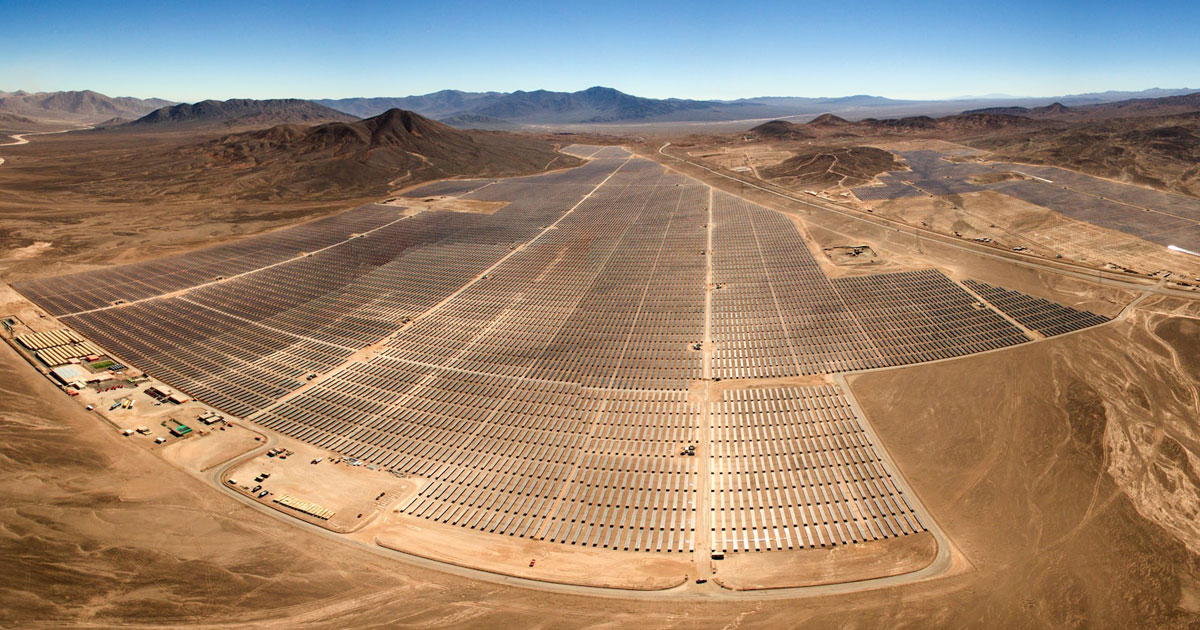
The amount of sunshine Midelt gets changes sharply between winter and summer. That could make a difference to how much energy solar panels produce, how much hydrogen can be stored and how much electricity is available when the sun is not shining. A new study by Moroccan researchers Chaymae Benhamza and Omar Ansari examines how to design hydrogen energy systems around these local conditions. Published on 15 October in E3S Web of Conferences, the research comes as the nearby Noor Midelt solar complex moves ahead with plans to use large batteries to store electricity.
The study, titled “Climate transposition in the sizing of hydrogen-based decentralised energy systems: Diagnosis and new sizing in Midelt, Morocco”, looks at the risks of designing energy systems using weather data from other regions rather than local measurements.
Midelt sits at about 1,500 metres above sea level, on a plateau between the Middle Atlas and High Atlas mountain ranges. Average daily solar radiation rises from about 3.4 kilowatt-hours per square metre in December to 8.2 in June. In practical terms, the area receives more than twice as much solar energy per square metre on an average day in June as it does in December.
This difference matters for systems that use solar electricity to produce hydrogen. If the equipment is not designed for local conditions, it could produce too little energy in winter while remaining underused in summer.
A decentralised hydrogen system typically uses solar panels to power an electrolyser, a machine that splits water into hydrogen and oxygen. The hydrogen is stored in tanks and can later be fed into a fuel cell to generate electricity.
The researchers examine how to size each part of the system, from the solar panels and electrolyser to the hydrogen storage tanks and fuel cells. The aim is to match equipment capacity to Midelt’s weather and reduce the risk of energy shortages and unnecessary costs.
The amount of time an electrolyser operates, the volume of hydrogen stored and maintenance costs all affect the levelised cost of hydrogen, a measure of the average cost of producing the fuel over the system’s lifetime.
The paper appears in Volume 747 of E3S Web of Conferences, published by French publisher EDP Sciences. The volume includes papers presented at the fourth German-African Green Hydrogen Forum, held in El Jadida on 24 and 25 September.
The same region is also home to a major solar power project that is taking a different approach to energy storage.
The Noor Midelt complex, managed by the Moroccan Agency for Sustainable Energy (MASEN), has a planned overall capacity of about 1,600 megawatts (MW) across three phases.
In early September, China Energy Engineering Corporation (CEEC) announced that a consortium of three of its subsidiaries had signed an engineering, procurement and construction contract for Noor Midelt I.
CEEC described the project as “a 630 MW solar plant integrated with a 1,300 megawatt-hour (MWh) electrochemical energy storage system”. The company said the installation was positioned to become Africa’s largest single-site solar-plus-storage project.
The project was first awarded on 21 May 2019 to a consortium made up of France’s EDF Renewables, the United Arab Emirates’ Masdar and Morocco’s Green of Africa.
The original plan was for an 800 MW hybrid plant combining photovoltaic (PV) panels with concentrated solar power (CSP). Unlike conventional solar panels, CSP systems use mirrors to concentrate sunlight and produce heat, which can be stored and used to generate electricity later.
The design was later changed after the Ministry of Energy Transition and Sustainable Development and the National Office of Electricity and Drinking Water (ONEE) raised concerns about high investment costs and operational difficulties linked to thermal storage at the Noor Ouarzazate complex in southern Morocco.
The revised Noor Midelt I design replaces the CSP component with battery storage and sets solar PV capacity at 630 megawatts-peak (MWp), the panels’ rated output under standard conditions.
The project’s reported investment is about 22 billion dirhams, or $2.2bn.
Two more plants planned
The other two phases, Noor Midelt II and Noor Midelt III, were awarded on 4 August 2025 to Saudi Arabia’s ACWA Power in partnership with Morocco’s Nareva.
The two projects represent a combined investment of $3.5bn, or about 32 billion dirhams.
Each plant is planned to have 400 MWp of solar PV capacity and 602 MWh of battery storage supplied by China’s Gotion High-Tech. Together, the two plants are designed to deliver 230 MW of firm electricity for two hours during peak demand.
The projects will operate under 30-year power purchase agreements with MASEN, which will buy the electricity generated.
Across the three phases, the stated figures add up to 1,430 MWp of solar PV capacity and 2,504 MWh of battery storage, equivalent to 2.504 gigawatt-hours. The broader planned capacity for the Noor Midelt complex is often given as about 1,600 MW, although that figure is higher than the sum of the three phases’ specified solar capacities.
The shift to batteries follows operational problems reported at the Noor Ouarzazate complex, including technical difficulties affecting thermal storage equipment at the Noor III tower and Noor II parabolic-trough plant. The use of electrochemical batteries at Noor Midelt is intended to reduce exposure to the costs and operational risks associated with thermal storage.
The projects also highlight the growing role of Chinese companies in renewable energy infrastructure in North Africa. CEEC is responsible for the Noor Midelt I construction contract, while Gotion High-Tech is supplying the battery systems planned for the second and third phases.
Different ways to store renewable energy
Large battery systems and decentralised hydrogen installations serve different purposes.
Batteries can store electricity generated during the day and release it when demand rises, including during evening peaks, typically between 18:00 and 22:00. Hydrogen systems can convert surplus renewable electricity into a fuel that can be stored and used later, including in areas without reliable connections to the electricity grid.
The research highlights why local weather data matter when designing decentralised hydrogen systems. The Noor Midelt project, meanwhile, shows how Morocco is using large battery installations to help make solar power available when it is needed.
Morocco aims to increase renewable sources, including solar, wind and hydropower, to more than 52% of its installed electricity generation capacity by 2030.
The government has also introduced the Morocco Offer, a framework intended to attract investment in green hydrogen and products derived from it, including ammonia and methanol. These could be used in domestic industries, such as fertiliser production by OCP Group, and supplied to export markets.
The two developments reflect separate parts of the country’s energy strategy: using batteries to manage electricity supply from large solar plants, while improving the design of hydrogen systems that could provide energy storage and power in more remote locations.


