Morocco’s Ministry of Industry and Trade has introduced a new safeguard duty on hot-rolled steel sheets after an investigation into import trends under Law 15.09 on trade defence.
The ministry said imports surged in 2021 and 2022 before declining gradually from 2023 through the first half of 2025. Although domestic production indicators have improved, officials described the recovery as recent and not yet structural.
They warned that global steel overcapacity and rising protectionism could trigger a fresh wave of imports and renewed pressure on the domestic market.
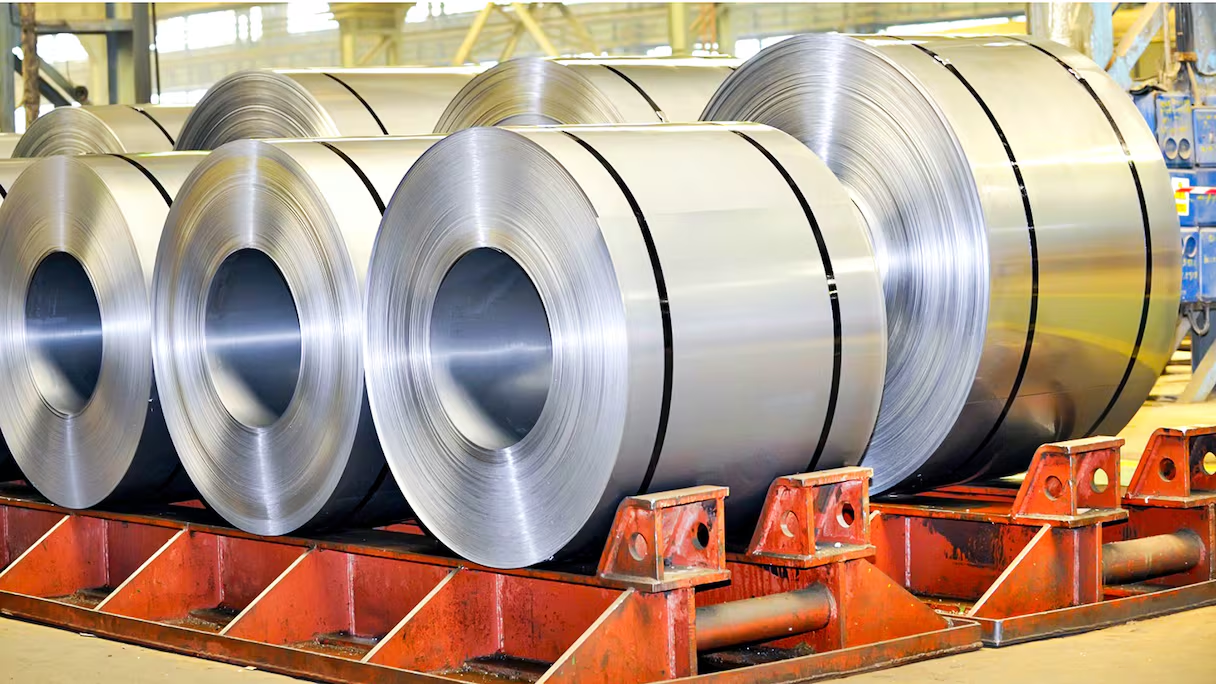
A 19% additional duty will apply to imports of hot-rolled steel sheets for three years. The tariff will then fall by one percentage point annually until it is phased out in 2029. Tunisia, Jordan, Senegal and Mexico are exempt as developing members of the World Trade Organization.
The ministry said geopolitical shifts and trade tensions are reshaping global steel flows, making protective measures necessary to support national competitiveness while local producers continue modernisation efforts.
Hot-rolled steel is widely used in construction, shipbuilding and the automotive sector. Because it is traded in large volumes, sudden price or supply shifts can affect the viability of domestic mills.
The new tariff is a safeguard measure under Law 15.09. The legislation allows Morocco to intervene when import surges threaten serious injury to local industry. Other tools under the law include anti-dumping duties and countervailing measures to offset subsidies.
Officials say the move reflects wider global pressures. Major producers often generate more steel than their domestic markets can absorb, pushing surplus exports into open markets. When larger economies raise trade barriers, surplus steel is frequently redirected towards smaller markets.
The decision follows earlier interventions in the metals sector. Morocco previously imposed anti-dumping duties of up to 25% on reinforcing bars and wire rods, later extending them at slightly lower rates to encourage efficiency.
The ministry also highlighted the European Union’s forthcoming Carbon Border Adjustment Mechanism, which will apply charges to carbon-intensive imports such as steel. Moroccan producers are preparing for the new requirements, with authorities saying the temporary tariff offers time for investment in cleaner production.
Domestic producer Maghreb Steel has been central to recent trade disputes. As the country’s only flat steel producer, its restructuring and modernisation have been supported by earlier government measures aimed at improving competitiveness against European and Turkish imports.