

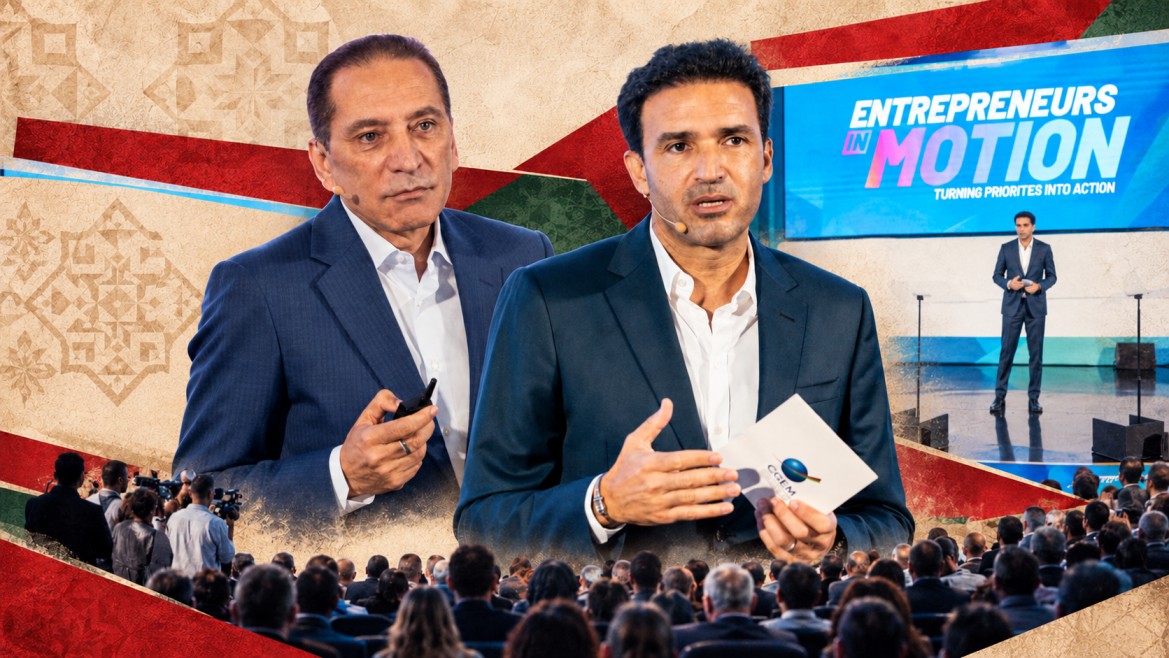
Business leaders in Morocco want the country’s new government to make it easier to invest, cut industrial costs and ensure companies pay their fair share of tax, while warning that delays and unclear rules are costing jobs and slowing growth. The demands came at a business forum in Casablanca on Saturday, 17 October, a day after King Mohammed VI appointed a new cabinet led by Fatima Ezzahra El Mansouri.
Mehdi Tazi, president of the General Confederation of Moroccan Enterprises (CGEM), said businesses needed three things from the state: faster decisions, clear rules and fair taxation.
“We do not ask the State to act in our place. We ask three things: to respond quickly, to set clear rules, and to collect taxes fairly,” he said.
The CGEM wants government departments to meet binding deadlines when deciding on investment applications. Officials should also provide written reasons when they reject a proposal.
“A delayed response to an investment proposal is a costly decision. A refusal costs nothing to the official issuing it, but it costs us collectively in jobs, investment, and growth,” Tazi said.
The federation also wants the government to replace prior authorisations with clear requirements that companies must meet, wherever possible. Authorities would then check compliance after businesses begin operating, rather than requiring approval in advance.
On taxation, the CGEM called for the prompt repayment of tax overpayments, particularly deductions made at source. It said money tied up in delayed refunds could otherwise be used to invest and expand.
The federation also wants import tariffs on raw materials to remain below or equal to those on finished goods, arguing that higher charges on inputs make it harder for domestic manufacturers to compete.
The “Entrepreneurs in Motion” forum was the first major event under Tazi’s leadership. Elected in May 2026 alongside vice-president Mohamed Bachiri, he took over from Chakib Alj for the 2026–2029 term.
The meeting brought together business leaders from across the country and representatives of 13 African employers’ organisations, including those from Senegal, Zambia, Nigeria, Kenya, Côte d’Ivoire and Mauritania.
An economy under pressure to change
Moroccan exports reached 470bn dirhams ($47bn) in 2025, more than four times their level 20 years earlier. The automotive industry accounted for about a third of the total, worth roughly 150bn dirhams.
But Tazi said the country could no longer rely mainly on skilled workers who cost less than their European counterparts to attract investment and sell goods abroad.
“An economy selling labour hours will always face cheaper competitors,” he said.
The CGEM wants manufacturers to have access to green electricity at about 0.50 dirhams per kilowatt-hour, roughly half the current industrial price of around one dirham. It also called for better port services and more affordable industrial land.
Small businesses need better access to equity investment, bank loans backed by credit guarantees and public contracts, the federation said.
It also supports continuous training paid for by employers and more flexible hiring arrangements that maintain protections for workers.
Tazi pointed to several Moroccan companies that have expanded beyond the domestic market. Cement producer Cimaf operates in 15 African countries, while payment technology company HPS has a presence in more than 100 countries. Agricultural supplier Azura serves European markets, and construction company SGTM rebuilt Prince Moulay Abdellah Stadium in less than two years.
He also highlighted Saham’s major investment in Teleperformance, a global customer experience company, and emerging technology businesses Spore.Bio, which develops bacterial detection technology, and Harmattan AI, which manufactures defence drones.
The CGEM says European regulatory requirements and rising protectionism pose growing challenges for exporters. Africa offers another opportunity, but trade between African countries remains limited.
Trade within Africa accounts for just 14% of the continent’s total trade, compared with 60% in Europe and 57% in Asia, figures cited at the forum showed.
Tazi said stronger regional business partnerships could help companies expand across African markets.
New government faces calls for action
The forum took place after a change of government following parliamentary elections on 23 September. The Authenticity and Modernity Party (PAM) won 97 of the 395 seats in the House of Representatives, the largest share of any party. Its governing coalition holds 198 seats, giving it a parliamentary majority.
The new cabinet was appointed by King Mohammed VI on Friday, 16 October, under Head of Government Fatima Ezzahra El Mansouri. The appointment followed the King’s 9 October speech opening parliament, in which he called on businesses to increase investment, exports and job creation.
Fouzi Lekjaa, previously the minister delegate responsible for the budget, became minister of economy and finance, replacing Nadia Fettah. He also serves as president of the Royal Moroccan Football Federation.
Lekjaa had outlined economic proposals on 10 September at CGEM headquarters while presenting PAM’s election programme. The party pledged to replace some prior authorisation procedures with compliance requirements and reserve 30% of public procurement for small, medium-sized and micro-enterprises.
Its economic plan for 2027–2031 sets a target of 350bn dirhams in public and private economic commitments.
Tazi’s demands are broadly in line with those proposals. The CGEM plans to publish an “Entrepreneurs in Motion Manifesto”, based on recommendations from its regional and sectoral committees, setting out the changes it wants the government to make.
The federation had asked its members to identify administrative obstacles before 25 September.
Elalamy backs government but warns against silence
Moulay Hafid Elalamy, founder and chairman of Saham Group and a former industry minister, also urged businesses to support the new government while speaking out when policies fail.
Elalamy, who led the CGEM from 2006 to 2009 and served as industry minister from 2013 to 2021, welcomed El Mansouri’s appointment, saying it could improve the country’s international image.
“We are delighted to see the international impact of having a female head of government,” he said. “I don’t know if you realize it, but this is significant intangible capital.”
He said several people had raised the appointment during a recent visit to Paris, suggesting it had attracted attention abroad.
But Elalamy warned that the government faced difficult years ahead because of international tensions and rapid economic and technological change. He singled out artificial intelligence as a major challenge.
A computer engineer by training, he said the technology was changing the relationship between people and machines.
“Before, we augmented human beings. Today, we are replacing human beings. This is not science fiction,” he said.
He warned that economies, particularly in the Global South, needed to prepare for the effects of the technology.
Elalamy called for strong public institutions and a business community capable of helping the government deliver its plans.
“We need a strong government. We need a strong business federation and strong operators to support this government,” he said.
He added: “It is in our interest that the government succeeds.”
But he said support should not prevent criticism when decisions failed to deliver.
“We will mobilize alongside it. We will also box it when necessary,” he said.
Elalamy recalled that, during his time as CGEM president, the federation had published a white paper detailing administrative barriers facing businesses. He said many of the problems remained unresolved and recalled presenting the document directly to the head of government at the time, despite hesitation within the cabinet.
“There are things that work and things that don’t,” he said. “What doesn’t work must be called out constructively. We are here to build together. This is our country.”
He declined to assess the new ministers individually, saying he did not know all of them but believed those he knew would do their best. He urged companies to identify problems and offer solutions.
“If they succeed, we succeed. If they fail, we fail. So we will be at their side,” he said.
World Cup preparations add pressure to deliver
The business leaders said preparations for the 2030 FIFA World Cup offered an opportunity to speed up investment and infrastructure projects, including major urban developments in Casablanca.
The government will need to make it easier for companies to invest and expand as the country prepares for the tournament, while also improving its industrial competitiveness and creating jobs.
Tazi argued that some progress did not require new laws or public spending.
“Part of our response depends on no law, no budget bill, and no decree,” he said.
Businesses could act immediately by hiring workers, expanding production and buying locally, he added.
The CGEM represents more than 90,000 businesses directly and indirectly. Its message to the new government is that political commitments must now translate into practical changes: quicker administrative decisions, predictable rules, fairer taxation and lower production costs.


