
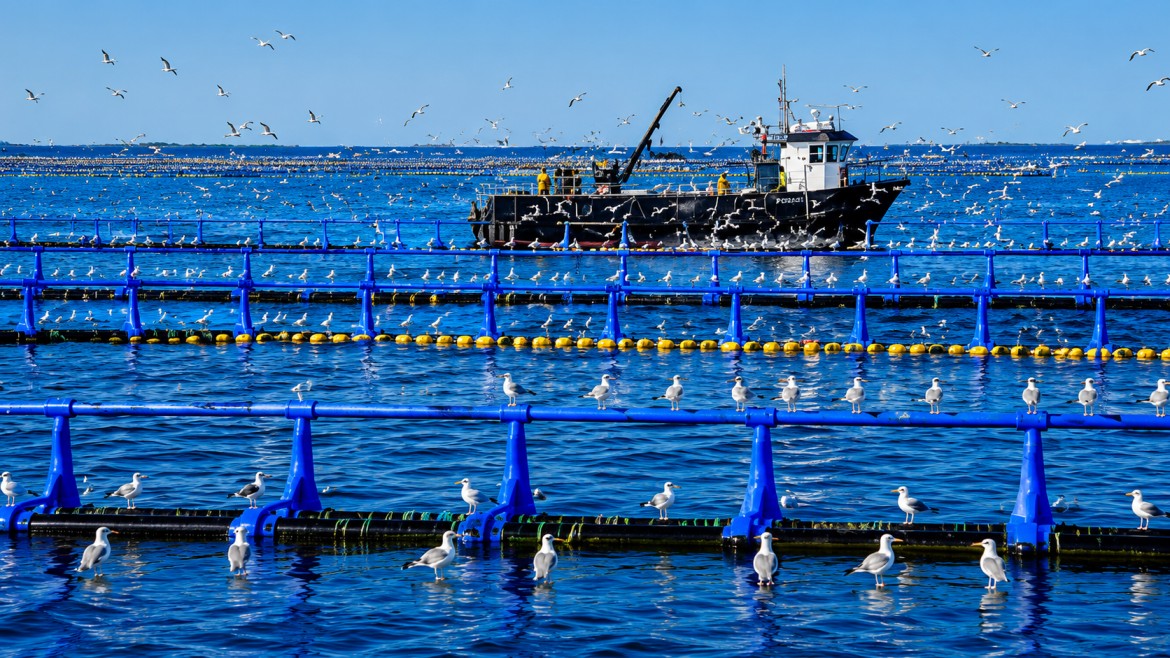
Morocco now has 244 active aquaculture projects with a planned production capacity of about 90,000 tonnes a year, as the country works to grow fish farming and rely less on wild fish stocks. The projects are part of the Halieutis strategy, launched in 2009 to modernise the fisheries sector. The plan aims to improve food security, protect marine resources and create jobs in coastal areas while building a more stable seafood industry.
The 244 projects cover thousands of hectares along the Atlantic and Mediterranean coasts. The National Agency for the Development of Aquaculture (ANDA) says the country has identified more than 24,000 hectares suitable for fish, shellfish and seaweed farming.
Shellfish farming makes up most of the projects. Dakhla Oued Eddahab is the country’s main production area thanks to its calm, nutrient-rich waters. Farms there mainly produce Mediterranean mussels and Pacific oysters. Red seaweed farming is also expanding as global demand grows for products used in food, cosmetics and pharmaceuticals.
Agadir and the Souss Massa region are the main centres for offshore fish farming. Producers use floating cages to raise high-value species such as European sea bass and gilthead sea bream. Finfish account for about 47% of the country’s aquaculture production.
Oualidia Lagoon, where aquaculture began in the 1950s, remains a key site for oyster farming. It is also home to new projects, including sustainable shrimp farming. One pilot project currently produces about 60 tonnes of shrimp a year and plans to increase production to 300 tonnes.
The government is also working to solve supply chain problems that have slowed the industry’s growth.
For years, fish farms depended on imported fish fry and oyster seed from Europe. A new marine hatchery in Tangier can now produce up to 30 million juvenile sea bass and sea bream every year. Local production is expected to cut costs and reduce disease risks.
Feed is another major expense, accounting for up to 80% of fish farming costs. Morocco has opened its first commercial fish feed factory and is exploring cheaper alternatives, including protein made from black soldier fly insects.
National hatcheries, packaging plants and seafood processing facilities are also expanding to support the growing industry.
International lenders are backing the sector through funding and technical support. The World Bank has financed a $20m programme to help young entrepreneurs and local cooperatives enter aquaculture. The Islamic Development Bank and the Japan International Cooperation Agency are supporting investment, innovation and sustainable farming techniques.
The government says the sector has already created about 2,250 direct jobs. It aims to increase that number to around 30,000 over the next decade.
Public grants worth about MAD300m ($27.7m) are available to support investment, while total investment in the industry is expected to exceed $1bn.
Although current projects are designed to produce 90,000 tonnes a year, ANDA estimates the country’s long term aquaculture potential exceeds 380,000 tonnes annually. National plans also include around 1,500 aquaculture units capable of producing more than 300,000 tonnes a year.
Morocco exports more than $3bn worth of seafood every year, mainly from wild fisheries. Officials hope expanding aquaculture will make the industry less vulnerable to climate change and overfishing.