

Morocco is Africa’s third-largest producer of poultry meat, with about 653,000 tonnes, according to Poultry World.
Only Egypt and South Africa produce more. Together, the three countries make up nearly 64 percent of all poultry meat produced in Africa.
Morocco produced 486 million broiler chicks last year. People in the country eat about 20.9 kilograms of chicken per person each year, showing strong and steady demand. Chicken is the cheapest source of animal protein for many families.
The sector provides around 500,000 jobs and generates about 45 billion dirhams in sales. It makes up roughly a quarter of Morocco’s farm economy and plays a key role in food security, especially in rural and semi-urban areas.
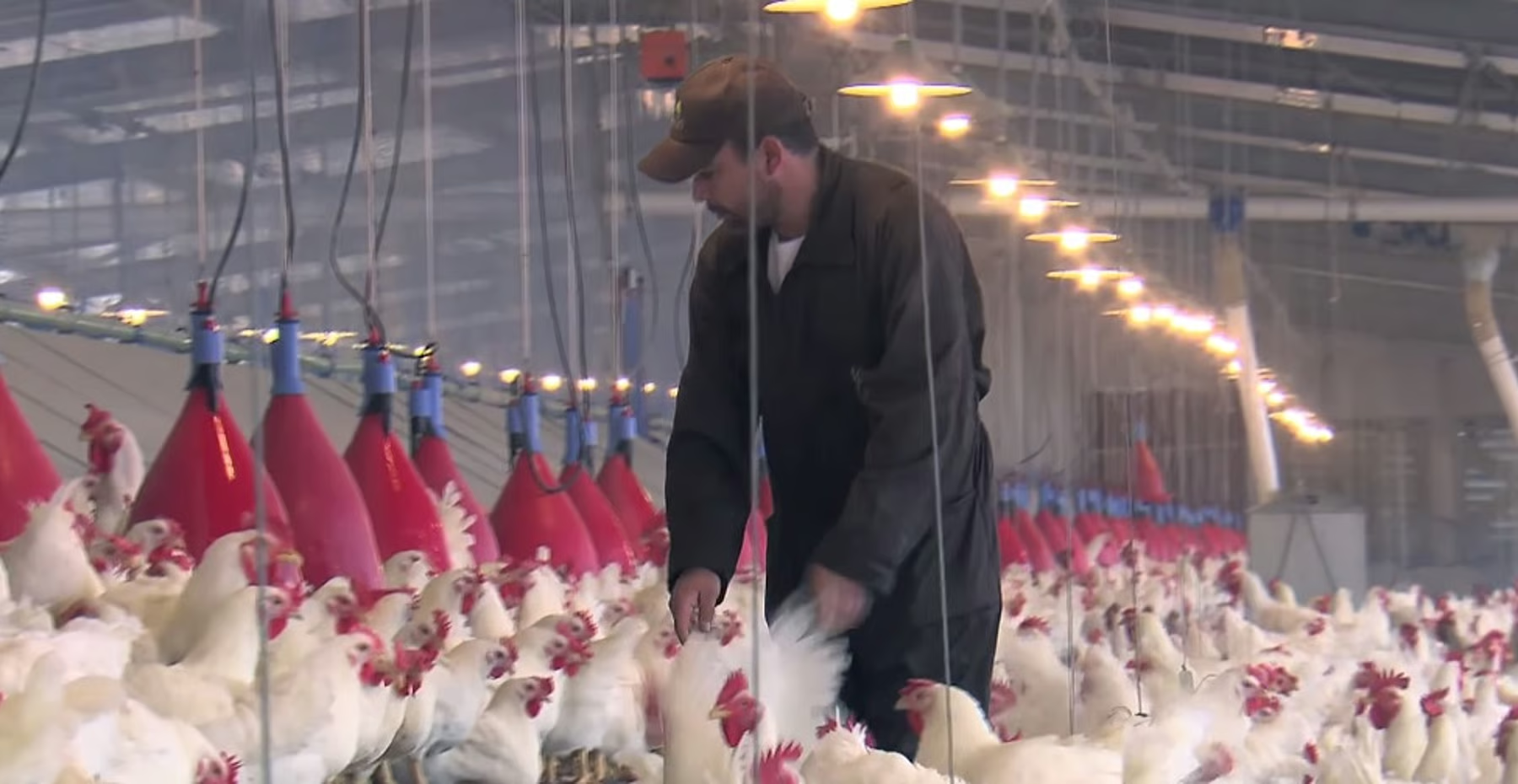
Over the past years, the industry has moved from small backyard farms to large, modern operations. This shift was supported by government plans such as Plan Maroc Vert and Génération Green 2020-2030, which helped farmers invest, improve standards and modernise production.
Cold storage, better feed systems and modern slaughterhouses have helped improve hygiene and opened the door to more exports, especially to West Africa.
Morocco is now seen as a supply hub for the region. In 2024 and 2025, exports of day-old chicks and hatching eggs to countries like Liberia, Benin and Ghana grew strongly. In 2026, trade with Mali and Benin passed $170m.
Unlike Egypt, which is dealing with too much supply at home, Morocco focuses on selling chicks, eggs and processed chicken rather than large amounts of frozen meat. By selling chicks and eggs, Moroccan companies help farms in countries such as Senegal, Mauritania and Benin build their own production.
The market is controlled by a small number of large groups, including Koutoubia Holding and Zalar Holding. These companies manage everything from animal feed to distribution. Some have opened branches in West Africa to control the full supply chain.
However, the sector faces clear risks. Around 80 percentof feed costs depend on imported corn and soybeans. If global prices rise or shipments are delayed, local chicken prices can quickly increase. Droughts at home also limit Morocco’s ability to grow more grain.
Energy costs are another problem. Modern chicken farms need heating in winter and cooling in summer, which raises expenses. Many chickens are still sold in traditional markets and live bird shops, which makes it harder to control prices and ensure full traceability.
Competition is also growing. South Africa has become one of the most efficient producers in 2026, while Egypt is trying to expand sales in West Africa to reduce its surplus.


