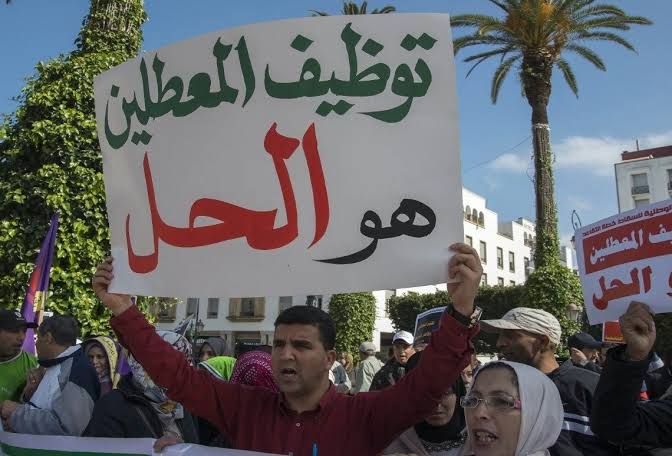
More people in Morocco want to work than official unemployment figures show, according to a new World Bank report. It says the country’s labour market is under more pressure than the headline unemployment rate suggests. Official data from the High Commission for Planning (HCP) put unemployment at 10.8%, or 1.253 million people, in the first quarter of 2026. The rate was 13.5% in urban areas and 6.1% in rural areas. The World Bank says the official figure leaves out 884,000 people who want a job but are not counted as unemployed. Most of them live in cities. They include people who have stopped looking for work or cannot start a job straight away.
Adding these people raises the labour underutilisation rate from 10.8% to 17.1%.
The report also counts 671,000 underemployed workers who want to work more hours. Including them pushes the rate to 16.6%. The broadest measure, which combines unemployment, underemployment and the potential labour force, reaches 22.5%.
The figure is even higher for young people aged 15 to 24, reaching 45.3%.
Women and young people face the biggest challenges. The combined rate of unemployment and the potential labour force stands at 27.9% for women and 40.4% for young people.
“The gap between the official unemployment rate of 10.8% and the broader rate of 17.1% reveals the true scale of unused human potential in the Moroccan economy.”
The findings follow the launch of the HCP’s new EMO2026 labour force survey, which replaced the previous National Employment Survey (ENE).
The new survey follows standards set by the International Labour Organization (ILO). It counts someone as unemployed only if they had no paid work during the reference week, looked for a job in the previous four weeks and were available to start work within two weeks.
People who want to work but do not meet one of those conditions are now counted as part of the potential labour force instead of being classed as unemployed.
The annual survey sample has also grown from about 90,000 households to 135,000 households, a 50% increase. It now covers both urban and rural areas and includes newer forms of work such as gig and digital platform jobs.
The report warns against comparing the 2026 figures with those from 2025 because the new method changes how some workers are classified.
Labour force participation stood at 41.8%, well below the global average of 61%. Women’s participation was 17.5%, compared with a global average of nearly 51%.
World Bank data ranks Morocco 186th out of 195 countries for women’s labour force participation.
The report says the drop in the overall participation rate from 43.5% to 41.8%, and the fall in women’s participation from 19% to 17.5%, mainly reflect the new methodology rather than a real decline in the labour market.
It links the large number of discouraged workers to the difficulties women and young people face in finding jobs. It also points to weak basic skills among some jobseekers, too few jobs that match graduates’ qualifications, low starting salaries and limited productivity growth.
More recent HCP figures show some improvement. Official unemployment fell to 9.5% in the second quarter of 2026, down from 10.8% in the previous quarter.
Services created 166,000 jobs, while industry added another 47,000. The government has also announced a 15 billion dirham programme to boost youth employment through vocational training and incentives for private sector hiring.