

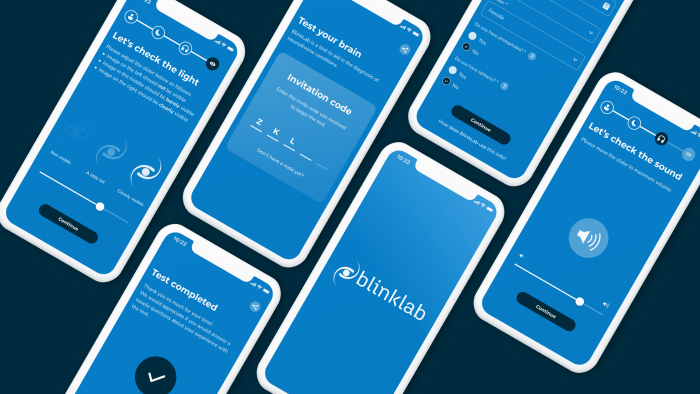
Morocco is launching a national programme to screen young children for autism using a smartphone app, in partnership between BlinkLab Limited and Mohammed V Foundation for Solidarity.
The system will use BlinkLab’s Dx1 tool and will be added to the public health system at no upfront cost. It aims to make early checks available to families across the country, which has a population of about 38 million.
Children can be screened from as young as 18 months. The app uses the phone’s camera to track how a child reacts to simple sounds and images, including how they blink. It then uses artificial intelligence to spot patterns linked to autism and attention disorders.
The company says the tool is based on years of research into how the brain processes sensory information. It can detect very small movements that doctors cannot easily see.
Officials say the programme could help reduce long waits for diagnosis, especially as Morocco has a limited number of specialist doctors. Because it runs on a phone, it can also reach families in rural areas.
The rollout will be supported by centres run by National Centre Mohammed VI for the Disabled, which have already tested the technology. Early studies found it was simple to use and produced accurate results.
BlinkLab says recent trials showed the tool correctly identified autism in 91% of cases and correctly ruled it out in 85% of cases. These results are above the levels usually required by US regulators.
Data from the programme will be kept by the company and used to improve its AI system. The rollout will also act as a large real-world study as BlinkLab works towards approval in the United States.
The company expects to screen up to 600,000 children each year, with the programme gradually expanding to about 3,000 public health centres.
BlinkLab, founded by researchers from Princeton University and based in Perth, plans to apply for approval from the US Food and Drug Administration later in 2026.


