

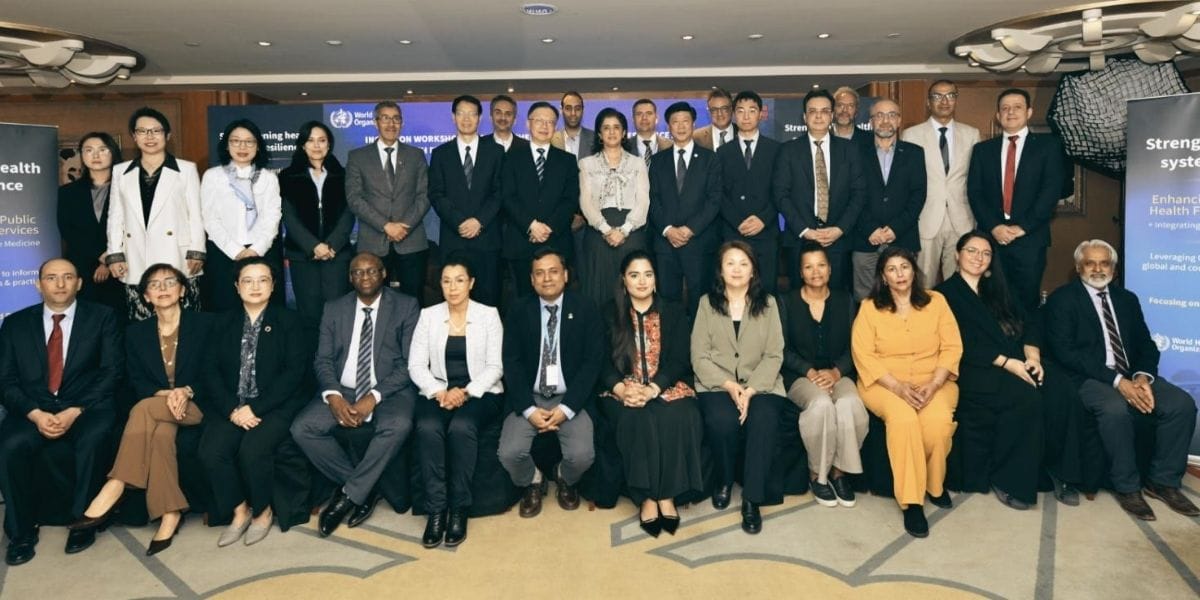
Morocco has joined a World Health Organisation-backed health system resilience programme aimed at strengthening disease surveillance, emergency response and primary healthcare, as countries across the Eastern Mediterranean region prepare for rising health and climate-related pressures.
The three year initiative, running until 2028, is supported financially by China and includes cooperation between Morocco, Iraq and Pakistan. It was formally launched during a high level workshop in Cairo held from 31 March to 1 April, where officials and experts mapped out national implementation plans tailored to each country’s health priorities.
The programme is led by the World Health Organization and is designed to reinforce national health systems through shared technical expertise and cross-border cooperation. It also forms part of a wider South-South cooperation model, with China contributing funding and policy experience alongside participating states including Iraq and Pakistan.
For Morocco, North Africa, the focus is on three main areas: improving epidemiological surveillance to detect outbreaks earlier, strengthening emergency management between regional and national health structures, and ensuring continuity of primary healthcare services during crises.
These priorities align with ongoing domestic reforms in Morocco’s health sector, which include upgrading around 1,400 primary healthcare centres and rolling out a unified digital health platform by the end of 2026.
A notable feature of the initiative is the planned assessment of Traditional Chinese Medicine as a complementary element within primary healthcare systems. The aim is to evaluate whether selected practices can be safely integrated into conventional care, particularly for chronic disease management and prevention.
China’s involvement extends beyond financing, focusing on sharing public health system experience and adapting solutions to local conditions rather than applying standardised models.
“This workshop marks a new phase in the cooperation between WHO and China,” said Hanan Balkhy, WHO Regional Director for the Eastern Mediterranean. She said the combination of Chinese experience and country-specific needs would help build more sustainable health systems across the region.
The initiative comes as the Eastern Mediterranean region faces growing health pressures, including outbreaks and displacement linked to regional instability. In March 2026, WHO launched a 30.3 million dollar appeal to respond to escalating health emergencies, including diseases such as cholera and measles.
While Morocco remains relatively stable, the programme is designed to strengthen preparedness against regional spillover risks and future shocks. It also reflects lessons from the 2023 Al Haouz earthquake, with increased emphasis on resilient infrastructure and community-based referral systems.
China has been expanding its global health role in recent years, including a 500 million dollar pledge to the World Health Assembly in 2025, with a shift towards long-term system building and workforce training.
A detailed national action plan for Morocco is expected in the coming months, setting out how the programme will be implemented across the country’s health system.


