

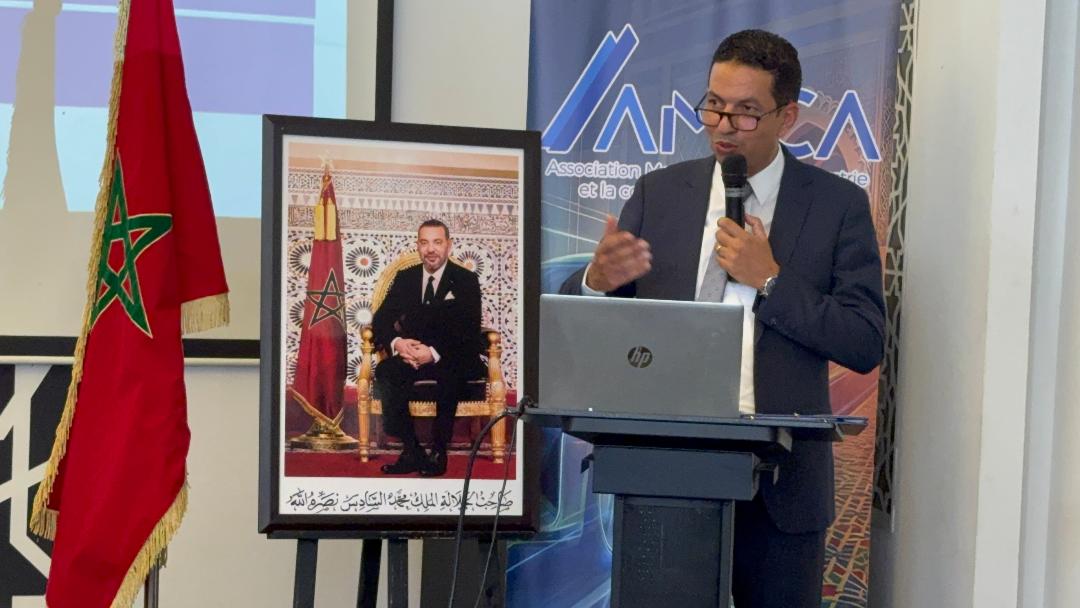
Morocco’s automotive industry will take centre stage when Kenitra hosts the International Automotive Industrial Competitiveness Show (SCIA 2026) from 24 to 26 June, bringing global manufacturers, suppliers and investors to one of Africa’s fastest-growing car production hubs.
The event is organised by the Moroccan Association for the Automotive Industry and Construction with the Ministry of Industry and Trade. Around 300 international exhibitors are expected. The choice of Kenitra reflects its role as a key centre of the national automotive ecosystem, especially through the Atlantic Free Zone.
SCIA President Badr Lahmoudi said the sector is moving away from subcontracting towards competitiveness, higher added value and technological independence. “Morocco has established itself as a leading industrial hub. Our goal now is to strengthen industrial ecosystems, build deeper partnerships, and attract the next wave of high-tech investment.”
Rachid Machou said local suppliers must integrate further into global value chains and increase technology transfer and expertise sharing.
The automotive sector has become Morocco’s main export engine. In January 2026, exports rose by 19.1% to more than MAD 12.24bn. Manufacturing and construction segments increased by 60.6%.
Passenger electric vehicle sales are expected to rise by 36.3% in 2026 to more than 7,200 units. The government plans 5,000 charging points by 2028, including solar-powered stations.
Industry reports say Tesla is studying Kenitra as a potential assembly location, following investments by Renault and Stellantis in EV production in Morocco.
SCIA 2026 will focus on decarbonisation and green hydrogen as Morocco works to develop low-emission car factories powered by renewable energy and local innovation in hydrogen mobility.
The Atlantic Free Zone has reached a 90% occupancy rate. The workforce pipeline is supported by the Automotive Industry Training Institute, which trains specialised labour for the sector.
SCIA 2026 is expected to attract strong participation from France, Italy and Germany and strengthen links between European technology and African manufacturing.


