

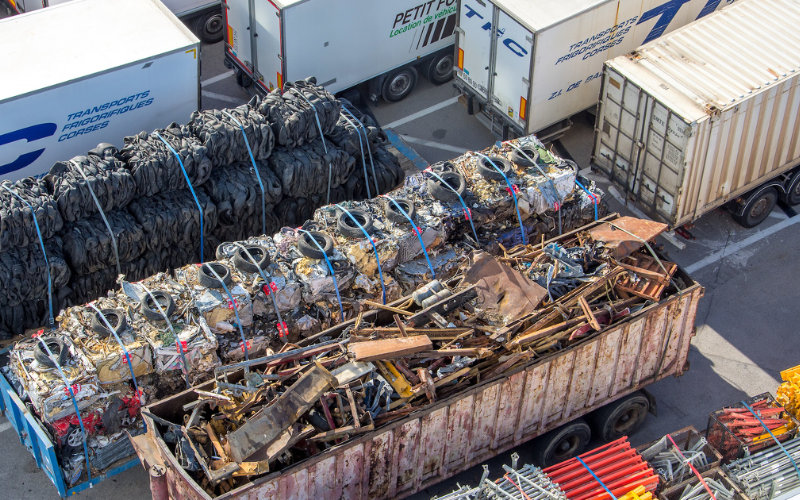
Moroccan factories are bringing in more European waste than ever, much of it scrap metal that can be melted down and turned into steel for buildings and infrastructure. The country imported 760,040 tonnes of waste and recyclable materials from Europe during the first nine months of the year, a 50.1% increase compared with the same period last year.
The shipments were worth about 2.7bn dirhams ($272m), up from 1.7bn dirhams ($173m) a year earlier, according to figures from the European Commission’s Eurostat Comext database.
Scrap iron and steel accounted for most of the increase. Imports of these materials more than doubled, rising by 101% to 534,969 tonnes, worth 1.82bn dirhams ($183m).
That means roughly seven out of every 10 tonnes of European waste imported by Morocco were scrap iron and steel.
The increase comes as the European Union prepares to tighten rules on waste exports to countries outside the Organisation for Economic Co-operation and Development (OECD). The changes could affect the supply of raw materials to Moroccan factories, particularly steelmakers that depend on imported scrap.
Imports rise throughout the year
European waste shipments increased steadily over the first three quarters.
Imports reached 211,000 tonnes in the first quarter, rose to 272,000 tonnes in the second and climbed further to about 277,000 tonnes in the third.
June was the busiest month, with around 120,000 tonnes arriving, followed by September with 103,400 tonnes.
France was the biggest European supplier, exporting 217,493 tonnes, an increase of 29% compared with the previous year.
Spain came second with 184,792 tonnes, up 41%, while the Netherlands shipped 183,156 tonnes, almost five times its previous volume.
Together, the three countries accounted for about 77% of all European waste and recyclable materials imported by Morocco.
Belgium also increased its shipments by 87% to 80,516 tonnes. Germany exported 29,462 tonnes, while Denmark recorded a sharp rise from just 114 tonnes last year to 24,501 tonnes.
Poland was the main exception. Its exports fell by 92%, from 83,649 tonnes to 6,792 tonnes.
Scrap metal drives the increase
Steel scrap was by far the largest category of imported material.
Imports rose from 266,175 tonnes to 534,969 tonnes in one year, while their value increased by 114% to 1.82bn dirhams ($183m).
Moroccan steelmakers use scrap as a raw material, melting it in electric furnaces to produce reinforcing bars and other metal products.
The Netherlands was the largest supplier, sending 174,510 tonnes, followed by France with 130,298 tonnes and Spain with 124,168 tonnes. Belgium supplied another 49,663 tonnes.
Monthly deliveries increased from about 32,000 tonnes in January to a peak of 104,650 tonnes in June. During the third quarter, shipments remained between 65,000 and 82,000 tonnes a month.
The sharp increase raises questions about whether manufacturers are importing extra scrap ahead of the new European rules.
However, the available trade figures do not prove that companies are building up stocks in preparation for the restrictions. Higher industrial demand and changes in supply sources could also explain the increase.
Tyres, textiles and glass among other imports
Scrap metal was not the only material shipped from Europe.
Imports of rubber waste reached 105,268 tonnes, down 9.8% from a year earlier. France supplied 86,732 tonnes, accounting for 82% of the total.
Much of this material comes from old tyres that have been shredded. It is used in several industrial activities, including as an alternative fuel in cement factories.
Morocco also imported around 56,400 tonnes of used clothing and textile waste.
This included 29,353 tonnes of second-hand clothes, down 11.6%, and 27,069 tonnes of textile rags and waste, an increase of 96%.
Spain dominated both categories, supplying 24,517 tonnes of used clothing and 22,551 tonnes of textile waste.
Imports of broken glass doubled to 26,035 tonnes, most of which came from Belgium.
Other categories recorded declines. Imports of ash and industrial residues fell by 46% to 27,246 tonnes.
Copper waste shipments dropped by 12.7% to 5,527 tonnes. Despite the fall in volume, their reported value reached about 581m dirhams ($58m), with Germany, Italy and Greece among the main suppliers.
New EU rules could disrupt supplies
The European Union is due to introduce new waste-export rules on 21 May 2027.
The regulations will restrict exports of non-hazardous waste to countries outside the OECD, unless those countries are included on a special list approved by the European Commission.
The list will determine which countries can continue receiving European waste and which categories of material they will be allowed to import.
Information circulating about the proposed European decision suggests Morocco could remain eligible to receive certain materials, particularly used textiles and tyres.
Metal waste, however, may not be included at this stage.
Such a decision could create problems for Moroccan steelmakers, which rely heavily on European scrap metal to produce construction materials and other steel products.
The stakes are significant. Iron and steel scrap alone accounted for 70% of European waste imports during the first nine months of the year, with a value of more than 1.82bn dirhams ($183m).
Any restrictions could force manufacturers to look for alternative suppliers, increase the cost of raw materials and put pressure on production.
The sharp rise in scrap imports this year has also raised the possibility that industrial operators are trying to secure supplies before the new rules take effect. But the figures alone are not enough to establish whether stockpiling is taking place.
The final impact will depend on the European Commission’s decision on eligible countries and the types of waste they can receive.
The latest figures show how closely parts of Morocco’s industrial sector are linked to Europe’s recycling market. They also highlight how changes to European trade rules could affect factories that turn discarded materials into products used in everyday construction.


