

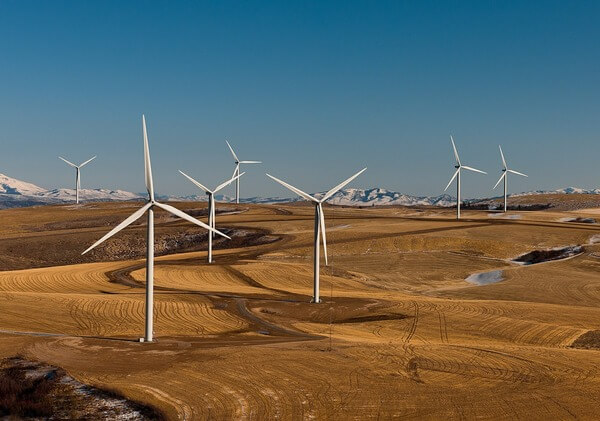
Morocco is one of Africa’s leading wind power producers, with enough installed capacity to put it third on the continent, behind South Africa and Egypt, according to a new report by the Global Wind Energy Council. The three countries account for more than 85% of Africa’s total installed wind power capacity. South Africa leads with 4.2 gigawatts (GW), followed by Egypt with about 3.2GW and Morocco with 2.2GW, according to the report obtained by the Washington-based Energy Research Unit.
Morocco finances its wind projects in dirhams through a model similar to South Africa’s, where local banks and pension funds help fund projects in local currency.
Africa added a record 1.53GW of wind power capacity in 2025, bringing the continent’s total to 11.1GW by the end of the year. That was more than 23% higher than in 2023, when installed capacity stood at less than 9GW. Growth was driven mainly by new projects in South Africa, Egypt and Morocco.
Africa has the technical potential to produce 58.4 terawatts (TW) of electricity from onshore wind, but only 0.02% of that potential has been developed so far, the report said.
Several countries are beginning to build their wind power sectors. Ethiopia, Kenya, Tunisia, Senegal and Mauritania have installed capacities ranging from 100 to 800 megawatts (MW). Algeria, Libya and Sudan each have no more than 200MW of installed capacity, despite their substantial wind resources.
Africa’s strongest wind regions can achieve capacity factors of between 35% and 42%, compared with a European average of 25%. A capacity factor measures how much electricity a wind farm produces compared with the amount it could generate if it operated at full capacity all the time.
Wind turbines are also becoming larger and more powerful. The average capacity of installed turbines rose from 0.85MW in 2007 to more than 5MW in 2025. Developers are now moving towards turbines rated at 6.5MW and 8MW.
Africa has 259 planned wind power projects with a combined capacity of 186GW, according to the report. The plans extend beyond established markets to countries including Mauritania, Algeria, Tanzania, Zambia, Madagascar, Cameroon and Angola.
Demand from industry could help move more projects from planning to construction and operation by 2030. Mines, cement factories, metal smelters and fertiliser companies are among the businesses expected to support investment.
The Global Wind Energy Council expects Africa’s installed wind power capacity to reach between 30GW and 50GW by 2035.
Morocco could reach between 5GW and 8GW, while South Africa is expected to exceed 15GW. Egypt’s capacity could rise to between 8GW and 10GW.
Egypt is already building the 1.1GW Gulf of Suez wind farm, with the participation of the National Investment Bank and the Sovereign Fund of Egypt. Other emerging wind markets across the continent could reach capacities of between 0.5GW and 3GW.
Corporate power purchase agreements, under which businesses agree to buy electricity from producers, could account for between 50% and 70% of new wind power capacity in Africa’s more developed markets.
Developers are also increasingly combining wind farms with solar power and battery storage. This approach is particularly relevant to projects larger than 100MW that supply industrial customers.
The report identifies five conditions needed to meet the continent’s wind power targets: power purchase agreements that can attract financing, regular tender schedules, access to funding in local currencies, transmission networks built ahead of new generation capacity, and stable regulations.
Security risks in the Sahel, disruptions to global supply chains and the rollback of the European Union’s Carbon Border Adjustment Mechanism could also hold back growth, the report warned.
Africa’s wind power sector is expanding, but its future growth will depend on whether countries can turn planned projects into operating wind farms by securing funding, building the necessary infrastructure and maintaining stable rules for investors.


