

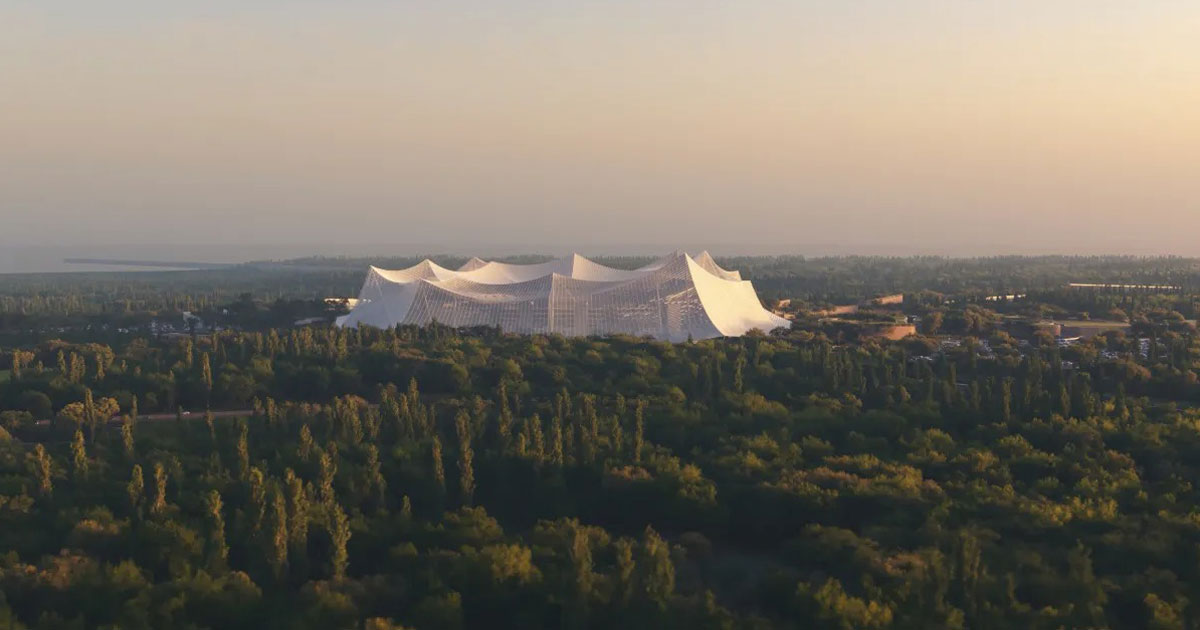
A team of Moroccan construction firms, SGTM and TGCC, has won a 3.2bn MAD (about $340m) contract to build the roof and outer shell of the Hassan II Grand Stadium.
The contract was awarded by the National Agency for Public Equipment after a bidding process. This part of the project is one of the hardest because the roof design is unusual and technically demanding.
The stadium is being built in Mansouria, about 38km north of Casablanca. When finished, it should hold 115,000 fans and could become bigger than the Rungrado 1st of May Stadium, currently the world’s largest football stadium.
The project is a key part of Morocco’s preparations for the 2030 FIFA World Cup, which it will host with Spain and Portugal.
The design comes from US firm Populous and Moroccan architect Tarik Oualalou. Instead of a normal roof, the stadium will sit under a giant canopy inspired by a traditional Moroccan moussem tent. The structure will use steel, strong cables and a special aluminium and textile covering that can handle strong winds and allow airflow.
The total stadium budget is about 5bn MAD, and the roof and facade alone make up more than 60% of the cost.
The government says giving the work to Moroccan companies keeps much of the money in the local economy. SGTM has worked on major projects such as the Nador West Med port, while TGCC is known for large hotels and commercial buildings.
The stadium is part of a wider 14.5bn MAD plan to upgrade sports facilities before 2030. It is expected to host the national team and possibly Casablanca clubs Raja Club Athletic and Wydad AC. The project is also expected to boost development in the Benslimane and Mohammedia area, with new transport links, train stations, and hotels.


