

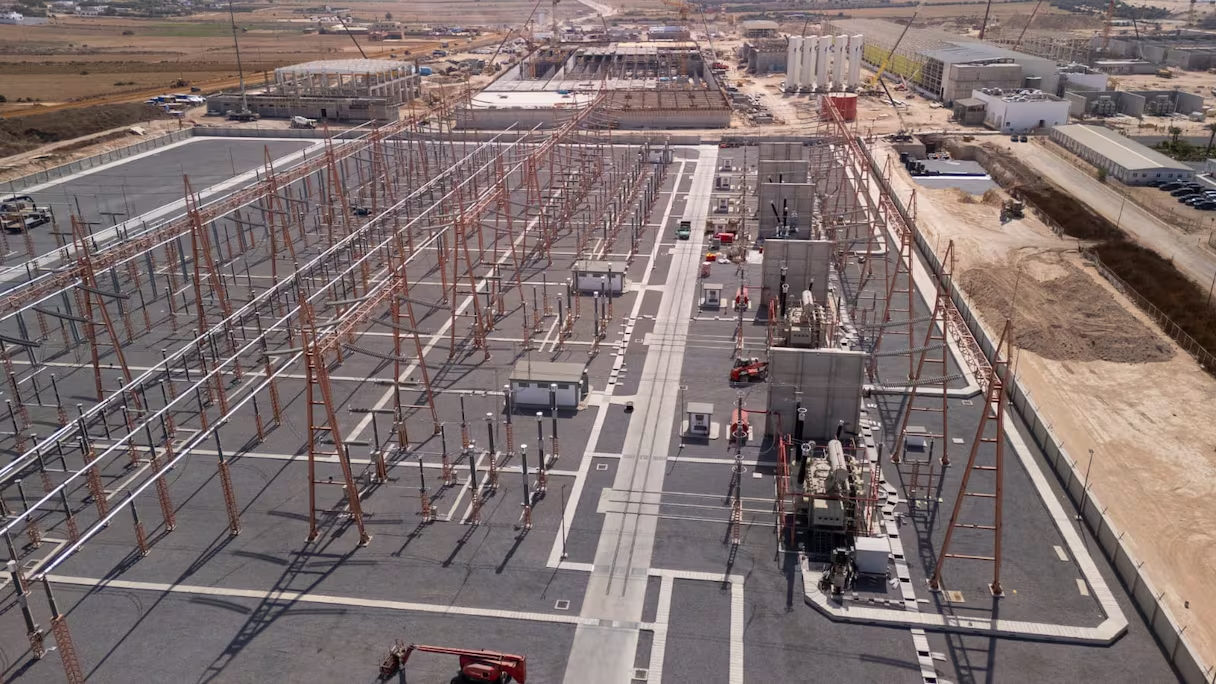
A new high-voltage power connection is now ready for the Casablanca-Settat seawater desalination plant, bringing the project a step closer to opening in February 2027. The National Office of Electricity and Drinking Water (ONEE) completed the 400kV electricity infrastructure on 19 July. The project cost more than 486 million Moroccan dirhams, including tax.
The new infrastructure will provide the large and steady supply of electricity needed to run the desalination plant around the clock.
The project includes a 400kV to medium-voltage transformer station in El Mharza Sahel with a capacity of 300 MVA. It also includes a 400kV double-circuit transmission line stretching 50km on each circuit, for a total of 100km.
The desalination plant uses reverse osmosis technology, which relies on powerful pumps that consume large amounts of electricity. The new connection is designed to keep the plant running without interruption.
ONEE built the infrastructure as part of its plan to strengthen the national electricity grid and provide reliable power for large strategic projects.
Construction of the desalination plant began in June 2024 after Crown Prince Moulay El Hassan launched the project.
The plant covers 50 hectares and is being built through a public-private partnership worth 6.5 billion Moroccan dirhams.
The first phase is expected to start operating in February 2027. It will produce 548,000 cubic metres of drinking water every day, or about 200 million cubic metres a year.
A second phase, due by mid-2028, will add another 274,000 cubic metres a day. That will increase total production to 822,000 cubic metres a day, or about 300 million cubic metres a year.
Around 250 million cubic metres a year will be supplied as drinking water. Another 50 million cubic metres will be used to irrigate farmland.
The plant will supply Greater Casablanca, Settat, Berrechid, Bir Jdid and nearby areas. It is expected to help meet growing demand for water as Morocco continues to face long periods of drought and water shortages.


