

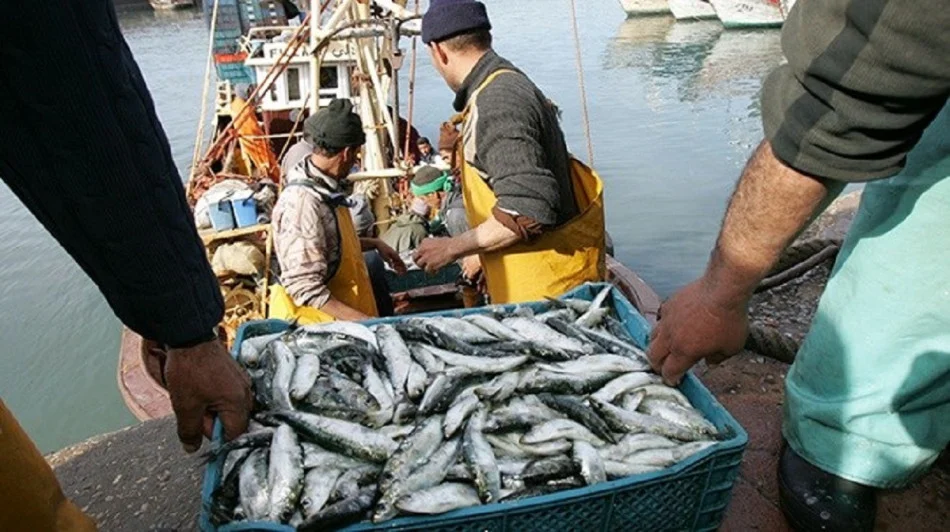
Morocco exported $1.89bn worth of fish and other seafood products in 2025. Spain bought more than half of them, according to UN Comtrade data. Seafood exports covered by Chapter 03 of the international Harmonised System reached $1.892bn last year. The category includes fish, crustaceans, molluscs and other aquatic animals.
Spain was the biggest buyer by a wide margin. It imported $1.08bn worth of Moroccan products, equal to 57.2% of total Chapter 03 exports.
Italy was second with $285.5m, or 15.1%. Spain and Italy together accounted for 72.3% of total exports in the category.
Ghana ranked third with $69.3m, followed by Portugal with $66.1m and Ivory Coast with $63.9m.
The five markets together accounted for 82.8% of total exports. The figures show how much the seafood trade depends on a small number of buyers.
Other European markets also bought Moroccan seafood. The Netherlands imported $38.8m and Greece $20.8m. Japan was the biggest buyer in Asia, with imports of about $26.2m.
West African markets included Mali, Burkina Faso, Senegal, Nigeria and Guinea. Exports to those countries were worth $26.5m, $21.5m, $14.6m, $12.3m and $11.4m respectively.
The figures only cover products listed under HS Chapter 03. They do not include processed and preserved seafood, such as canned sardines, which falls under a different customs category.
Processed seafood adds a significant amount to the trade. Canned sardines, preserved mackerel and processed tuna under HS 1604 generate an estimated $850m to $900m in annual exports.
Together, raw and processed seafood exports put the wider marine export business above $2.5bn a year.
Octopus, squid and cuttlefish are among the main higher-value products sold to Spain and Italy. Other exports include hake, sea bass, sea bream, shrimp, sardines and mackerel.
Spain’s close location also makes it an important market for fresh seafood. Refrigerated trucks can move products from Moroccan ports to Spanish distribution and processing centres through the Strait of Gibraltar.
The fishing sector contributes about 1.1% of GDP and supports more than 261,000 direct jobs. More than 113,000 fishermen work at sea.
A government plan for 2025-2027 includes 1.8bn dirhams in investment. The plan aims to raise the sector’s value-added to 19.3bn dirhams by 2027 and expand social security coverage for coastal fishing crews.
The government has also backed aquaculture projects as a way to reduce pressure on wild fish stocks.
Recent figures show that the sector continued to grow in 2026. Marketed coastal and artisanal fish products reached 6.28bn dirhams in the first seven months of the year, up 2% from the same period in 2025.
Total landings rose 5% to 551,547 tonnes. Cephalopod revenue increased by 7%, while pelagic fish landings rose 11% to 456,192 tonnes.
Spain remains the key market. More than half of all Chapter 03 seafood exports went there in 2025, while the five biggest markets took more than four-fifths of the total.


