
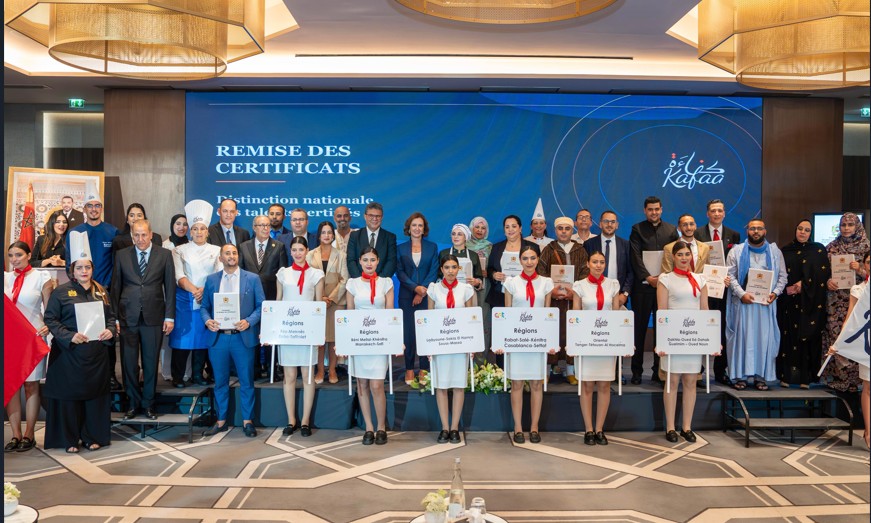
Morocco is betting on its people as it works to grow its tourism industry. More than 6,000 tourism workers have now received official skills certificates through the KAFAA programme, according to the Ministry of Tourism. The government launched the programme’s third edition in Rabat on Thursday after attracting more than 20,000 registrations since its start in 2024.
Tourism Minister Fatim-Zahra Ammor said the programme is helping prepare the workforce needed to support Morocco’s tourism ambitions.
“Morocco still has grand tourism ambitions. To achieve them, we need trained, qualified, and above all, motivated talent,” she said.
The KAFAA programme allows tourism workers to have skills gained through years of experience officially recognised. It was launched as part of Morocco’s 2023-2026 Tourism Roadmap, which places workforce development at the centre of efforts to improve visitor experiences.
The initiative is run in partnership with the National Tourism Confederation (CNT).
CNT president Hamid Bentahar said KAFAA shows what can be achieved when the public and private sectors work together to invest in people.
The programme was first introduced in six regions: Marrakech-Safi, Tangier-Tetouan-Al Hoceima, Souss-Massa, Fes-Meknes, Casablanca-Settat and Rabat-Sale-Kenitra. It later expanded to Beni Mellal-Khenifra, Oriental, Draa-Tafilalet and the southern provinces.
The latest expansion comes as Morocco pushes ahead with plans to grow its tourism sector. Tourism accounts for about 7% of Morocco’s economy and remains one of the country’s biggest sources of foreign currency.
The country’s tourism roadmap has a budget of 6.1bn dirhams and aims to attract 17.5 million visitors by 2026, create 200,000 direct and indirect jobs and generate 120bn dirhams in tourism revenues.
Morocco has already seen strong growth. The country welcomed a record 14.5 million tourists in 2023, followed by 15.1 million visitors in 2024.
Officials are also preparing for the 2030 FIFA World Cup, which Morocco will co-host with Spain and Portugal. The country is expected to need around 100,000 additional hotel beds, increasing demand for trained hospitality workers, managers and chefs.