

Morocco’s preparations for the 2030 World Cup are attracting suppliers from abroad, with Turkish companies looking to sell more marble, granite and other building materials for the country’s stadiums, hotels and infrastructure projects. Thirteen Turkish natural stone companies travelled to Casablanca between 13 and 16 October to meet potential buyers. The delegation, coordinated by the Aegean Exporters’ Associations, brought 16 representatives who held business meetings with 75 Moroccan companies, according to Turkish media outlet Ege’de Sonsöz.
The companies are now aiming to increase their annual natural stone exports to Morocco to $100m, more than double their current sales.
Morocco imported $204m worth of natural stone in 2025. Turkish suppliers accounted for $43.5m of that total, giving them just over a fifth of the market, or 21.3%.
İbrahim Alimoğlu, president of the Aegean Mine Exporters’ Association, said the sector wanted to raise its exports to the kingdom to $100m.
The delegation also visited two Moroccan companies, Sinastone and J.M.M. Marbre et Granit, to explore potential business partnerships. Its main areas of interest include marble, granite and other stones used for building facades, flooring and interior decoration.
The 2030 World Cup is a major part of the Turkish industry’s plans. Morocco, which will host the tournament alongside Spain and Portugal, is investing in stadiums, hotels, tourist facilities and transport infrastructure.
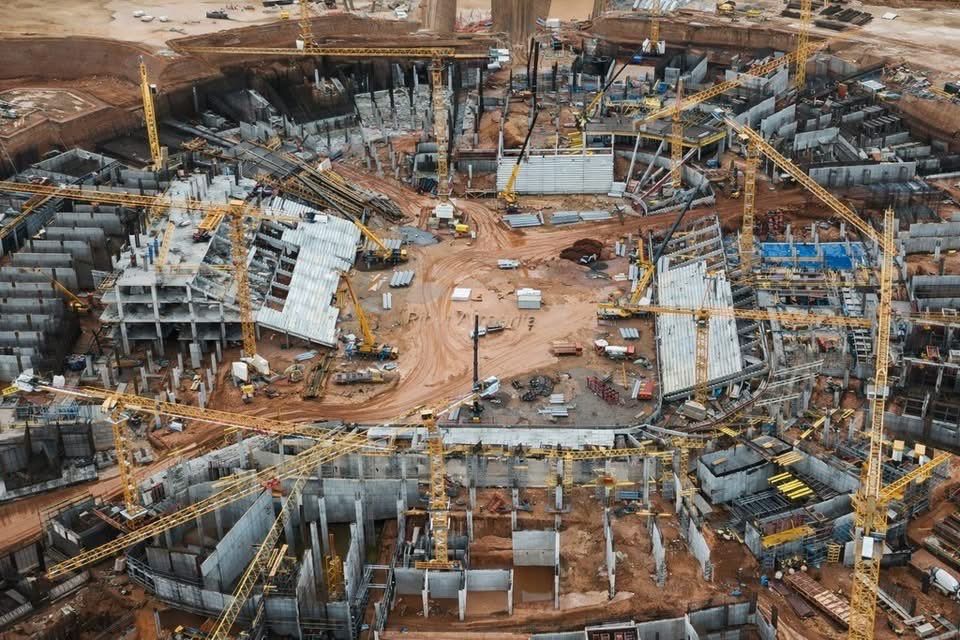
One of the biggest projects is the planned Grand Stade Hassan II in Benslimane, near Casablanca. The stadium is expected to hold 115,000 spectators, making it the largest in the world if completed as planned. Its estimated construction cost is 5bn dirhams, or about $500m.
The country is also spending about 14.5bn dirhams ($1.4bn) to upgrade six existing stadiums in Tangier, Rabat, Agadir, Marrakech, Fez and Casablanca.
Tourism is another source of potential demand. Morocco is targeting 26 million visitors a year by 2030, requiring more hotel rooms and investment in tourist facilities. Transport projects, including the expansion of the high-speed rail network and airport terminals, are also expected to create opportunities for construction suppliers.
Turkish companies are targeting more than natural stone contracts. A separate delegation of 10 Turkish steel and construction materials companies also visited Casablanca in October. It held more than 120 business meetings with 72 Moroccan companies.
Turkey is a major global supplier of natural stone, with annual exports worth more than $2bn. Its companies are hoping to use their production capacity, competitive prices and proximity to Morocco to secure a larger share of the market.
But competition is not the only challenge. Morocco has introduced additional tariffs on more than 1,000 Turkish industrial products following the renegotiation of its free trade agreement with Turkey in 2020 and 2021. The measures were designed to protect local manufacturers and address the trade imbalance between the two countries.
Moroccan authorities have also stressed the importance of using locally made materials in public projects where possible. This could encourage foreign suppliers to work with domestic distributors and manufacturers rather than rely solely on direct exports.
Turkish companies are therefore seeking partnerships with established Moroccan businesses as they compete with suppliers from Spain, Italy and China for contracts linked to the 2030 World Cup.


