

Fresh data from Visa shows a sharp seasonal boost in Morocco’s economy. Spending on premium cards rose 40% year on year during Ramadan and Eid al-Fitr 2026, pointing to strong domestic demand and rising tourism activity.
International visitors played a major role. Spending by foreign travellers using premium cards increased by 40%. Visitors from France, the United Kingdom and Switzerland recorded a 50% rise in transactions.
Tourism data shows the same trend. Morocco welcomed 4.3 million tourists in the first quarter of 2026, up 7% from a year earlier. Arrivals in March, the peak month of the Visa study, rose 18%, reflecting progress under the government’s 2023–2026 tourism roadmap.
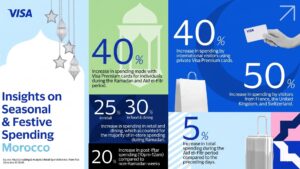

Consumer habits also shifted during Ramadan. Grocery spending rose 10% in the week before the holy month as households prepared. Evening spending between 10pm and midnight increased by 20% compared with non-Ramadan weeks.
Spending peaked during Eid al-Fitr between 19 and 22 March. Total transactions rose a further 5% above the Ramadan average. Clothing and retail spending increased 20%, while food and fast-food services rose 15%.
The surge comes as Morocco’s wider economic outlook improves. The High Commission for Planning forecasts GDP growth of 5% in 2026. The outlook is supported by a 10.4% recovery in agriculture and inflation expected to ease to 1.3%.
Sami Romdhane, Country Manager at Visa, said: “The Ramadan and Eid al-Fitr period has been marked by a rise in spending across travel and everyday consumer goods.” He added: “More relevant and seamless shopping experiences”.
Digital payments remain central to the trend. The 40% rise in premium card use, including Visa Signature and Infinite tiers, points to deeper digital adoption. With the 2030 FIFA World Cup approaching, Morocco is expanding air connectivity and digital infrastructure.
The data suggests the Ramadan economy has broadened beyond traditional food markets into a late-night, multi-sector spending period driven by tourism and digital payments.


