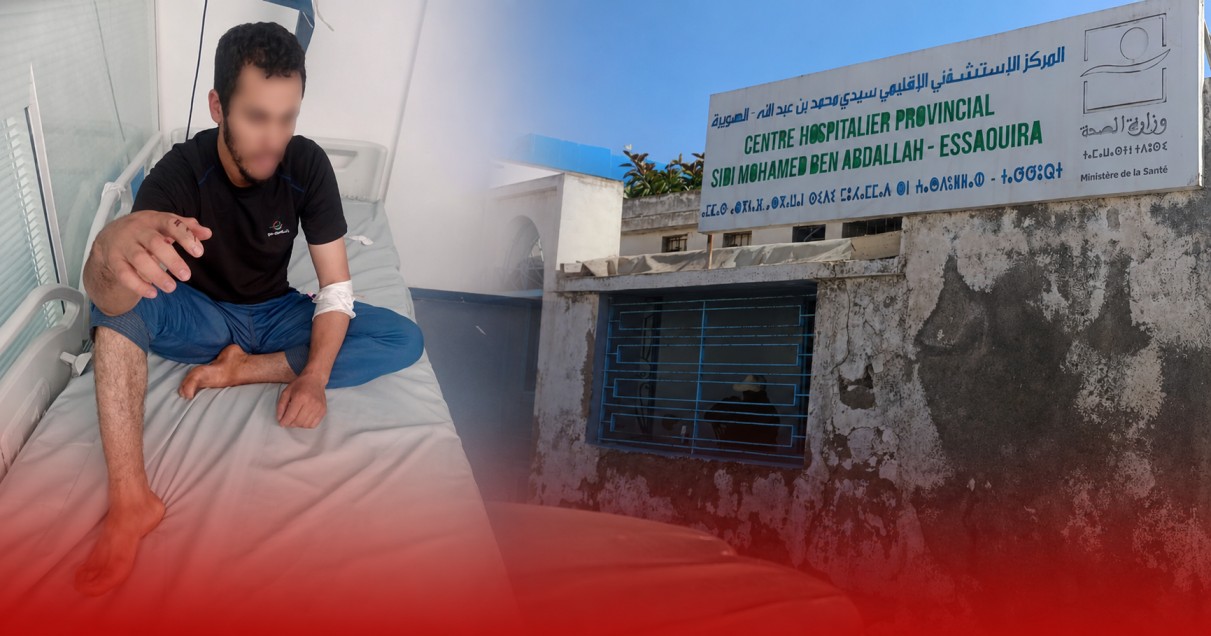
A man bitten by a snake in Essaouira spent hours in hospital while his family searched for antivenom they say could not be found anywhere nearby. The case has raised fresh questions about whether hospitals across Morocco have access to the treatment needed for serious snake bites, despite government assurances that antivenoms are available.
According to Santé Mag, the man was bitten on the morning of 14 June and was taken to the emergency department of Sidi Mohammed Ben Abdellah Provincial Hospital in Essaouira at around 2 pm.
His family said doctors gave him fluids through an IV and other medication. They were also given a prescription for anti-tetanus serum.
However, relatives say they were told the hospital did not have any snake antivenom in stock.
The family said they then contacted several health facilities in an attempt to find the treatment, but were unable to locate it either in Essaouira or elsewhere.
Santé Mag said it also contacted a number of health facilities and was told that no antivenom was available at the time.
The case comes nearly a year after Health Minister Amine Tehraoui said Morocco guaranteed the availability of antivenoms adapted to local snake species. Speaking during National Envenomation Awareness Week in July 2025, he said public health services had access to the polyvalent Inoserp MENA antivenom as part of the country’s strategy to deal with snake bites and other venom-related injuries.
The incident in Essaouira has prompted questions about whether those treatments are reaching patients when they are needed.
Figures from Morocco’s Poison Control and Pharmacovigilance Centre show that only about 39% of snakebite patients receive antivenom treatment in hospital.
The patient’s family also raised concerns about conditions in the emergency department.
The man’s brother told Santé Mag he visited the hospital several times between 14 and 15 June and saw only one nurse and security guards during part of the night and early morning.
The next morning, at around 9:15 am, he said he was unable to enter the ward to bring breakfast to his brother because the entrance was locked.
According to his account, a cleaner told him she could only open the door if a security guard was present. The security guard allegedly replied that opening the door was not his responsibility. The visitor said he had to wait until other staff arrived.
He also claimed there were no administrative staff present during part of the morning and said other families were struggling to find someone who could answer their questions. One family reportedly told him they had settled a sick relative into a room but could not find anyone in charge.
The reports have raised wider questions about staffing levels and the organisation of emergency services, especially during the summer months when snake activity increases because of higher temperatures.
Morocco records between 300 and 350 snake bites each year, according to official figures. Around eight people die annually.
The Marrakech Safi region, which includes Essaouira, is one of the areas most affected by snake bites. Only the Tangier Tetouan Al Hoceima region records more cases.
Morocco is home to 28 species of snake. Eight are considered potentially deadly, including the Moorish viper, which can cause severe bleeding, and the Egyptian cobra, whose venom can quickly affect breathing.