

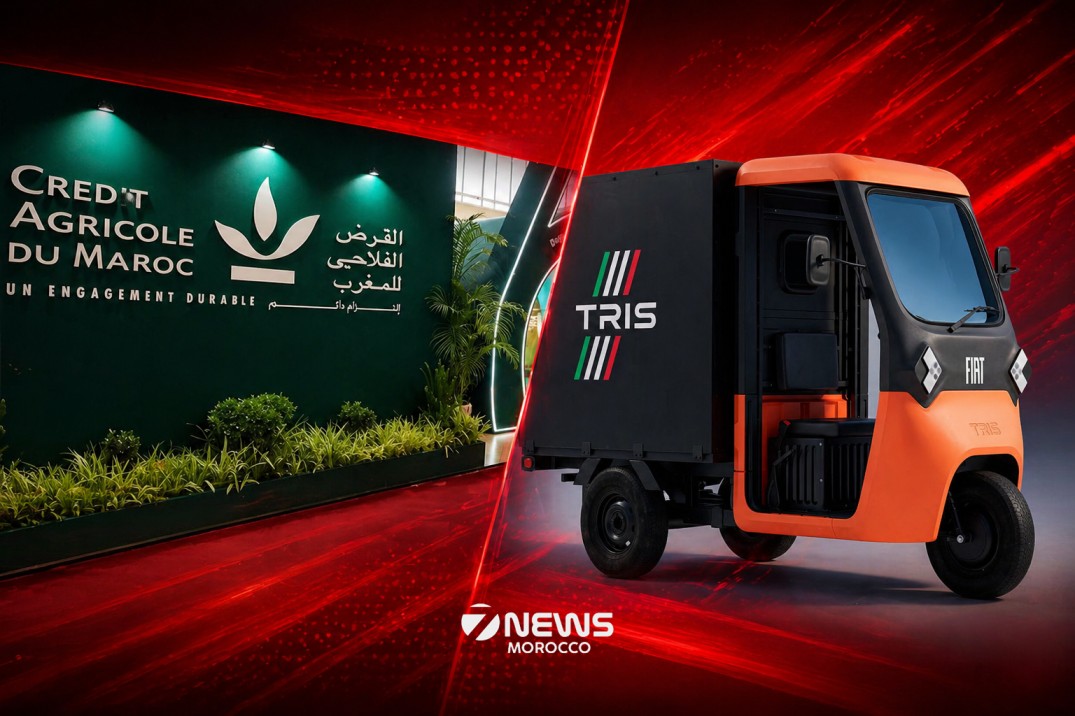
Stellantis Morocco and Crédit Agricole du Maroc Group signed in Meknes, at the International Agriculture Fair SIAM 2026, an agreement to support rural transport through electric vehicles for farmers and small rural businesses.
The deal focuses on improving access to transport in rural areas, especially for small and medium farmers and workers who often cannot get traditional bank loans.
The project offers financing through Tamwil El Fellah and ARDI Microfinance. It will help people buy the FIAT TRIS, a small electric utility vehicle designed for farm and rural use.
The vehicle is meant for basic daily tasks like carrying crops to markets, moving tools between fields, helping cooperatives with deliveries, and supporting small shops in rural areas. A cargo box version is available to keep goods protected during transport.
Stellantis Morocco said the vehicle is built for real farm needs, especially for day-to-day work. Crédit Agricole du Maroc Group said the goal is to support people who do not usually qualify for standard loans and improve access to finance in rural areas.
The FIAT TRIS is made in Kenitra. It can travel about 90 kilometres on a full charge and plugs into a normal 220-volt socket. It can reach around 80 percent charge in about three and a half hours.
The project fits into Morocco’s Generation Green 2020 to 2030 plan, which aims to support young farmers and build a stronger rural economy.
Although most rural areas in Morocco now have electricity, transport is still a problem. The project aims to help farmers move goods more easily and at lower cost than fuel-powered vehicles.
The use of electric vehicles is also expected to cut fuel use and make transport of fresh produce more efficient, especially for short trips between farms and local markets.


