
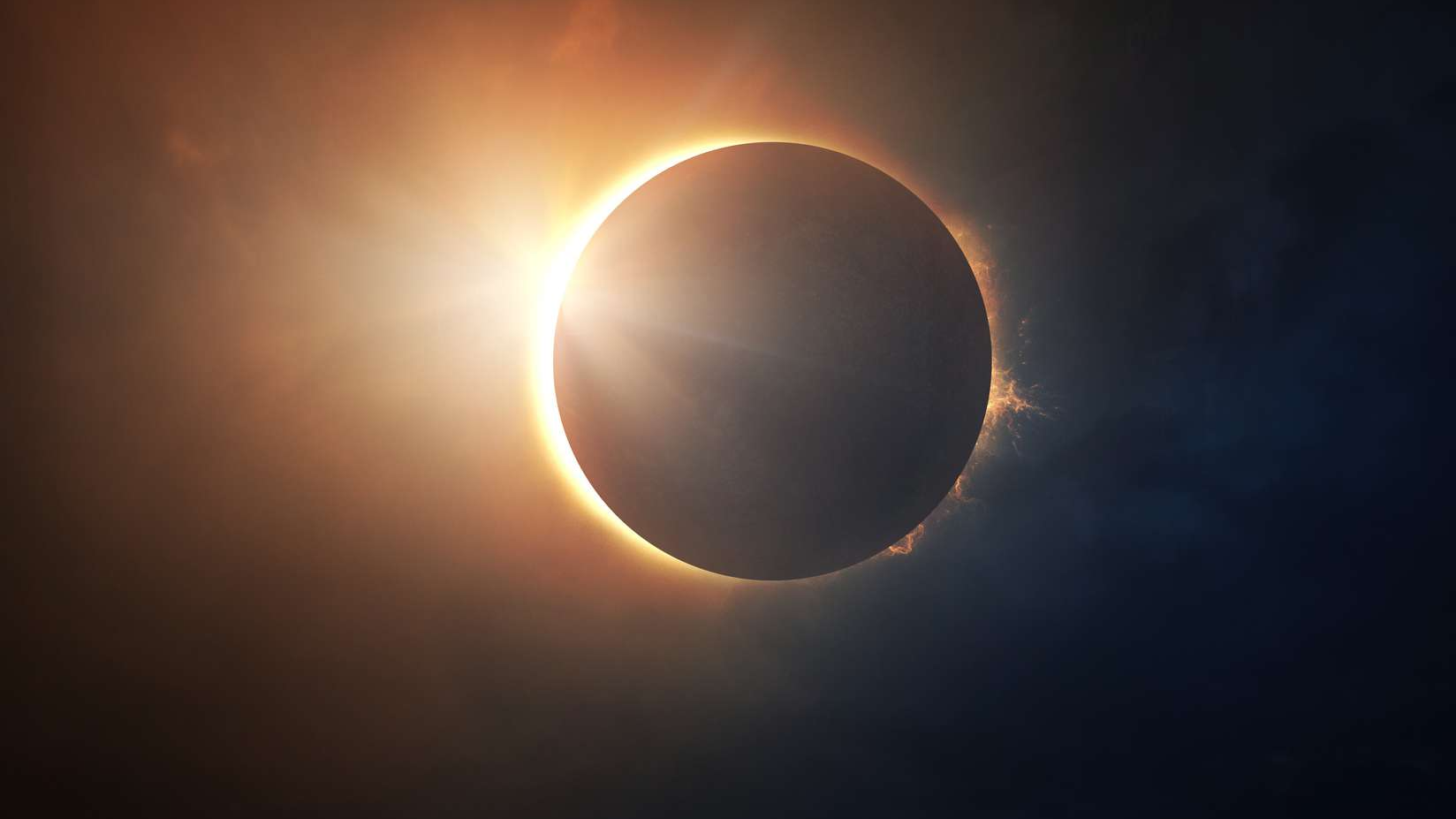
People across Morocco will be able to see a partial solar eclipse on Wednesday, 12 August. The eclipse will start at around 18:44, although the exact time will depend on where you are. It will reach its peak between 19:40 and 19:50 in several major cities.
Casablanca will see the eclipse start at 18:48. The maximum will come at around 19:43, when about 87% of the Sun will be covered. The eclipse will end at around 20:20, close to sunset.
The amount of the Sun covered will vary across the country. Northern areas will see more of the Sun covered than southern areas.
In Meknes, the eclipse will reach its maximum at around 19:42. In Agadir, the peak will come at about 19:49.
The eclipse will not be total in Morocco.
A total eclipse will be visible in parts of Greenland, Iceland and Spain, as well as a small area in north-eastern Portugal.
A solar eclipse happens when the Moon moves between the Earth and the Sun. The Moon then blocks part of the Sun from view.
Do not look directly at the Sun
Looking directly at the Sun during the eclipse can seriously damage the eyes.
The damage is called solar retinopathy. Strong sunlight can damage the retina, the part of the eye that sends visual information to the brain.
The injury can happen without causing pain. The retina has no pain receptors, so people may not realise that their eyes have been damaged.
Problems can appear four to 12 hours later. They can include a blind spot in the centre of vision, distorted shapes and blurred vision.
The darker sky during a partial eclipse can also make the pupils wider. This allows more light to enter the eyes.
Serious retinal damage can be permanent, and there is no medical or surgical treatment that can repair damaged photoreceptor cells.
Anyone watching the eclipse should use specially designed eclipse glasses that meet the ISO 12312-2 international safety standard.
Normal sunglasses are not enough to protect the eyes.