

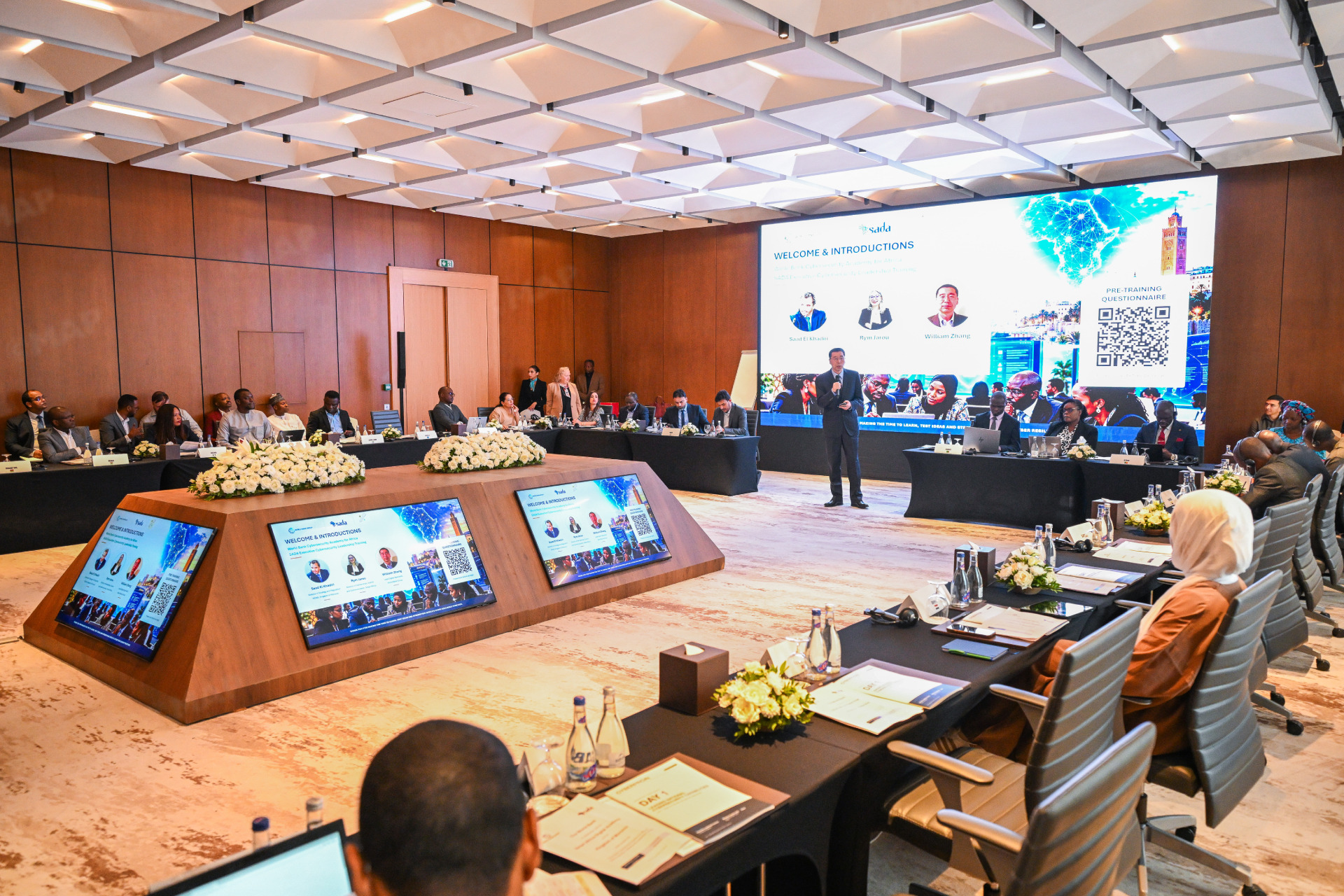
African cybersecurity officials are meeting in Rabat for a three-day training programme focused on a growing problem: how governments can protect their systems from cyberattacks as artificial intelligence makes those attacks faster and more effective. The “Cyber Academy” runs from 6 to 8 October. It brings together senior executives and technical managers from cybersecurity authorities across African countries, as well as international and African cybersecurity experts.
The programme focuses on decision-making, strategic leadership, cyber crisis response and cooperation between African countries. It also looks at the risks linked to AI, digital sovereignty and data sovereignty.
The training is organised by the General Directorate of Information Systems Security (DGSSI), the World Bank and the Smart Africa Digital Academy (SADA).
The programme is designed to help cybersecurity leaders move beyond day-to-day technical work and take a bigger role in national digital policy and crisis management.
William Zhang, the World Bank’s lead expert in digital transformation and cybersecurity, said the training is “of paramount importance” and is at the centre of global efforts to build cybersecurity capacity.
The rapid development of AI is creating new risks, Zhang said. Many cybersecurity organisations already lack the resources needed to deal with current threats.
“Many cybersecurity organizations face a lack of resources to tackle current challenges,” Zhang told MAP. “AI aggravates this situation by making it easier to detect and exploit security vulnerabilities.”
AI can help attackers automate phishing campaigns, write malicious code faster and find weaknesses in computer networks on a much larger scale. Many government agencies in Africa also depend on older IT systems, which can leave them exposed to automated attacks.
This is changing the role of cybersecurity inside governments. Security is no longer only an IT issue. Senior officials need to make decisions about how systems are protected, how AI is introduced and how governments respond to major cyber incidents.
Rym Jarou, director of partnerships, events and communication at the Smart Africa Digital Academy, said the programme is aimed at strengthening the skills of cybersecurity leaders and managers and helping them support digital transformation across Africa.
Leaders responsible for digital transformation need cybersecurity skills at both operational and strategic levels, Jarou said.
SADA’s programme covers cybersecurity strategies, cyber operations, digital sovereignty and data sovereignty. It also looks at the security challenges created by the growing use of AI.
Smart Africa is an alliance of more than 30 African countries that works to accelerate development through technology. Its capacity-building arm, SADA, has made cybersecurity training and digital sovereignty key priorities.
African governments are also looking to keep more government and citizen data inside the continent. That means building local data centres and developing the security skills needed to protect them from ransomware, espionage and other attacks.
Tawfiq Ali Lakssar, head of the cybersecurity unit at Yemen’s Ministry of Telecommunications and Information Technology, said cybersecurity leaders need a strong executive foundation.
That includes learning how to lead cybersecurity units and preparing plans to integrate and govern AI across facilities, government agencies and training teams.
“The value of this executive training is reflected in its programmed topics,” Lakssar said.
The programme includes developing effective cyber response plans based on international best practices. Participants will also exchange experience with officials from other countries taking part in the event.
Interactive sessions and cyber crisis simulations are part of the training. Participants will face practical scenarios that test decision-making and strategic cybersecurity leadership.
The programme comes as African governments expand their use of digital services while facing shortages of money, infrastructure and skilled cybersecurity workers.
Cybercrime is estimated to cost the African economy about $4bn each year. The continent also has a cybersecurity skills gap of more than 100,000 unfilled positions.
South Africa, Kenya and Nigeria traditionally record the highest volume of cyberattacks in Africa. Attacks against infrastructure in North Africa are also increasing.
Africa’s digital economy is expected to reach $712bn by 2050. The growth is increasing the need for stronger digital security, particularly in areas such as banking, ports, electricity and other critical infrastructure.
A successful ransomware attack against a national port, banking system or utility network could cause major economic disruption.
Government agencies in emerging markets also struggle to keep experienced cybersecurity workers. Private companies can often offer higher salaries, making it harder for governments to retain skilled staff.
The World Bank’s involvement in the programme reflects the economic risks linked to cyberattacks and the growing importance of digital technology to African economies.
Morocco has spent the past decade developing its national cybersecurity system. The General Directorate of Information Systems Security operates under the National Defense Administration and has developed national rules for protecting sensitive infrastructure.
Hosting the Cyber Academy with the World Bank and Smart Africa also gives Rabat a role in sharing cybersecurity policies, training and expertise with other African countries.
The country faces its own growing cyber threat.
Hackers breached the National Social Security Fund (CNSS) in April 2025. The breach exposed the personal and financial records of almost two million citizens.
Security firms recorded 12.6 million web attack attempts against Moroccan networks in 2024. The figure made the country the third most targeted in Africa, according to the figures provided for the programme.
More than 75,000 targeted cyberattacks were recorded against Moroccan targets in the first part of 2025.
Microsoft later warned about increasing ransomware and espionage risks, pointing to outdated technology and a shortage of security resources.
Morocco was placed in Tier 1 of the International Telecommunication Union’s 2024 Global Cybersecurity Index, with a score of 97.49 out of 100.
The country ranked 43rd globally in the National Cyber Security Index in August 2026.
The wider challenge for African governments is to expand digital services without leaving their systems and data exposed.
AI is making that challenge more urgent. Attackers can use the technology to find weaknesses and launch attacks more quickly, while governments need to build the skills, systems and rules to defend against them.


