

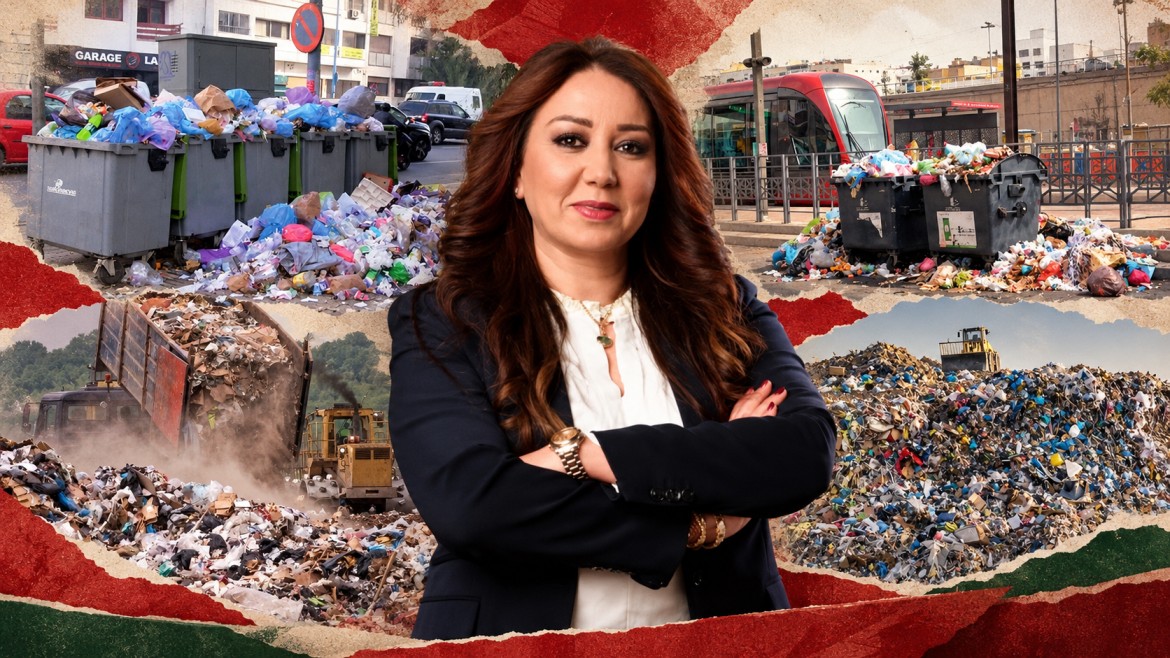
Residents in Casablanca could soon face fines for dumping rubbish in the street, as the city prepares to deploy about 130 cleanliness officers to tackle illegal waste disposal and poor hygiene in shops and restaurants. Mayor Nabila Rmili confirmed on 22 October that the force was ready to start work in the coming days, with equipment purchased and officers trained.
The project has a budget of 30 million dirhams ($3.2m). The Casablanca commune will pay 70% of the cost, while the Ministry of the Interior will cover the remaining 30%.
People caught dumping rubbish outside designated collection points will face a fine of 100 dirhams ($10.60), rising to 200 dirhams ($21.20) for repeat offences, according to the reported enforcement framework.
The force will have about 130 officers, with eight assigned to each of the city’s 16 districts. This is a major increase on the original plan, which called for 20 inspectors under the 2023–2028 Communal Action Plan.
The plan also aims to carry out 200 enforcement operations each year and reduce environmental offences by 50% by 2028. The new force’s operational arrangements were approved during the second sitting of the October communal council session.
The officers will focus on two main problems: hygiene violations in food shops and restaurants, and rubbish dumped in streets and other public spaces.
Noufissa Ramhane, a vice-president of the communal council, will oversee commercial hygiene and food safety. Deputy mayor Moulay Ahmed Afilal will be responsible for tackling illegal dumping and other cleanliness violations in public areas.
The division of responsibilities has caused tensions within the city council. Afilal has disputed how the initiative has been presented, saying he had pushed for it for years.
Casablanca already has the legal authority to enforce hygiene and sanitation rules. Organic Law No. 113-14 gives the president of the communal council administrative police powers, including measures against rubbish accumulation and improper waste disposal.
Food safety inspections already involve municipal teams, health authorities and the National Office for Food Safety (ONSSA). Officials can inspect businesses without warning and issue formal warnings, suspend the sale of products or temporarily close an establishment, depending on their findings.
The municipality has yet to clarify all the procedures governing the new force and how its duties will differ from those of existing departments responsible for waste collection and street cleaning.
Waste collection remains a problem
The crackdown comes as Casablanca continues to struggle with irregular rubbish collection, particularly in districts such as Aïn Sebaâ-Hay Mohammadi and Sidi Bernoussi.
Regional governor Mohamed Mhidia has reprimanded waste collection contractors, including Arma, over failures to meet their contractual obligations. The municipality also began discussions in early October on revising collection contracts to address equipment shortages and management problems and to require private operators to accelerate investment.
The situation presents a challenge for the city: residents could face fines for dumping rubbish even as collection services remain unreliable.
The municipality is encouraging residents to check collection schedules and report missed collections through the Casa Mdinti app.
Casablanca hopes the initiative will improve public spaces ahead of the 2030 World Cup. Its success will depend not only on fines and patrols but also on reliable rubbish collection, clear rules and consistent enforcement.
How other countries are tackling rubbish
Other countries have introduced environmental police and tougher penalties, but their results have varied.
Kenya’s National Environment Management Authority seized 90,695 banned plastic bags during a raid in Nairobi in October 2026. Five people were arrested, including the owner of a manufacturing plant. Reported penalties range from two million to four million Kenyan shillings ($14,000–$28,000), or one to four years in prison.
The Kenyan unit also arrested 13 owners of facilities, including hotels and petrol stations, in May 2026 over alleged environmental violations.
Dubai introduced tougher penalties in September 2026. Serious waste offences can attract fines of up to 500,000 dirhams ($136,000). Illegal wastewater discharge carries a 100,000-dirham ($27,200) fine, while wastewater leaking onto public roads can cost 10,000 dirhams ($2,720). Fines for general street littering start at 500 dirhams ($136).
Egypt’s New Waste Management Law sets a minimum fine of 100,000 Egyptian pounds ($2,000) for unlicensed waste management activities. Large-scale illegal dumping carries fines of between 20,000 and 100,000 pounds ($400–$2,000). In Cairo, street littering fines range from 200 to 5,000 pounds ($4–$100).
Enforcement in Egypt remains uneven, partly because waste collection services are under pressure.
Tunisia’s environmental police, launched in 2017 to address a worsening rubbish crisis, struggled to produce lasting results. Weak waste infrastructure and poor landfill management undermined the initiative, while the El Gonna landfill in Agareb continued operating beyond its mandatory closure date in 2019.
Ghana has also introduced local enforcement measures. Agona Environmental Health launched an environmental police task force in June 2026. A recent Afrobarometer survey found that 66% of Ghanaians rated the government’s environmental protection efforts poorly.
Technology has also been used to combat environmental crime. An East African pilot involving the AI-enabled TrailGuard tracking system led to the arrest of 30 environmental criminals and poachers. However, those results do not establish how effective similar technology would be against illegal rubbish dumping in cities.


