
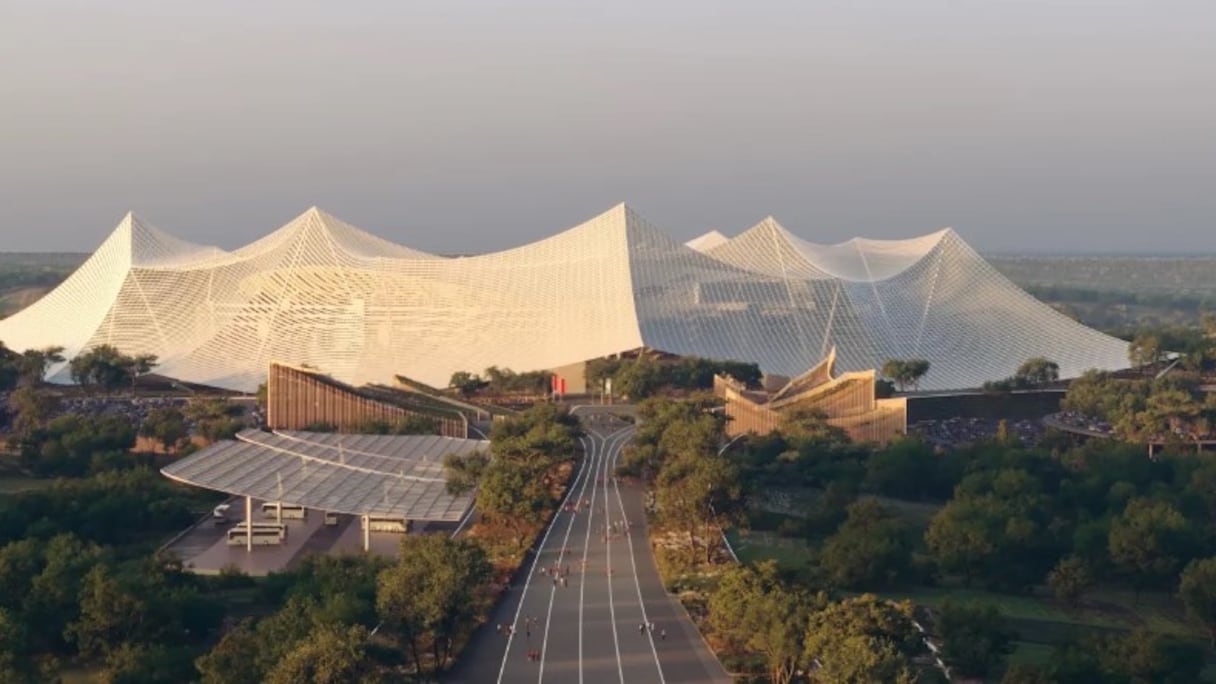
The Casablanca-Settat Multi-Service Regional Company Casablanca-Settat Multi-Service Regional Company SRM has started building new water infrastructure to supply the future Grand Hassan II Stadium in Benslimane province.
The project is worth about 166 million dirhams and is meant to link the stadium to the regional drinking water system while it is still under construction.
It includes a large water reservoir that can hold 10,000 cubic metres, a pumping station capable of moving 260 litres of water per second, and 16 kilometres of pipes to carry and distribute the water.
SRM says the work is part of its plan to keep up with big development projects in the Casablanca-Settat region and make sure basic services grow alongside new infrastructure.
Stadium project tied to major upgrades
The Grand Hassan II Stadium is one of Morocco’s key projects for its joint bid for the 2030 FIFA World Cup with Spain and Portugal. It is being designed by Populous together with Oualalou + Choi.
The stadium is being built in Mansouria, about 38 kilometres north of Casablanca. It will hold around 115,000 people, which would make it one of the biggest football stadiums in the world.
It is seen as a possible venue for the 2030 World Cup final, although it will compete with other top stadiums like Madrid’s Santiago Bernabéu Stadium. It is also expected to host Morocco’s national team and could be used by Raja CA and Wydad AC.
Bigger transport and infrastructure push
The water project is just one part of a wider build-up around the stadium and the region.
Morocco is expanding the Al Boraq high-speed rail line, which will eventually link cities including Kenitra, Marrakech and Agadir, making travel between World Cup cities faster and easier.
At the same time, the Office National Des Aéroports is upgrading airports, including Mohammed V International Airport in Casablanca and Marrakech Menara Airport. The aim is to handle more than 60 million passengers a year by 2030.
Focus on green energy
Officials also say the whole project is being designed with sustainability in mind.
New facilities around the stadium are expected to use solar and wind power. There are also plans for desalination projects to help reduce pressure on drinking water supplies, especially during dry periods.