

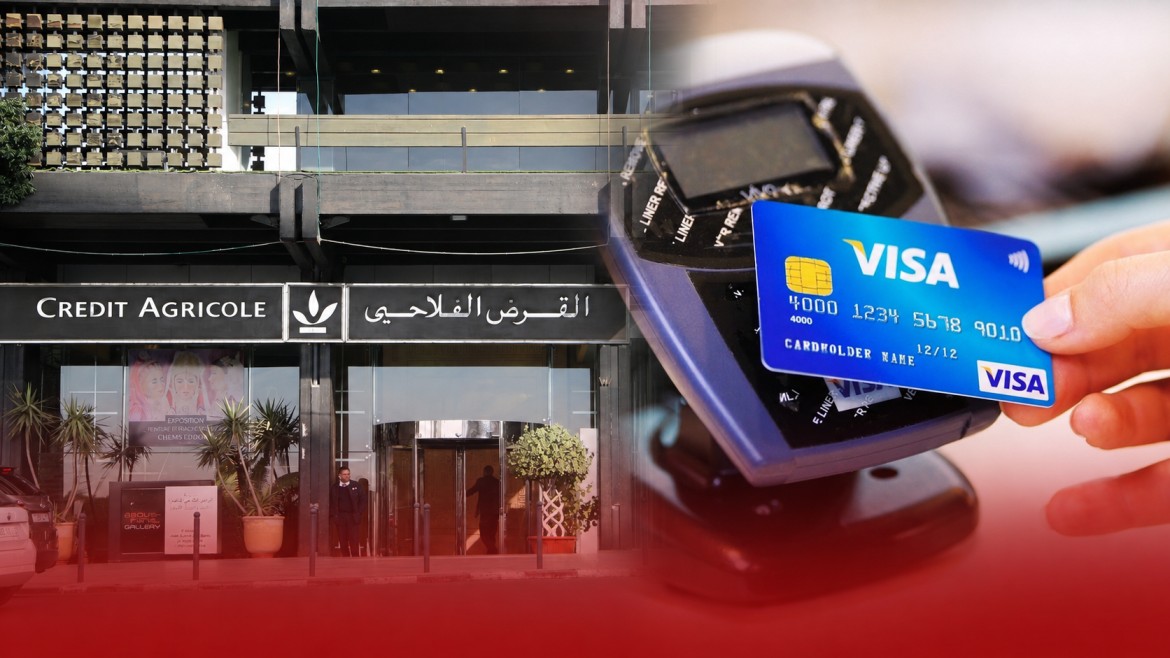
Crédit Agricole du Maroc and Visa have signed a new long-term partnership to make digital payments easier and safer for people and businesses in Morocco. The agreement was signed on Tuesday by Mohammed Fikrat, President of the Management Board of Crédit Agricole du Maroc, Leila Serhan, Visa’s Senior Vice President for North Africa, the Levant and Pakistan, and Sami Romdhane, General Manager of Visa for the Maghreb.
The two companies said they want to help speed up Morocco’s move towards digital payments with “innovative, secure solutions adapted to new consumer habits.”
The partnership has three main goals. It aims to increase digital payments, improve digital banking services and help more people access financial services.
Crédit Agricole du Maroc said the deal supports its goal of building “a more innovative, accessible and inclusive financial ecosystem” by using Visa’s international expertise.
The agreement comes as Morocco continues trying to reduce the use of cash. Around 56% of adults have a bank account, meaning nearly half of the adult population is still outside the formal banking system. Cash remains the most common way to pay, even though mobile payment services are growing.
As part of the partnership, Crédit Agricole du Maroc will expand its CAM Pay app, which lets customers pay with their smartphones using NFC technology. Visa will also provide tokenisation technology, which replaces card details with a secure digital code to make online and mobile payments safer.
Visa will also introduce new fraud detection and data analysis tools. Research shows Moroccan banks using advanced technology have cut fraud detection errors by almost 38%, improving payment security.
The partnership also focuses on rural areas, where many people still have limited access to banking. Crédit Agricole du Maroc plans to expand low cost prepaid cards and the F’jibi card, which can be used without opening a traditional bank account. The aim is to give more rural residents and small farmers access to digital payment services.
The agreement is part of Morocco’s wider push to modernise its financial system and increase financial inclusion, with support from the World Bank.


