
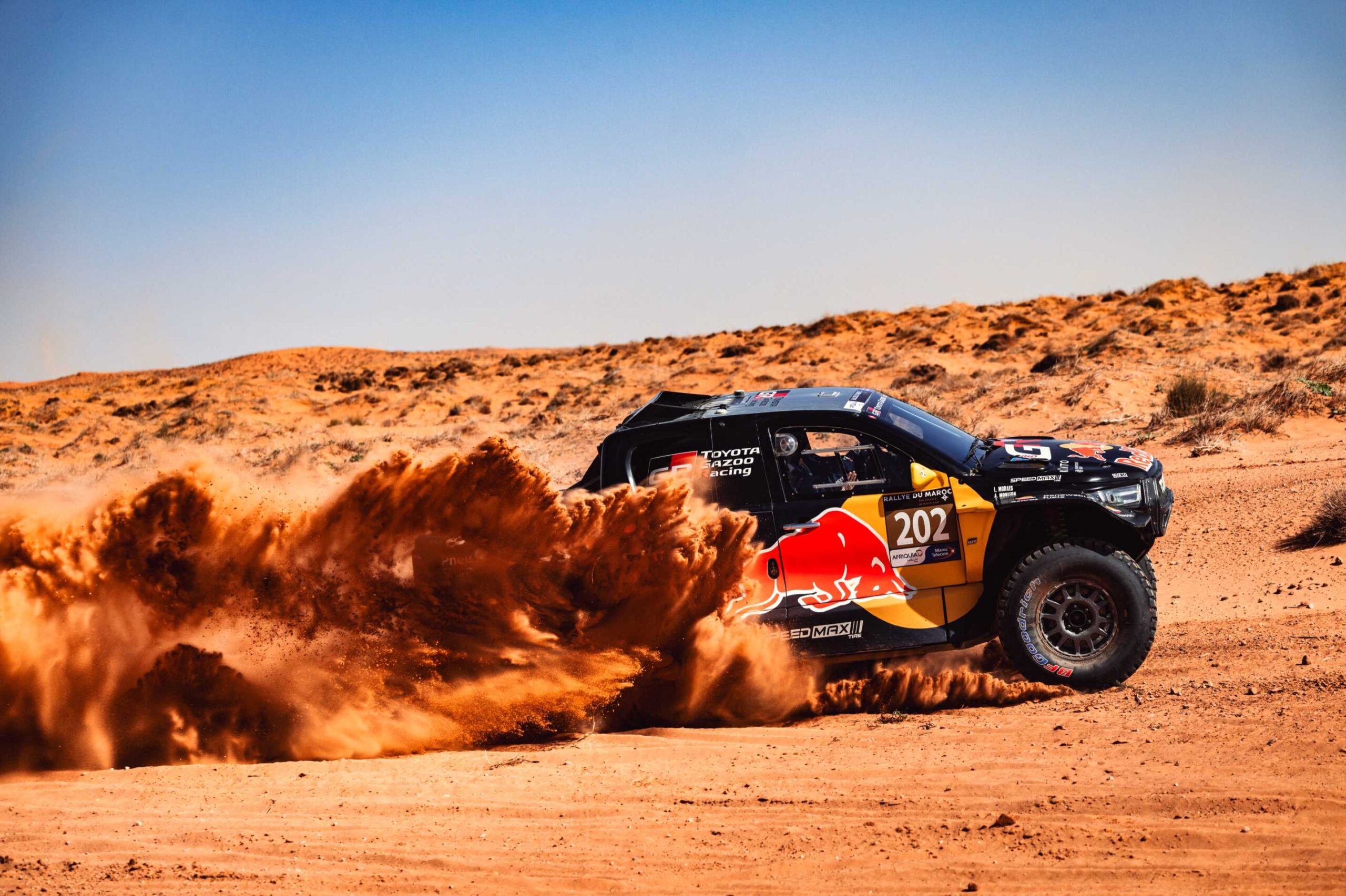
For the first time in years, Dakar Rally drivers could be racing across the Moroccan desert again in January, after organisers reportedly told teams they plan to move the 2027 event out of Saudi Arabia because of security concerns. The 49th edition of the rally is expected to run from 9 to 22 January, with 12 stages and about 4,300km of timed racing. The original plan was to cover 5,320km in Saudi Arabia between 1 and 15 January.
Spanish sports newspaper AS reported on Monday, 19 October, that Amaury Sport Organisation (ASO), which organises the race, had shared the revised programme with participating teams. Spanish newspaper La Vanguardia also reported details of the proposed change.
The plan is not yet official, and the exact start and finish locations have not been confirmed.
Spain and Portugal are being considered for the opening prologue and first stage, before the competitors cross into Morocco. A rest day is planned for 16 January, while technical inspections are scheduled for 6 January.
The desert around Merzouga is expected to host much of the competition. Organisers are reportedly planning a marathon stage, during which competitors spend the night in the desert without mechanical assistance from their teams.
The revised route follows weeks of uncertainty over the rally’s location. Organisers first considered moving the Saudi route further north before turning to Morocco. An earlier proposal presented to teams in October reportedly included eight stages in Morocco. The latest plan increases that number to 12.
The move would also require teams to change their preparation schedules and transport arrangements for race cars, motorbikes, support trucks, press vehicles and other equipment. Moving the vehicles and equipment from Europe to Morocco would involve maritime transport, potentially through ports such as Tanger Med or Nador.
A return to Africa
The Dakar Rally has been held in Saudi Arabia since 2020. Before that, it spent 11 years in South America, following the cancellation of the 2008 edition because of security threats in Mauritania.
The race began in 1979 as the Paris-Dakar Rally, traditionally crossing Europe and Africa before finishing in Senegal. Morocco was a regular stop, with stages passing through areas including Erfoud, Zagora and Merzouga.
Security concerns led organisers to cancel the 2008 race on the eve of its start. The event moved to South America in 2009 and remained there until 2019.
Saudi Arabia became the sole host in 2020 under an agreement between ASO and the Saudi Sports Ministry. The original five-year deal was reported to be worth more than $16m a year and was later extended through 2026.
Morocco already hosts major rally-raid events. The Rallye du Maroc, organised by ODC and led by Dakar Rally director David Castera, is the final round of the FIA-FIM World Rally-Raid Championship. It also gives teams an opportunity to test their vehicles and prepare for the Dakar each autumn.
Large rally events bring teams, support crews and journalists to desert regions, supporting local hotels, transport companies and logistics businesses. A Dakar return could bring further activity to areas around Ouarzazate, Zagora and Erfoud.
Official confirmation still pending
ASO has yet to make a public announcement confirming the relocation. As of 20 October, the official Dakar website continued to list the original Saudi Arabian schedule of 1 to 15 January 2027.
The proposed route would also require coordination between authorities in Spain, Portugal and Morocco if the opening stages take place in Europe. Border arrangements and the movement of vehicles and equipment across the Strait of Gibraltar would need to be organised within the revised timetable.
The three countries are also working together to host the 2030 FIFA World Cup, although the arrangements for the rally would require separate planning and approval.