

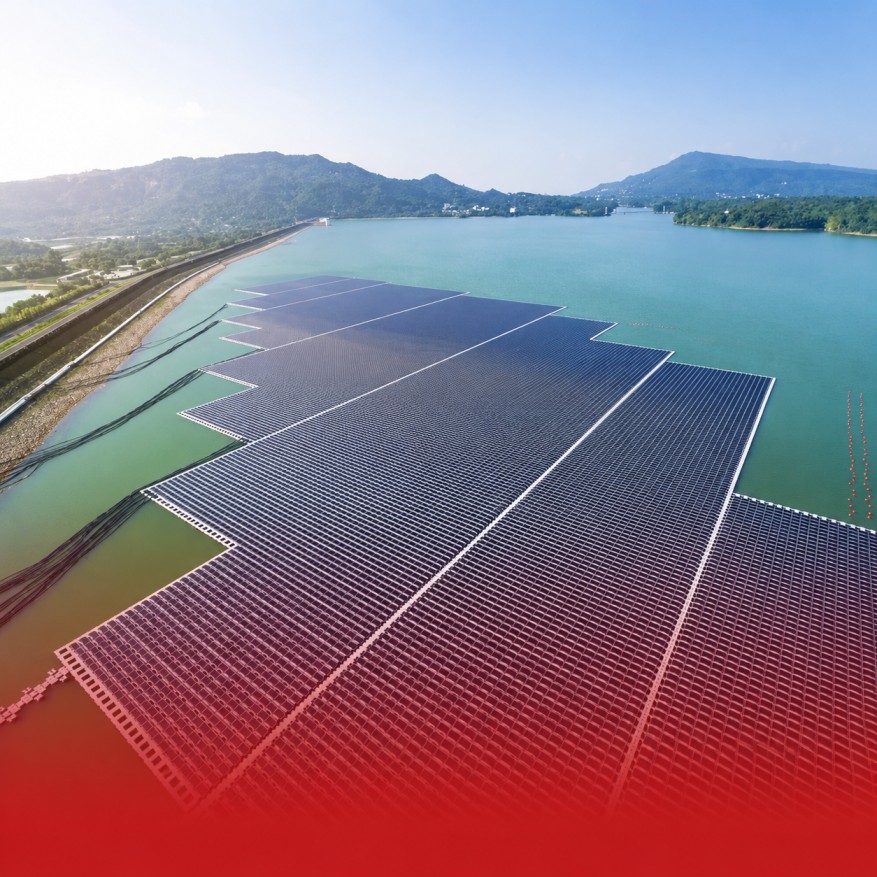
Morocco’s dams could do more than store water. They could also help generate solar power while reducing the huge amounts of water lost to evaporation each year, according to a new scientific study. The study, published in npj Clean Energy, looked at 58 dams across Morocco. Researchers found that these reservoirs lose nearly 909 million cubic metres of water every year through evaporation. They also found that covering just 1% of the reservoirs’ surface with floating solar panels could provide a meaningful amount of electricity for the country.
The dams included in the study cover a total area of around 433 square kilometres. Water losses are highest during the summer, especially in July, when about 109 million cubic metres evaporate in a single month.
Floating solar panels are installed on platforms that sit directly on the water. The system generates electricity without taking up farmland or other land needed for development. At the same time, the panels shade the water and help reduce evaporation.
According to the study, Al Wahda dam records the largest annual water loss, at around 184 million cubic metres. It is followed by Al Massira with 131 million cubic metres and Oued El Makhazine with nearly 77 million cubic metres.
Researchers say Morocco is well placed to benefit from the technology thanks to its strong solar resources. The country receives about 3,000 hours of sunshine each year.
The study estimates that covering just 1% of the reservoirs with floating solar panels would already produce a significant amount of electricity and offer a quick return on investment. If around 40% of the reservoir surfaces were covered, the electricity generated could theoretically match Morocco’s entire national power demand, which reached 42.38 TWh in 2023.
The researchers stressed that this does not mean dams should be widely covered with solar panels. Each site would need its own assessment because dams serve many purposes, including drinking water supply, irrigation, hydropower production and flood control.
The study also found that solar panels perform best when installed at an angle of about 31 degrees. However, lower angles can make floating platforms more stable, reduce costs and further limit evaporation.
Morocco has already started testing the technology. Existing projects include a 360 kW floating solar installation in Sidi Slimane and a 13 MW project at Oued Rmel dam near Tangier. The Oued Rmel project is expected to supply part of the energy needs of the Tanger Med port complex.
The findings come as Morocco works towards its goal of increasing the share of renewable energy to 52% of installed electricity capacity by 2030.
Researchers said floating solar could help support that target while also addressing water losses from reservoirs. However, they warned that issues such as water quality, biodiversity, changing water levels and grid connections must be carefully studied before large-scale deployment.
“The potential is real, but its implementation requires rigorous planning,” the researchers concluded.


