

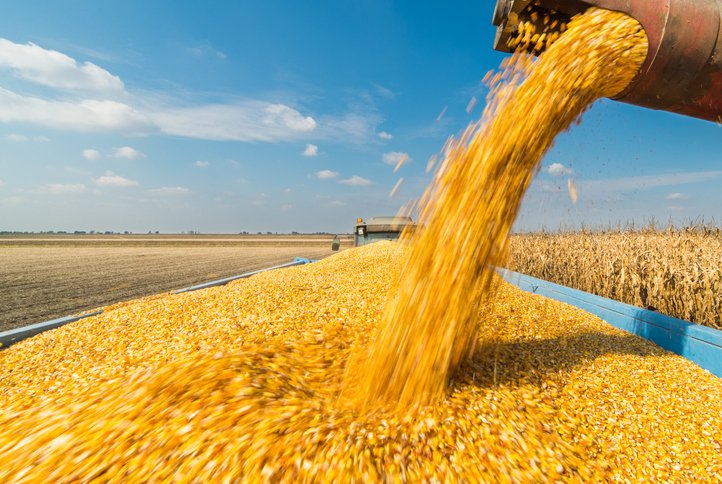
Good rainfall has helped Morocco produce one of its biggest cereal harvests in years. The country is expected to harvest 9 million tonnes of cereals in the 2025-2026 season, up 50.6% from the 10-year average. The better harvest is expected to push economic growth to 4.8% in 2026, before slowing to 3% in 2027 if next season returns to normal.
Rain was scarce at the start of the season, but later showers came at the right time. They refilled dams, improved soil moisture and helped crops grow across much of the country.
Farmers planted about 3.9 million hectares of cereals, up from less than 3 million hectares a year earlier.
The harvest is expected to reach around 9 million tonnes, or 90 million quintals. That is more than double last season’s drought-hit crop of 4.4 million tonnes and well above the 10-year average of about 6 million tonnes.
Soft wheat will make up the biggest share of the harvest with about 4.4 million tonnes, or 49% of total production. Barley is expected to reach 2.5 million tonnes (28%), while durum wheat should total 2.1 million tonnes (23%).
Average yields are expected to reach 2.3 tonnes per hectare, compared with less than 1.5 tonnes per hectare in dry years.
Most cereal production comes from Casablanca-Settat, Fès-Meknès and Marrakech-Safi.
Agriculture makes up about 10% to 12% of the economy, but it provides jobs for around 30% of the workforce and up to 70% of people living in rural areas. A good harvest usually means stronger economic growth because it increases farmers’ incomes, boosts household spending and cuts food imports.
Agricultural output is expected to grow by 19.1% in 2026 before falling 6.8% in 2027 because this year’s harvest sets a high benchmark.
The agriculture sector alone is expected to add 1.9 percentage points to economic growth next year. Household spending is also expected to rise by about 4.7%.
The bigger harvest should reduce the country’s need for imported grain. Soft wheat imports are expected to fall to about 3 million tonnes, down more than 40% from the recent average of 5 to 5.5 million tonnes.
Morocco usually imports grain from France, Russia, Ukraine and Canada to meet annual demand of around 10 to 11 million tonnes.
The government is also building up grain reserves. It aims to store 1.5 million tonnes of cereals, equal to about 17% of this year’s expected harvest. Storage subsidies have increased from 10% to 25%, and 200,000 tonnes of new storage capacity have been added to reduce crop losses after harvest.


